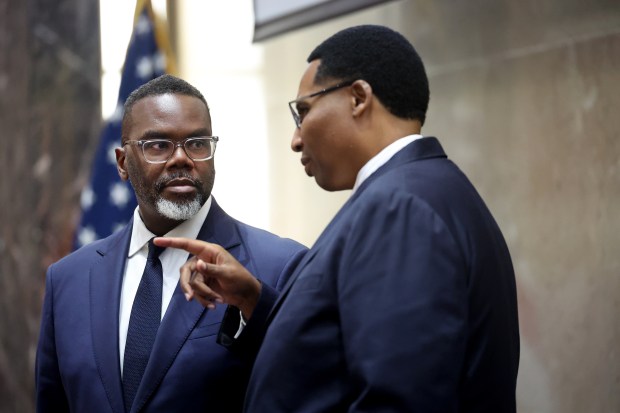
The Chicago City Council voted on Wednesday to pause the ‘One Fair Wage’ ordinance, which would have mandated pay increases for tipped employees, for two years. This decision primarily impacts workers like waiters, who typically earn less than the city’s minimum wage. Although only one alderman opposed the freeze, it does not signal an end to the struggle, with future efforts from the restaurant industry likely aiming to halt these raises permanently.
This decision is a setback for Mayor Brandon Johnson and his focus on working-class issues. While Mayor Johnson expressed displeasure, calling it a compromise, he stated he would not veto the measure. Johnson acknowledged the challenges with the decision but emphasized the importance of dialogue. ‘We’re not going to sit here and act like what just happened isn’t problematic,’ he said, showing his preference for regular wage increases.
Initially, in March, aldermen voted to indefinitely stop ‘One Fair Wage,’ but Johnson had vetoed it, calling the subminimum wage relic from a time linked to slavery. The latest compromise delays raises by two years for larger restaurants and four years for smaller ones, effectively neutralizing Johnson’s veto power due to council support.
Both the One Fair Wage campaign and the Illinois Restaurant Association have reluctantly agreed to this compromise. Ald. Walter ‘Red’ Burnett, who initiated the freeze, argued that it was crucial for safeguarding jobs amid rising operational costs for restaurants. Ald. Gilbert Villegas supported the freeze, suggesting that longer-term economic considerations need addressing.
However, not all shared optimism. Ald. Jason Ervin criticized the delay, pointing out the disproportional impact on Black Chicagoans. Ervin labeled the decision an ‘economic betrayal and moral failure.’ Despite differing opinions, the measure passed, with only Ervin formally objecting.
The original ‘One Fair Wage’ ordinance had been a notable achievement when it passed in 2023, aiming to raise tipped wages from $9.48 to $12.62 and to eradicate the subminimum wage by 2028. Instead, raise adjustments will now be postponed, extended until 2028 for large establishments, and 2030 for smaller ones. The ordinance will proceed incrementally post-freeze unless future opposition arises.
Sam Toia of the Illinois Restaurant Association signaled that efforts might persist against eliminating the tipped wage. During discussions, which Mayor Johnson’s team reportedly did not join, Toia suggested allowing subminimum wages but enforcing a total earning rate at 124% of the city’s minimum wage.
Additionally, the meeting included a public apology from GOP gubernatorial candidate Darren Bailey, who had previously criticized Chicago harshly. Meanwhile, the Council approved an ordinance to honor civil rights leader Rev. Jesse Jackson, focusing on voting rights protection. Despite debate, supporters highlighted its necessity amid federal attacks on voting rights.
The Council also agreed on a settlement with Access Living concerning a lawsuit about accessibility discrimination in housing. The city committed $2.25 million and plans to build nearly 3,000 units for individuals with disabilities.
In other actions, the Council confirmed several appointments, including William Cheaks to Commissioner of the Department of Transportation, and approved a tax incentive worth $55 million for a major development project near the United Center. Aldermen dismissed a proposal for a city charter referendum, which sought to redefine governmental powers. Tribune reporter Alice Yin contributed to the coverage.
Leave a Reply