An outbreak of a rare type of Ebola, triggered by the Bundibugyo virus, has generated significant concern. Ebola, spread through bodily fluids, is known for its high contagion rate and can be fatal, with mortality rates ranging from 30% to 50%. Symptoms include fever, rash, and vomiting as reported by the World Health Organization (WHO).
This strain lacks any approved vaccine or treatment, distinguishing it from regular Ebola strains. Health officials are alarmed because the outbreak was detected late. While most cases are concentrated in Congo’s eastern Ituri province, instances have surfaced 600 miles away in the capital Kinshasa and neighboring Uganda. This expansion has led to uncertainties about the virus’s complete geographical spread.
In response, Congo has closed its land border with Rwanda. The State Department confirmed this action on its social media account, X. WHO highlighted the uncertainties surrounding the actual number of infected persons and potential geographic spread. Added challenges include recent regional conflicts, notably between the Congolese government and rebel group M23, with one confirmed case reported in the city of Goma.
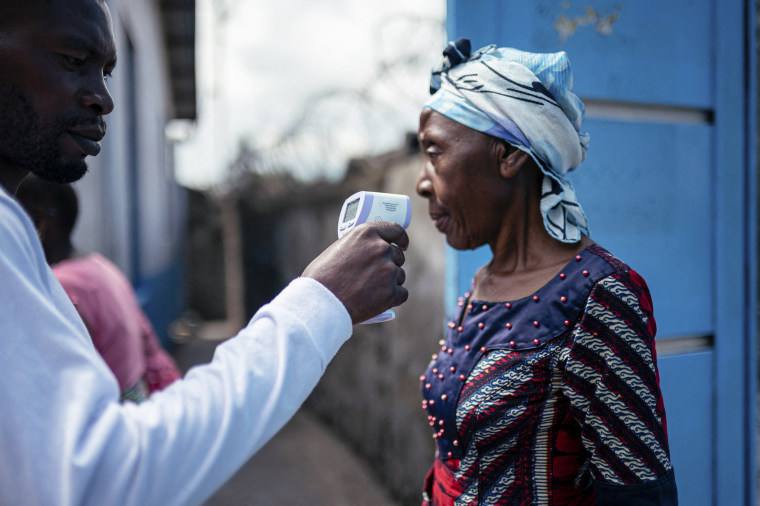
A healthcare worker in Goma checks visitors’ temperatures before hospital entry. Jean Kaseya, director-general of the Africa CDC, expressed alarm over the rising death rates, emphasizing the absence of medicines and vaccines.
WHO has declared an emergency, indicating its support for efforts to combat the outbreak. A team of 35 experts from WHO and the Congolese Health Ministry arrived in Bunia, Ituri’s capital, with 7 tons of emergency medical supplies.
The U.S. government aids in surveillance, diagnostic efforts, infection prevention, and containment strategies as stated by the CDC. Despite repeated inquiries, Satish Pillai, CDC’s Ebola response manager, provided limited information on affected Americans, focusing instead on assessing ground needs.
Organizations like Doctors Without Borders are gearing up to enhance their medical responses. Trish Newport, MSF emergency program manager, voiced concerns over the fast rise in cases and deaths across multiple health zones and neighboring regions.
Jeremy Konyndyk, president of Refugees International, noted on social media that the larger infrastructure once used in the 2014-16 Ebola outbreak has weakened. He pointed to reductions within USAID and the CDC, and mentioned cuts overseen by the Department of Government Efficiency.
The State Department has yet to comment on the implications these cuts might have on the response to the outbreak. Nonetheless, the department confirmed cooperation with Congo and Uganda on containment efforts and mentioned efforts to quickly deliver support to essential partners.
Leave a Reply