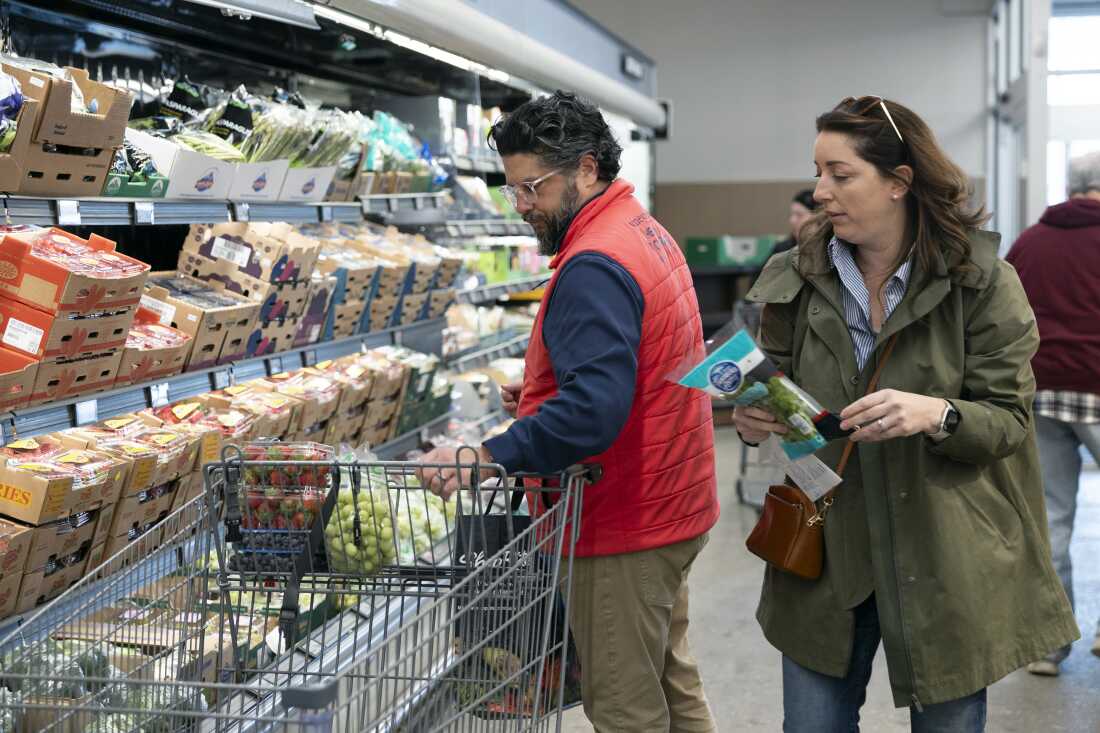
Rich Henderson and his wife, Rachel Negro-Henderson, choose to grocery shop at Aldi in Bellmawr, N.J. as a cost-saving measure. When Rachel began shopping at Aldi during the pandemic due to her husband’s job loss as a crew coach, she often encountered acquaintances who were hesitant to acknowledge their reasons for being there. She remarked that many people acted like they accidentally ended up in the store, needing only a single item. Over time, however, the stigma faded as she frequently saw familiar faces who were open about wanting to save money while receiving the same quality products.
Several factors have contributed to the rising challenges of affording groceries. The COVID-19 pandemic significantly heightened food insecurity, leading to a dramatic increase in grocery prices due to inflation and corporate strategies like shrinkflation. Add to this the potential for tariffs, and consumers are increasingly frustrated. “Give us a break,” said grocery analyst Phil Lempert, emphasizing the necessity of affordable food.
Economic pressures have shifted consumer behavior towards budget grocery stores and warehouse clubs in pursuit of savings. This change is evident on social media, where users frequently highlight deals from stores like Aldi and Costco. Lempert noted that these stores have improved their offerings to appeal to a cost-conscious demographic, moving away from any previous negative perceptions.
How Budget Stores Maintain Low Costs
Budget grocery stores tend to be smaller and more efficient than their larger counterparts. According to Lempert, stores like Aldi streamline workflows by placing unboxed items directly onto shelves, reducing labor costs. These stores focus on essential products, displaying fewer frills compared to larger supermarkets known for their aesthetics.
European chains Aldi and Lidl have expanded in the U.S., with Aldi adding 200 new stores and planning 180 more. Conversely, Grocery Outlet plans to close 36 locations due to over-expansion. Warehouse retailers like Costco and Sam’s Club offer groceries at lower prices, capitalizing on their purchasing power. For instance, Costco maintains interest with its low-priced food deals and reported a significant sales increase recently.
Consumer trust in discount outlets is growing, supported by data from Consumer Reports. Aldi and Lidl offer prices over 8% lower than Walmart, with BJ’s and Costco reducing costs by around 21%.
Store Brands Gaining Popularity
Consumer preferences are shifting towards store-brand items, outpacing sales of traditional brands. Nonetheless, budget stores may not carry a complete range of products. Rachel Negro-Henderson, a loyal Aldi shopper, admits to buying certain items like deli meats elsewhere. Despite occasional additional trips, she values the savings and quality offered by Aldi.
Both Rich and Rachel Henderson appreciate Aldi’s affordability, emphasis on non-GMO products, and sustainable practices. Over time, they found that while they forego certain brands, the quality remains intact. Data shows that more than 90% of Aldi’s products are store-branded.
Social Media Influence on Budget Cooking
Online creators leverage social media to share budget-friendly meal ideas from budget grocery shopping. Kiki Rough, who provides recipes from various tough economic times, draws from her own experiences with food insecurity. Her outreach aims to teach users how to maximize limited grocery budgets. She notes that financial difficulties cut across social classes, urging people to shed any embarrassment about their circumstances.
Phil Lempert anticipates the continuation of frugal shopping habits, including a focus on finding cheaper grocery options. Data from AlixPartners indicates that consumers expect to spend the same or more on food, yet remain committed to budget-conscious practices and avoiding impulse buys. Consumer Reports supports this trend, indicating that more consumers are actively comparing prices to avoid being overcharged for groceries.
Lempert observes that younger generations prioritize low-cost shopping experiences over traditional supermarket attractions, predicting that shoppers will maintain these habits moving forward.
Leave a Reply