The Struggle for Survival
The humanitarian relief system is under severe strain. Escalating costs in food, fuel, and fertilizer are driven by the war in the Middle East, posing significant challenges. This situation acutely impacts vulnerable regions like Somalia.
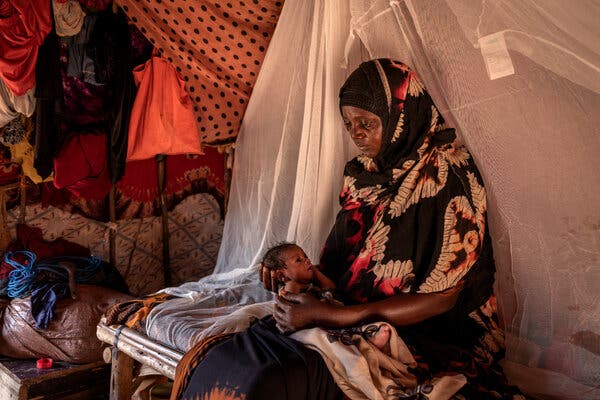
Muslima Ibrahim Mohamed, a mother from Somalia, holds her newborn son Noor Mohamed, representing the faces of those affected.
A Long Journey to Aid
Peter S. Goodman reported from Somalia, exploring camps, schools, and health centers. He documented the hardships faced by displaced communities.
Abdullahi Abdi Abdirahman and his family undertook a perilous journey across southern Somalia. They sought refuge in Dollow, an Ethiopian border town, after losing their livestock to drought.
The Withdrawal of Support
International relief organizations had previously clustered in Dollow, attracting over 100,000 people with promises of food, water, and healthcare. However, aid groups have since abandoned the area. The dismantling of the U.S. Agency for International Development (U.S.A.I.D.), led by President Trump, eliminated a crucial source of assistance for Somalia.
As governments in London and Berlin slashed humanitarian aid budgets, organizations faced tough decisions on resource allocation. Unfortunately, Dollow was not prioritized, leaving camps with dwindling support.
The Ripple Effects of Middle East Conflict
In the following month, the geopolitical conflict intensified when the U.S. and Israel launched a war against Iran. The closure of the Strait of Hormuz disrupted vital shipments from the Persian Gulf.
This disruption spiked global transportation costs, affecting Somalia where 70% of food relies on imports. Prices for staples such as rice and wheat flour doubled, aggravating the humanitarian crisis.
A glimpse of the camp at Dollow, where violence and drought displace populations seeking essential aid.
Leave a Reply