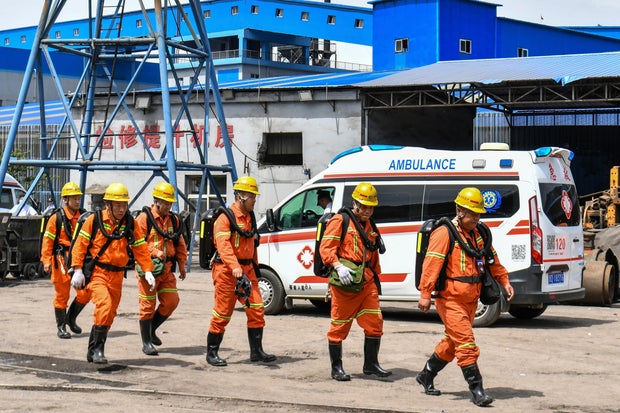
Deadly Accident at Liushenyu Coal Mine
A gas explosion occurred at the Liushenyu coal mine in Changzhi city, Shanxi province, on Friday evening, leading to a tragic loss of life. At least 82 people have died, and over 120 individuals have been hospitalized. Local officials reported that two individuals remain missing. These numbers reflect a revised count, down from the initial reports of 90 fatalities by state broadcaster CCTV.
Rescue and Investigation Efforts
The aftermath of the accident was described as chaotic. Initial figures were provided quickly and were not definitive. The explosion is under investigation, with authorities noting significant legal violations by the mine’s operator. Specific details about these violations haven’t been disclosed yet.
Rescue operations continued into Saturday, with hundreds of rescuers and medical staff deployed to aid the injured, many of whom suffered from the effects of toxic gas exposure. President Xi Jinping emphasized the need for a comprehensive rescue effort for the missing and advocated for a complete investigation to ensure accountability.
Following the President’s directives, those responsible for the mine have been placed under control. An investigation team from China’s State Council will conduct a thorough examination of the incident.
First-Hand Accounts and Challenges
Wang Yong, a miner affected by the explosion, recounted the terrifying moments just before losing consciousness, describing a sulfurous smell reminiscent of firecrackers and thick smoke choking those around him.
Efforts to save those trapped in the mine faced obstacles due to discrepancies between the provided mine blueprints and the actual layout, complicating rescue operations.
Background on Shanxi Province
The Shanxi Tongzhou Coal & Coke Group operates the Liushenyu coal mine, with an annual output capacity of 1.2 million tons. The mine was identified in 2024 by China’s National Mine Safety Administration as being prone to disasters due to its high gas content. Shanxi province, the country’s leading coal mining region, produced 1.3 billion tons of coal last year, comprising nearly a third of China’s total production.
Although coal remains a vital energy resource in China for its cost-effectiveness and abundance, mining incidents persist despite ongoing safety reforms. Historical tragedies include a mine collapse in Inner Mongolia in February 2023, which claimed 53 lives, and an explosion in Heilongjiang province in 2009 that resulted in 108 deaths.
Leave a Reply