This article is part of a series exploring NATO’s challenges amidst Russia’s invasion of Ukraine.
Officials across NATO’s eastern flank view the conflict in Ukraine as reshaping the alliance’s future strategy. Despite being four years into the war, Ukraine’s battlefield has become a testing ground for modern warfare.
Transformations in Military Approach
Drone warfare, cyber defense, civilian resilience, and large-scale military mobilization have become focal points. Eastern European officials assert that Ukraine has emerged as one of the world’s most experienced militaries, prompting NATO to reconsider its strategies for future conflicts.
NATO Secretary General Mark Rutte confirmed Ukrainian President Volodymyr Zelenskyy’s invitation to the alliance’s annual summit in Ankara. This underscores Ukraine’s pivotal role in shaping NATO’s direction despite not being a member.
A new kind of war is unfolding through Ukraine’s innovative combat strategies.
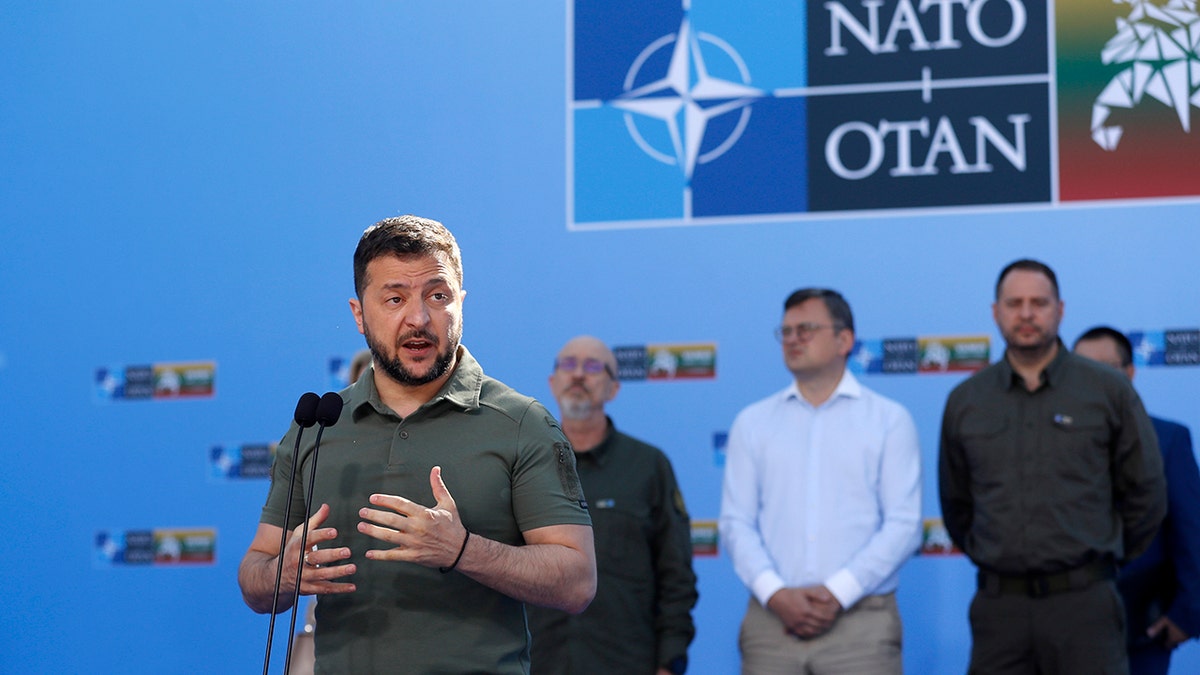
President Zelenskyy emphasized the Ukrainian army’s significance at the NATO summit in Vilnius, Lithuania. Lviv Mayor Andriy Sadovyi stated, I think today the Ukrainian army is the number one army in Europe. NATO needs the Ukrainian army.
Challenges and Strategic Responses
NATO foreign ministers met in Sweden ahead of the July summit. U.S. Secretary of State Marco Rubio described the meeting as one of the alliance’s most crucial summits. Rubio cautioned that NATO lacks sufficient munitions production for future conflicts. Ret. Lt. Gen. Richard Newton acknowledged the Pentagon’s focus on Ukraine’s rapid industrial adaptation, noting its influence on military strategies.
Rubio referenced President Donald Trump’s commitment to maintaining U.S. troop deployments in Poland, addressing concerns about potential reductions on NATO’s eastern flank. Polish Foreign Minister Radosław Sikorski welcomed Trump’s statement, asserting This makes Putin very uncomfortable.
Implications for Russia
Russian President Vladimir Putin’s grievances centered around NATO’s eastward expansion and Ukraine’s aspirations toward alliance membership. Moscow demanded NATO revert its footprint to pre-1997 levels. Contrary to Putin’s aims, NATO expansion accelerated post-invasion.
Finland joined NATO in 2023, bringing over 800 miles of shared border with Russia. Sweden followed suit in 2024, signifying dramatic security changes in northern Europe.
Polish officials claim the war extends NATO’s geographic and strategic transformation. Polish Deputy Defense Minister Paweł Zalewski highlighted shifts from expeditionary warfare to drone-led strategies: There’s not a military globally better equipped than Ukraine in understanding today’s battlefield realities.
Shaping Modern Warfare
Ret. Gen. Philip Breedlove emphasized Ukraine’s profound influence on global military understanding, claiming the Ukrainian military has evolved into one of Europe’s most formidable forces.
Ukraine’s technological evolution, driven by its vast pre-war IT sector, pivoted towards defense innovations. Lviv’s mayor noted a shift from commercial IT clusters to defense clusters during the war.
- Innovations: Emphasis on drones, anti-drone systems, battlefield communications
- Strategic Insights: NATO and European militaries study Ukraine’s model closely
The conflict revealed traditional air power limitations, accelerating drone warfare use due to Russian Air Force failures.
NATO’s Strategic Transition
The Pentagon promotes NATO 3.0, urging Europe to assume greater conventional defense responsibility as U.S. focuses on China and the Indo-Pacific.
Poland increased military spending to nearly 5% of GDP, emerging as one of NATO’s leading powers on the eastern flank.
Warsaw officials claim Eastern Europe was rightly cautious of Russia’s threat before many Western nations, citing increased regional power.
Ukraine’s Strategic Role
Despite not being a NATO member, officials argue Ukraine’s role is crucial for the alliance’s future. Breedlove asserts Ukraine is winning ground against formidable forces.
Ukraine’s wartime innovation ecosystem thrives, producing new technologies in drone warfare and decentralized weaponry.
The alliance cautiously avoids offering Kyiv a concrete timeline for accession amid war concerns, balancing the strategic implication of direct confrontation risks with Russia.
Leave a Reply