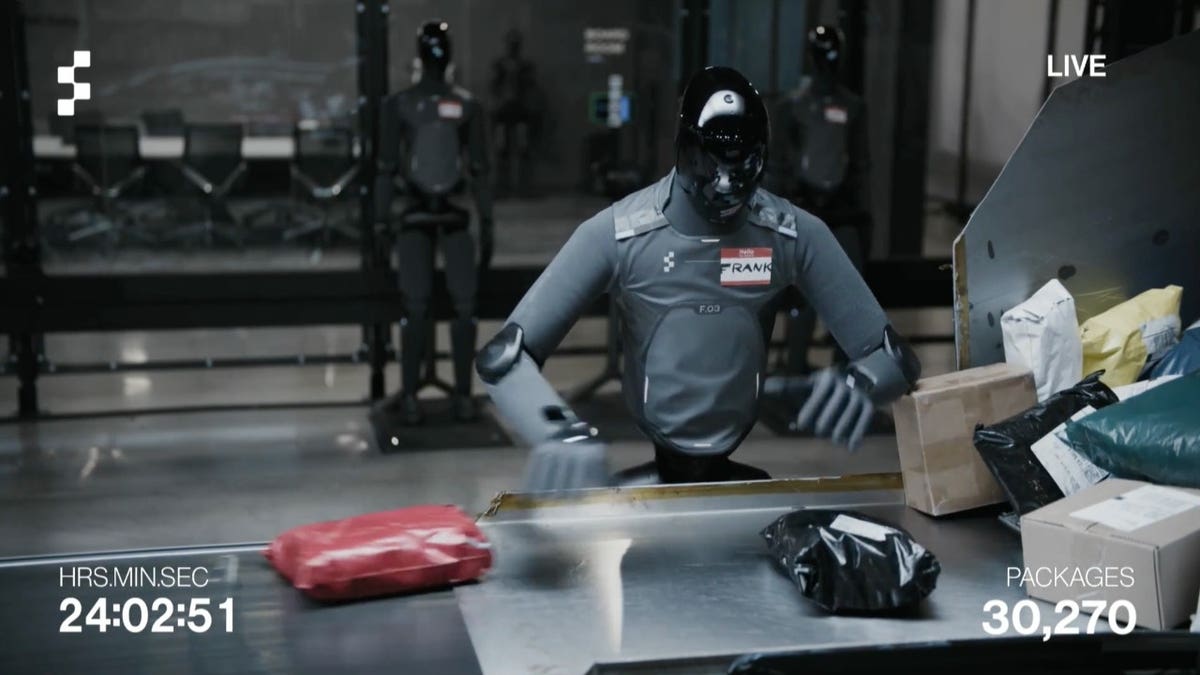
Figure AI announced that three of its humanoid robots successfully completed over 24 hours of continuous autonomous operation. Originally planned for eight hours, the test demonstrated the robots’ capabilities in sorting small packages without human intervention. These robots, named Bob, Frank, and Gary by online viewers, became a part of a livestream, allowing people to witness their performance first-hand.
These robots operated nonstop in a simple task: pick up a small package, identify the barcode, and place it on a conveyor belt with the barcode facing down. Despite the simplicity, such tasks require steady movement and quick decision-making, crucial in warehouse operations. During this time, the robots reportedly sorted over 28,000 packages at human-comparable speeds. CEO Brett Adcock remarked that the test continued beyond the initial eight-hour goal due to the robot’s successful operation.
Advanced AI System: Helix-02
The robots were powered by Figure AI’s proprietary Helix-02 system. This neural network integrates vision, touch sensing, body awareness, and movement control, enabling tasks beyond mere arm movement. They must balance, grip, adjust posture, and respond to unforeseen package placements. Figure AI emphasized that the robots operated entirely under this AI system without remote human control.
The ability to automatically reset is highlighted as a significant feature. Helix-02 can initiate a reset when encountering unexpected scenarios, potentially reducing downtime and enhancing utility in real-world environments. Additionally, these robots can exit the operation for maintenance as needed, allowing another unit to seamlessly take over.
Viewers and Human Names
The livestream offered a unique glimpse into real-time humanoid robot operations, extending beyond the initial eight-hour mark and captivating viewers. The robots gained names—Bob, Frank, and Gary—adding a human element to the demonstration. Figure AI acknowledged this by incorporating visible name tags, making the robots more relatable and the operation easier to follow.
Warehouse Automation Race
Figure AI faces competition from companies like Tesla, Agility Robotics, and Apptronik, all pursuing humanoid robotics in logistics. Figure AI has conducted tests at BMW facilities, hinting at potential future applications in controlled industrial environments before widespread integration into daily life. Package sorting exemplifies understandable technology, sparking questions about automation’s broader possibilities.
Real-World Challenges
Despite the success of the livestream, further testing in varied conditions will be necessary. Businesses seek assurance on system failures, maintenance needs, and capability under chaotic scenarios. These robots must prove efficient not only in controlled environments but also amid real-world chaos, with unpredictable package shapes and layouts.
Implications for the Future
Most people remain unaffected by humanoid robots in daily life for now. However, as technology progresses, implications could emerge in recognizable areas like faster delivery times and changing overnight warehouse roles. Automation does provide benefits, but it also raises concerns about job displacement. The reliability of robots in complex, real-world settings remains under scrutiny.
Leave a Reply