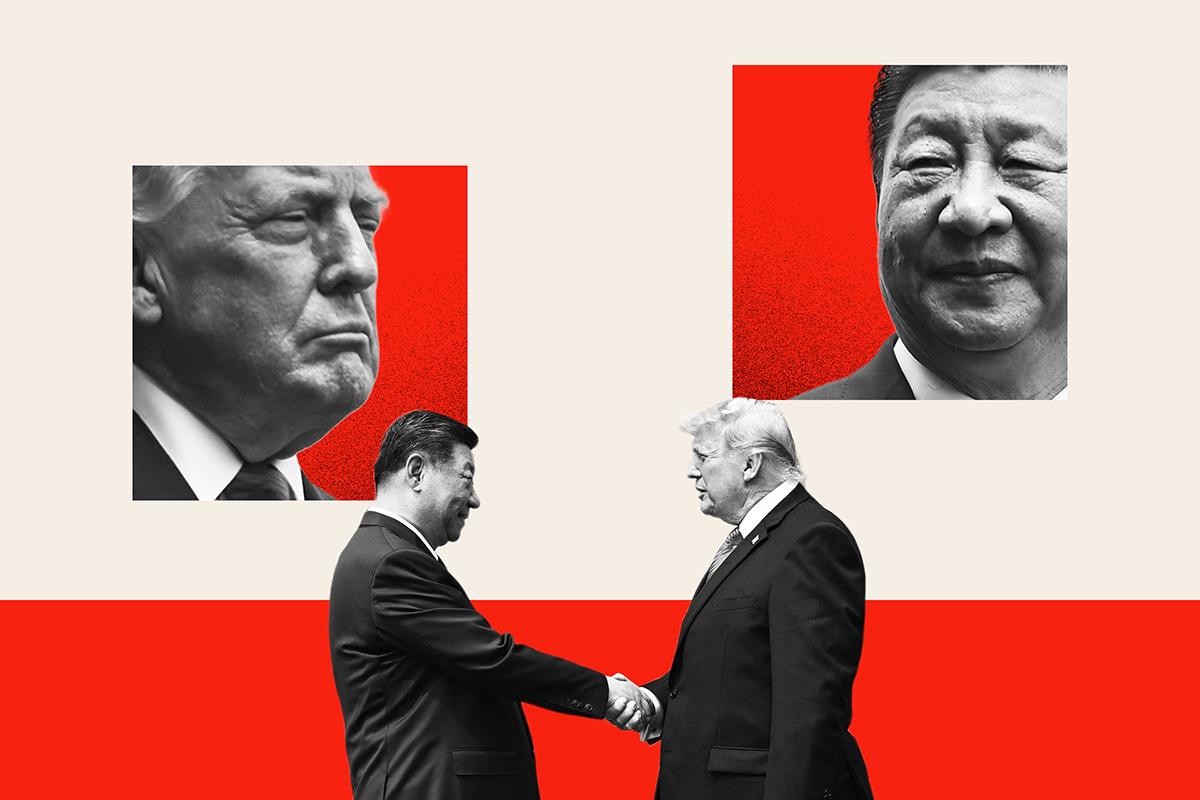
President Donald Trump has adopted a business-first approach, which seems to shape a softer stance toward Beijing. Even as this approach unfolds, key US advisors known for their critical views on China are still influential. Trump’s visit to Beijing, marked by pomp and ceremony, took a year to organize and celebrated a diplomatic shift initiated when the two nations reduced tariffs in May last year.
During his first administration, Trump clashed with China over trade deficits and the origins of the COVID-19 pandemic. These disputes led to strained relations, making reconciliation seem unlikely. However, in his recent visit, Trump emphasized his enduring friendship and respect for President Xi Jinping. His positive remarks reportedly helped strengthen mutual trust.
Accompanying Trump were prominent China critics, including Secretary of State Marco Rubio, Defense Chief Pete Hegseth, and Adviser Stephen Miller. Despite their usual stances, they supported Trump’s agenda to enhance cooperation for increased business opportunities in China. This meeting was both diplomatic and strategic, underlining the US’s power while reminding Xi of potential global disruptions if China does not cooperate.
“The whole purpose of the visit was to show China that the United States remains the leading global power.” — Miles Yu, a former China policy adviser
Trump’s concessions over Taiwan policy and AI technology access addressed Xi’s concerns, though they faced criticism from some of Trump’s supporters. In response, Xi agreed to an upcoming meeting in South Korea and committed to US-sought agricultural purchases.
Following the summit, Xi has tentatively agreed to a US state visit in late September, his first since 2015. Trump’s positive remarks might play a role in framing this visit favorably for Beijing, presenting it as a triumph for its approach to major power relations. Still, while Trump reaches out, China’s cautiousness persists, aware of the vigilant US advisors.
Despite surface-level diplomacy and interim agreements, Miles Yu describes the relations as a “new Cold War,” preferring this cold stance to a potential armed conflict. He stresses that “peace through strength” is central to Trump’s philosophy.
Domestically, the US confronts China’s influence continuously. Recent charges against Eileen Wang, accused of illegal activities on behalf of China, exemplify the longstanding effort against such influence. Similarly, a New York conviction further illustrates tensions, with an individual found guilty of running an unofficial Chinese station in Manhattan’s Chinatown.
Across America, various states implement laws to limit China’s influence on science, technology, and transnational repression against regime critics.
Thus, while Trump’s visit showcases potential cooperation, real changes might remain elusive. He suggests inviting Xi to an upcoming visit to signal that stability should be maintained until then.
There are diverse interpretations of Trump’s diplomatic approach. Associate Professor John Yasuda suggests that if Trump’s aim was to subtly intimidate Xi with a strong entourage, it might have backfired. Xi displayed authority, conveying a position of strength rather than parity between two equals.
“If the US reverts to transactional interactions, Beijing looks willing to ease tensions. Xi requires a less confrontational America to navigate domestic challenges. If Washington comprehends this arrangement is uncertain.” — John Yasuda, Johns Hopkins University
Leave a Reply