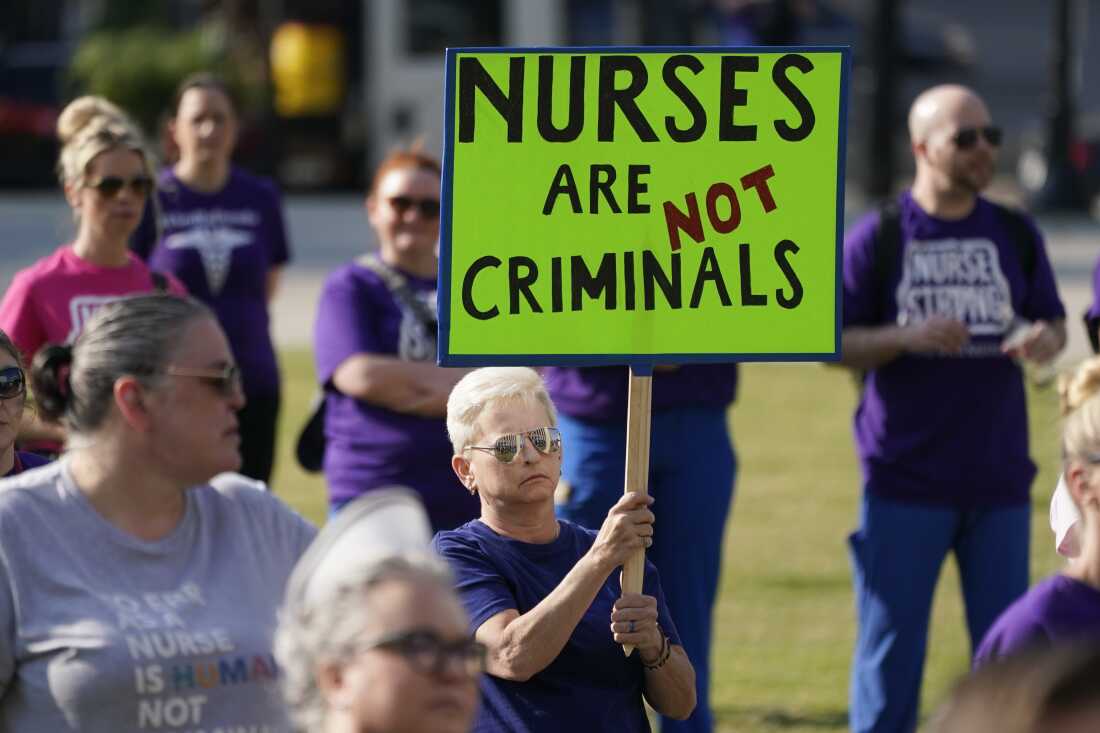
People gather outside the courthouse following the sentencing hearing for RaDonda Vaught on May 13, 2022, in Nashville, Tenn.
In 2022, RaDonda Vaught faced a jury that ultimately found her guilty of negligent homicide and neglect of an impaired adult. Her charge stemmed from a 2017 medication error at Vanderbilt University Medical Center, which resulted in a patient’s death. Vaught received a sentence of three years probation and lost her nursing license.
Post-trial, Vaught transitioned to a new life as a full-time farmer. Living on a sheep farm north of Nashville in Bethpage, Tennessee, she sells eggs at local farmers markets and supplies meat to butchers and restaurants. Offers to speak about her experience began arriving roughly a year into her probation.
This trial attracted considerable attention nationally. The healthcare sector showed an interest in hearing what Vaught had to say. Her speeches aim to shed light on the multiple factors surrounding the fatal medication mix-up in a healthcare environment increasingly reliant on automation and artificial intelligence. Vaught seeks to emphasize the complexities that led to the error.
Vaught’s speeches serve a dual purpose. They provide her with an income, replacing her former nursing salary. She delivered her story more than 20 times last year, earning between $5,000 and $10,000 per event. Yet some criticize her speaking as profiting from a tragedy.
Audience reactions, however, reflect both interest and empathy. Charlene Verga, who invited Vaught to a nursing conference in Massachusetts, noted Vaught’s ability to transform her mistake into a vital teaching opportunity.
Initially thinking the speaking engagements might be temporary, Vaught found herself adept at public speaking, despite the emotional challenges it posed. She recounted the first significant talk to hundreds of industry professionals, describing it as overwhelming and cathartic.
Vaught’s story aims not only to highlight the error but to inspire systemic changes within healthcare. Her stance is clear: humans make mistakes, and healthcare systems need structures where failures don’t lead to fatalities.
In recalling the incident with patient Charlene Murphey, Vaught discusses how a search error in retrieving the medication Versed led to the fatal administration of vecuronium — a powerful paralytic.
Testimonies during Vaught’s trial revealed that overrides were common practice amid technological updates at the hospital. However, the sequence of errors culminated in tragedy as Vaught overlooked warnings on the drug, including a clear label about its paralyzing nature.
Vaught pled not guilty, arguing broader systemic issues contributed to the mistake, like problems with the hospital’s electronic health records. Inquiry into the case showed Vanderbilt’s shared responsibility. They initially failed to report the error and misleadingly suggested the patient died of natural causes.
Vaught’s ability to discuss details publicly contrasts with the silence of the Murpheys, restricted by a settlement agreement. Nurses have shown solidarity, demonstrating support and raising funds for her defense during her sentencing.
Vanderbilt has declined to comment on lessons learned. Updates from companies producing drug-dispensing cabinets reflect efforts to prevent similar incidents, introducing more stringent medication search requirements.
Responding to Vaught’s case, Kentucky passed a law in 2024 granting immunity for healthcare errors, supported unanimously.
Matthew Garvey, a nursing consultant and former colleague of Vaught, was motivated by her case to enter law school, aiming to defend nurses facing similar challenges. While he believes accountability is necessary, he emphasizes the significance of Vaught’s narrative in fostering dialogue.
Garvey regards Vaught’s speeches as a therapeutic outlet, resonating with nurses nationwide grappling with fears of repercussions from errors.
“We can’t change what happened. We can only change what we do moving forward,” Garvey stated, underscoring the impact and constructive potential of firsthand narratives.
This article represents a collaboration between NPR, Nashville Public Radio, and KFF Health News.
Leave a Reply