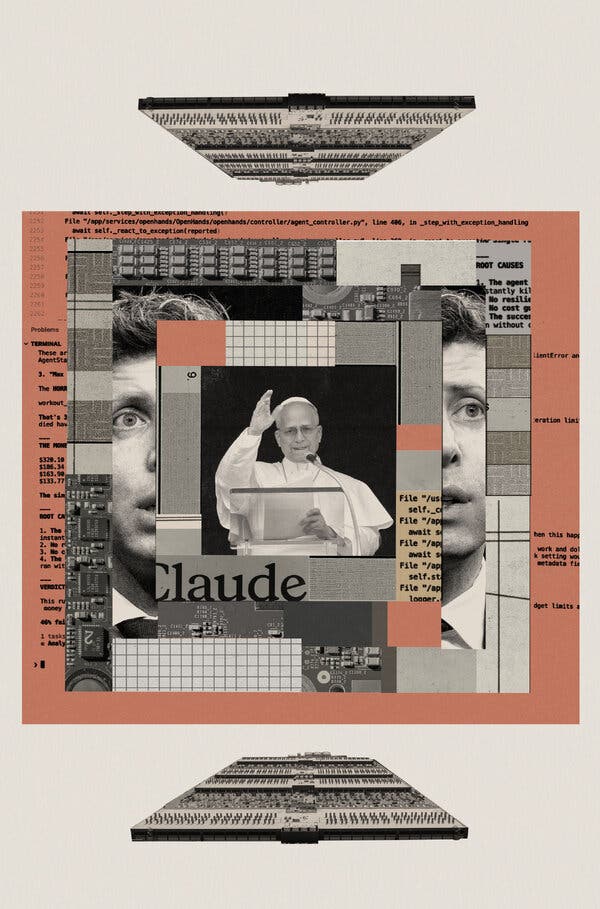
Since the boom of digital technology, Silicon Valley has pursued ambitious goals. Its journey goes back to when computers occupied entire rooms.
An old tech industry joke involves a programmer asking a computer, “Is there a God?” The machine replies, “There is now.” This mirrors the sentiment from the Whole Earth Catalog, a resource that greatly influenced Steve Jobs. The catalog suggested, “We are as gods and might as well get good at it.” By pouring billions into artificial intelligence, tech leaders are claiming these dreams are becoming reality. Their ambition extends to reaching a state of transcendence.
As AI’s influence seemed to tighten its grip on humanity’s future, an unexpected voice is emerging with a different message. The call is to the tech sector: reduce speed. Focus on elevating human values. Remember, machines are not deities.
Pope Leo XIV, notable as the first American pope, introduced his initial encyclical titled Magnifica Humanitas, or “Magnificent Humanity.” This document, stretching over 42,300 words, was launched with significant ceremonial importance. While it holds a tone of respect, the encyclical subtly criticizes Silicon Valley’s claim as the sole architect of the future.
Recognizing AI’s potential benefits, the pope stated, “A.I. can be a valuable tool.” Yet, he highlighted a concern: technology “tends to amplify the power of those who already possess economic resources, expertise and access to data.” Without proper oversight and transparency, he cautioned, “those who control A.I. will impose their own moral vision, which will become the invisible infrastructure of these systems.”
Leave a Reply