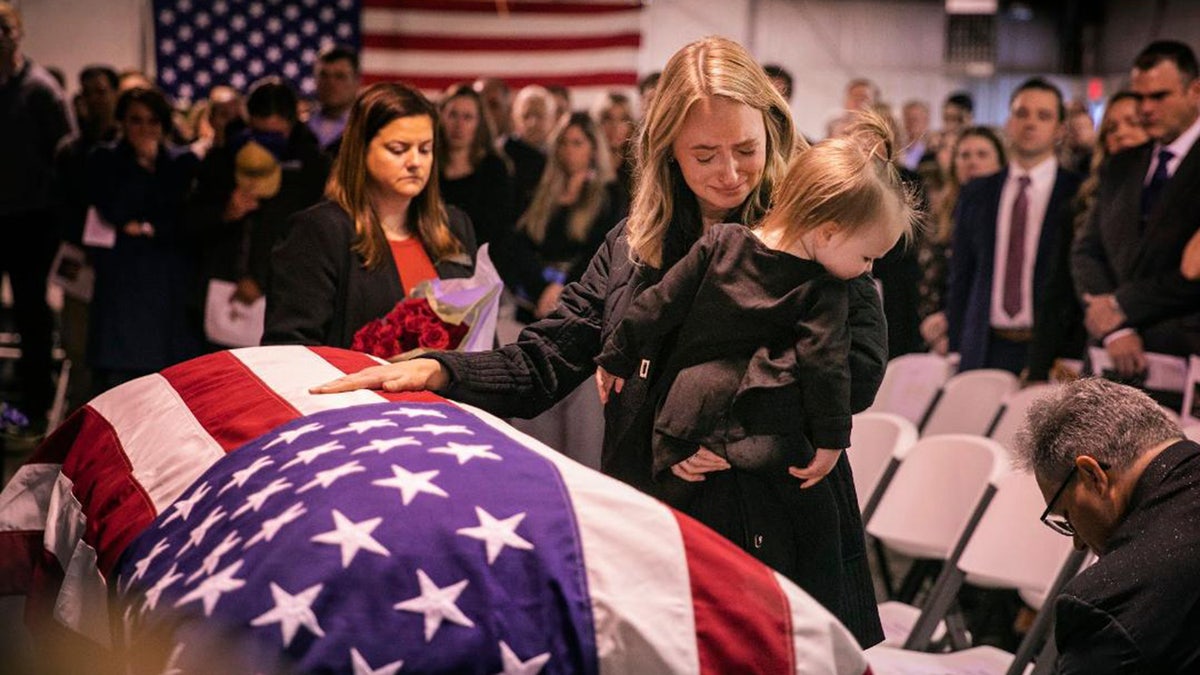
Veterans Affairs Secretary Doug Collins reflects on the profound costs of war, emphasizing the sacrifices of those who never returned. He calls for remembrance and the honoring of their memory.
On November 2, 2023, I lost my husband, Andy, in a Humvee accident. He died during an Army Reserve training exercise in Virginia as a captain, a few months before his 28th birthday. Our daughter, Adalyn, was only 17 months old. We were building a home and had plans to purchase a 200-acre farm. By 2:20 that afternoon, none of our dreams mattered. A call confirmed our worst fears. The world felt like it was collapsing.
Three days later, we traveled to Virginia Commonwealth University trauma center in Richmond to bring Andy home. A hearse awaited us. Meeting us was Andy’s commanding officer, maintaining a somber, stoic composure. As he embraced me, his demeanor cracked; he fell to his knees in grief.
The trip home seemed destined to be a quiet journey, modest vehicles trailing behind a hearse. Instead, tributes greeted us. At the first overpass, an American flag hung on a fire engine, with uniformed firefighters saluting. This was for Andy and us. More overpasses revealed similar displays of respect—firefighters, fellow Americans, and civilians all stood in homage.
Passing around 35 overpasses, each held their own touching tribute. Firefighters, heroes themselves, saluted a soldier they had never met. Others pulled over to the roadside to show their respects. Our friend Josh had orchestrated this tribute, ensuring a heartfelt homecoming spread across our journey.
Josh, a volunteer firefighter, knew whom to contact to create support along our route. His wife arranged photographic documentation of Andy’s final journey. Officers cleared paths for us, providing unimpeded access—a mark of distinction usually reserved for dignitaries—and a touching surprise none of us had anticipated.
As we neared home, farmers—people Andy served in agriculture—gathered with their equipment along Route 81. They, too, saluted as we passed. Despite differences in beliefs or backgrounds, they unified in respect.
The journey extended due to these tributes, turning a two-and-a-half-hour drive into four hours. Each salute, each flag, each show of solidarity highlighted what Memorial Day embodies.
In truth, Andy’s death was stateside, during training, not in combat. Yet, the distinction meant little to those who honored him along the way. The respect paid demonstrated that wearing the uniform warranted honor, regardless of how or where his duty concluded.
On Memorial Day, I contemplate those who stood for Andy: firefighters, farmers, neighbors, and strangers lining the highway. They never knew Andy, yet stood for him, illustrating Memorial Day’s true meaning—a day for remembrance, not commercialism or leisurely weekends, but a nation showing respect and gratitude.
Leave a Reply