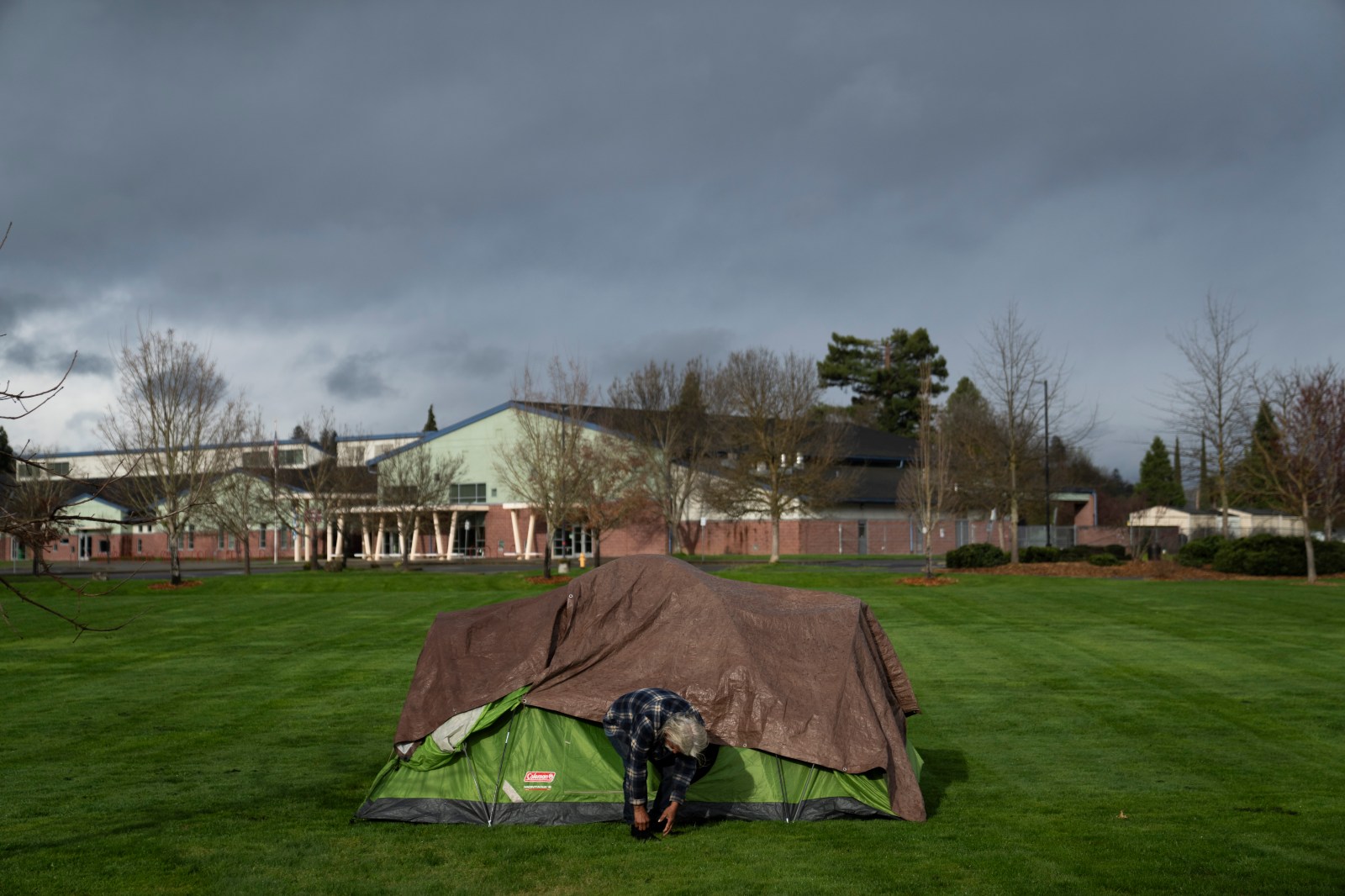
Increased Homeless Encampment Sweeps in Oakland
Recent research highlights a significant rise in encampment sweeps in Oakland, California, following a key Supreme Court decision. The peer-reviewed study, published in the American Journal of Public Health, revealed that these sweeps more than doubled after the court expanded city powers over homelessness management in 2024.
Supreme Court Ruling: City of Grants Pass v. Johnson
In June 2024, the Supreme Court ruled on City of Grants Pass v. Johnson, impacting how cities can enforce anti-camping laws. The case centered on an Oregon city penalizing people experiencing homelessness for camping outdoors when shelters were unavailable. Despite earlier opposition from plaintiffs and a contrary ruling from the Ninth U.S. Circuit Court of Appeals, the Supreme Court’s 6-3 decision upheld the city’s right to enforce such ordinances, noting they do not violate the Eighth Amendment’s ban on cruel and unusual punishment.
Research Findings
The study utilized 785 reports from a City of Oakland database, noting an increase in sweeps after the Supreme Court’s decision. Prior to the ruling, Oakland conducted an average of 14.4 monthly closures; the number surged to 32.2 post-ruling. Notably, both new and repeat closures rose, indicating frequent displacement without resolving the issue. One encampment faced closure 18 times over four years.
Race and ethnicity influenced closure locations, with increased activity in areas predominantly home to Hispanic and Black residents. The study suggests two interpretations: expanded enforcement capabilities or new encampments emerging from earlier sweeps.
Expert Insights
“Do sweeps actually work? Are they effective? They cost a lot of money,” posed Jamie Chang, a University of California Berkeley associate professor and senior author of the study.
Chang questioned the repetitive nature and potential costs of sweeps, casting doubt on their effectiveness in managing homelessness. Co-author C.J. Gabbe from Santa Clara University further expressed concern that sweeps disperse groups without addressing homelessness, merely shifting vulnerability.
Homelessness in the United States
Homelessness remains a pressing issue in the U.S., driven by limited shelter capacity and affordable housing shortages. The U.S. Department of Housing and Urban Development’s 2024 report noted California as having the largest homeless population, with about 187,000 individuals, followed by New York. The overall national count reached over 770,000 in January 2024, an 18% increase from the previous year.
President Donald Trump pledged action, signing an executive order in March 2025 for the National Park Service to clear encampments and graffiti on federal lands in Washington D.C.
Leave a Reply