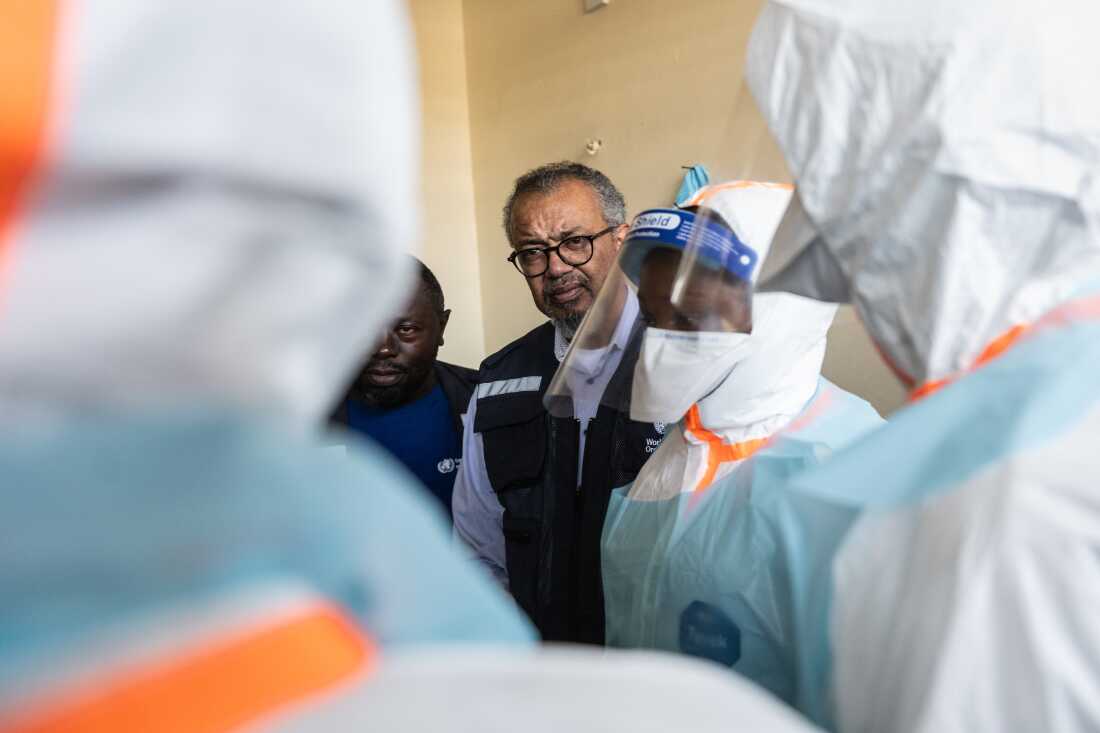
Director General of the World Health Organization (WHO), Dr. Tedros Adhanom Ghebreyesus, visited health workers at the Evangelical Medical Centre (CEM) in Bunia, Congo, on May 31, 2026. His visit comes as Congo reports at least 282 confirmed cases of Ebola, with most cases focused in the eastern Ituri province. The Ministry of Health announced these details late on Sunday, highlighting the central African nation’s ongoing struggle.
The outbreak centers around the Bundibugyo virus, a species of Ebola with no approved treatment or vaccine. Over 1,000 suspected cases have been noted. Key challenges in managing the outbreak include early detection, rapid isolation, rigorous contact tracing, and infection control. At present, contact tracing coverage stands at 45%, with 220 suspected cases under investigation.
Individuals who have recovered from the disease expressed their joy. Baraka Bulambulu, a nurse, shared that his final Ebola tests were negative, speaking of the relief of surviving the illness. Ezo Étienne, another nurse who recovered, recounted his symptoms beginning with dizziness during ward rounds.
The WHO confirmed that the five survivors are health workers—four nurses and a laboratory worker. Treatments have primarily addressed symptoms. Dr. Tedros praised the survivors, stating, “Your courage gives hope and your living story, that this outbreak can be stopped.”
Uganda, Congo’s neighbor, reported nine cases and closed its border to prevent further spread. Although Ebola outbreaks have frequently occurred in the region, the Bundibugyo virus remains rare. The lack of approved vaccines and treatments, combined with remote locations and local violence, complicates the response efforts.
Despite these challenges, Dr. Dieudonne Mwamba Kazadi, director-general of Congo’s National Institute of Public Health, described recoveries as “a victory worth celebrating.” He emphasized the importance of seeking early care in designated health facilities for recovery from Ebola.
Leave a Reply