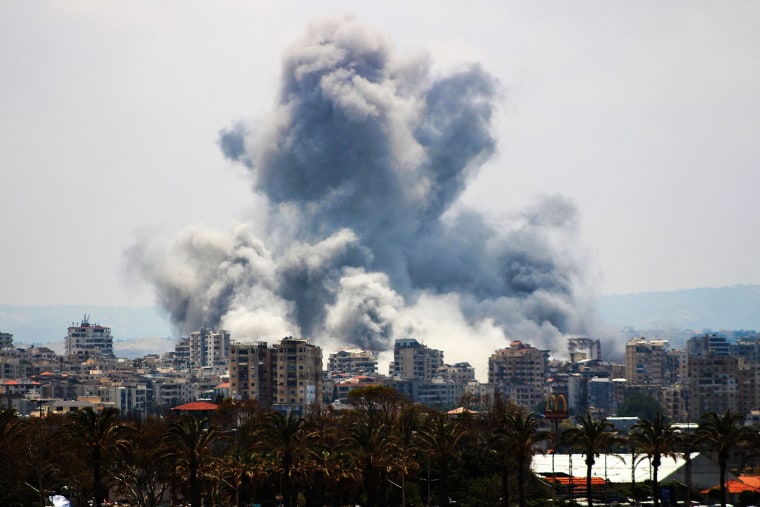
On June 1, 2026, Israeli Prime Minister Benjamin Netanyahu ordered airstrikes on Hezbollah-controlled areas in the southern suburbs of Beirut. This decision increased tensions amid efforts to mediate the ongoing U.S.-Iran conflict. Esmaeil Baghaei, a spokesperson for Iran’s foreign ministry, highlighted that these Israeli attacks contributed to delays in diplomatic processes to end the war.
The Israeli military, under the direction of Netanyahu and Defense Minister Israel Katz, targeted “terrorist locations” in Dahiyeh. This area has seen only two strikes since a Lebanon ceasefire was declared on April 16 by U.S. President Donald Trump. Previously, Israel had bombed Dahiyeh heavily during the early weeks of the conflict.
A smoke plume visible from Tyre marks the aftermath of an Israeli airstrike on Monday.
The escalation followed intensified clashes over the weekend, during which Israeli troops seized the 900-year-old Beaufort Castle. Netanyahu further instructed the military to broaden their ground operations.
According to Lebanese officials, Israeli assaults have led to over 3,370 fatalities in Lebanon since March 2. Hezbollah initiated these hostilities in support of Iran against U.S.-Israeli attacks. During the same period, Israel reported 24 soldier casualties and four civilian deaths.
Israel established a self-declared security zone in southern Lebanon, clearing out villages to allegedly protect northern Israel from Hezbollah fighters embedded within civilian regions. This conflict became the most lethal spillover of the U.S.-Israeli tension with Iran, causing over one million Lebanese to flee their homes.
On Sunday, Netanyahu commanded the expansion of “ground maneuvers in Lebanon” to “enhance and broaden control over Hezbollah-dominated areas.” Despite a declared ceasefire, Hezbollah stated they carried out 21 operations against Israeli targets, including a rocket launch at Nahariya.
An Israeli flag flies atop Beaufort Castle, locally known as Qalaat al-Shaqif.
In response to the escalating violence, France called for an emergency United Nations Security Council meeting. The U.S. facilitated discussions between the governments of Israel and Lebanon, even as Hezbollah objected. U.S. Secretary of State Marco Rubio spoke to both Lebanese President Joseph Aoun and Prime Minister Netanyahu, suggesting a “gradual de-escalation” strategy.
The U.S. proposal required Hezbollah to cease all attacks on Israel. In return, Israel would halt further escalation in Beirut. The plan intended to create a pause, allowing for a cessation of hostilities.
Lebanese Parliament Speaker Nabih Berri offered to ensure Hezbollah’s commitment to the ceasefire but insisted that Israel must first cease its aggressive actions. As a Hezbollah ally, Berri emphasized the question of who will enforce Israel’s withdrawal from aggression.
Leave a Reply