In Mexico City, Santiago García wears no religious symbols around his neck, yet a Boca Juniors necklace holds a special significance. Years ago, when García’s grandmother was critically ill, he placed his cherished necklace around her neck. He believed in the power of his team’s emblem. «Boca will save you,» he whispered to her. To him, it worked, and the necklace now belongs to her.
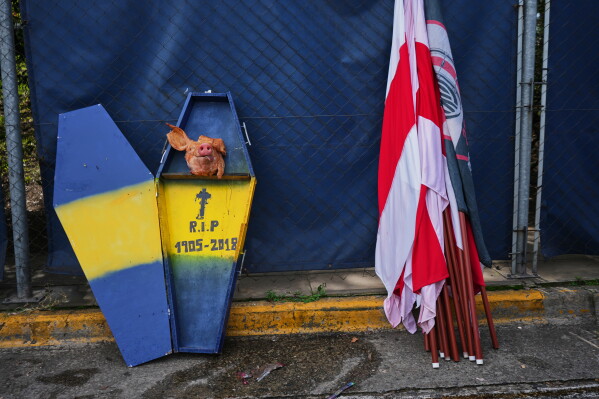
García’s devotion to Boca Juniors reflects the deep-rooted passion for soccer in Latin America as the region anticipates the 2026 World Cup. From Argentina to Mexico, soccer isn’t just a game, it’s part of everyday life. It inspires rituals and beliefs tied to the sport. A cardboard coffin in Buenos Aires, decorated with Boca Juniors colors, stands testament to this fervor.
«There has been an emotional connection between the public and their soccer teams for a long time,» Mexican analyst Erick Fernández stated. «It fosters identity and bonds that make us feel part of a sporting process that represents us.»
In Argentina, Lionel Messi’s homeland, sports passion often runs in families. Club loyalty grows stronger over time. A prime example is Pope Francis, a lifelong fan of San Lorenzo, who calls soccer the world’s most beautiful game.
García’s love for Boca Juniors was inherited. His father shared this loyalty. Initially, García’s mother supported another team, but she too became a Boca fan after meeting his father. Devotion to a club often passes from generation to generation.
García may have parted with his necklace, but Boca’s influence is still strong. At 17, he tattooed a phrase from the club’s anthem on his body. More than a decade later, the words remain as significant as ever. «It belongs to a song that is like a chant of war for us,» he explained. «It’s like saying: ‘No matter the storm, no matter what happens, we will always be there for you.’»
Pope Francis once told a crowd that soccer’s beauty lies in its collective spirit. Fans also share in a sense of community. They sing anthems, cry over victories and defeats, and embrace strangers during matches, creating bonds similar to religious devotion.
«Each person can support a team, but the sense of togetherness that generates ‘communitas’ — a word associated with religion — is only possible when people gather,» said Argentine anthropologist Eloísa Martín.
This collective identity can lead to both positive and negative outcomes. Fans sometimes react violently to perceived attacks on their community, yet this bond also fosters solidarity. They may help fellow supporters simply because they share club loyalty.
In Rio de Janeiro, Adilvania Santos, a dedicated Fluminense supporter, shared how soccer became a source of solace during tough times. «I get emotional talking about Fluminense,» she said, noting her love for the club as a central part of her life. She attends games despite living nearly 100 km from Rio.
«Soccer deeply moves Brazilians because it creates a sense of belonging, identity, and hope,» priest Jeferson Mengali explained.
He has long supported Corinthians, conducting Masses for the team and leading prayers for peace before matches. While not all fans pray, many engage in rituals they believe influence game outcomes. In Argentina, these are known as «cábalas» and became popular in the 1990s.
Cábalas vary greatly. Some drink from the same cup, sit in designated seats, or wear specific clothing during matches. These rituals continue if the team wins, but are abandoned if unsuccessful. A fan’s absence from a game can even feel like a sacrifice for victory.
In the García household, his father sits in a particular chair if Boca performs well. If the opposing team scores, he switches seats. His mother cleans rather than watches, frequently asking about the score.
García’s current cábala involves wearing the same jersey throughout the season and carrying an image of Diego Maradona. After Maradona passed away, he was quickly revered almost like a saint.
Argentines rarely refer to him by surname. They affectionately call him «El Diego.» According to Martín, «Maradona is the player, while ‘El Diego’ is the one people turn to like a family member when they need help.» Sacredness, it seems, requires community recognition.
Latin American soccer fans hold personal idols like Diego Maradona or Pelé in high regard. In Chile, Héctor Hermosilla treasures a portrait of David Arellano, founder of the Colo Colo club. Hermosilla’s dedication led him to sell merchandise to fund travel across Chile to support his team.
Despite technological changes, Hermosilla continues to attend games, adhering to rituals honoring Arellano. For Hermosilla, Arellano is a guiding figure akin to a deity.
The Associated Press received support for religion coverage through collaboration with The Conversation US, funded by Lilly Endowment Inc. The AP remains solely responsible for this content.
Leave a Reply