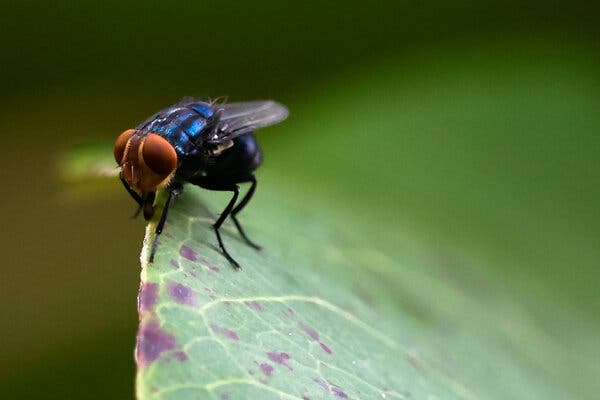
The New World screwworm, a fly whose larvae consume the tissue of animals, has been found in a 3-week-old calf in La Pryor, Texas. This marks the first U.S. detection in cattle since the eradication in the 1960s, confirmed by the Agriculture Department on Wednesday night.
Agriculture Secretary Brooke Rollins announced, “Immediate steps are being taken to contain and eradicate this case in South Texas.” If further cases emerge, it could severely impact the American cattle sector, as untreated infections are lethal.
For months, the Agriculture Department has anticipated the screwworm’s potential return to the U.S. Although eradicated from North and Central America by the mid-2000s, the pest was spotted in November 2024 at the Mexico-Guatemala border.
Screwworm flies have limited mobility but can spread with infected animals transported elsewhere. Over 20,000 instances in Mexico have led to a ban on Mexican cattle entering the U.S. for more than a year.
The flies do not affect fruit or vegetables. The Agriculture Department’s Food Safety and Inspection Service guarantees the safety of all beef, poultry, and eggs.
A 20-kilometer quarantine, termed an “infested zone,” has been declared. Increased surveillance and restrictions apply to the movement of warm-blooded animals. Both the Agriculture Department and the Texas Animal Health Commission have deployed veterinarians and officials to the affected area.
Millions of sterile New World screwworm flies are being released aerially and by truck. This strategy involves sterile flies mating with wild females, promoting eradication. Currently, a Panama facility creates about 100 million sterile flies weekly.
The U.S. Army Corps of Engineers is building a $750 million facility at Moore Air Base, Edinburg, Texas. By late 2027, it will produce 100 million sterile flies weekly, eventually up to 300 million.
Leave a Reply