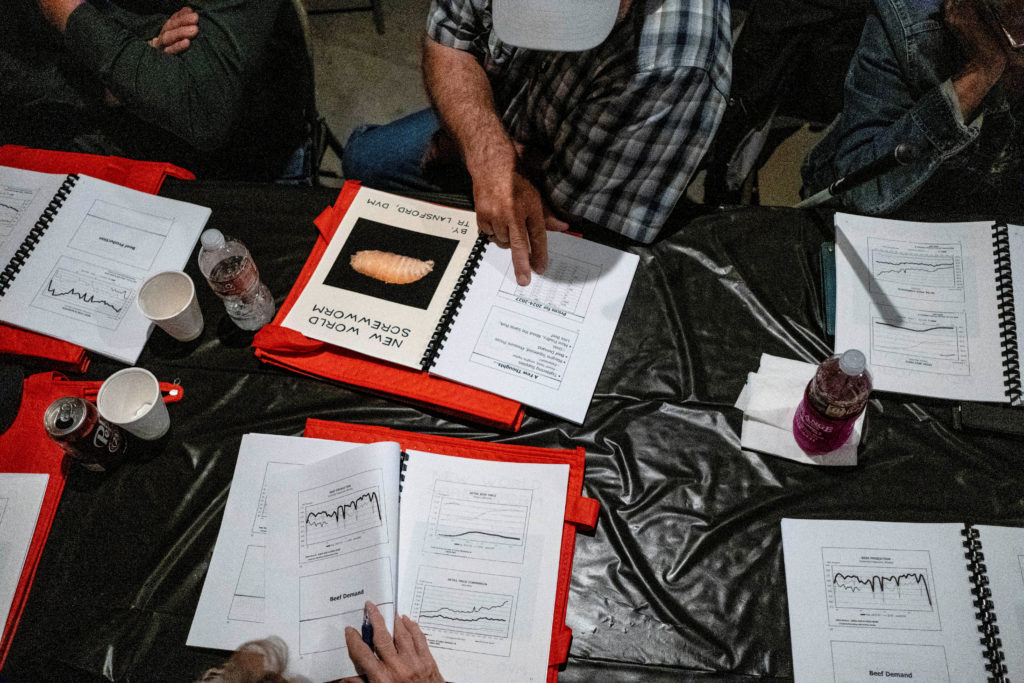
The New World screwworm fly has made a return to south Texas. This is an alarming development that the U.S. Department of Agriculture confirmed recently. The flesh-eating larvae of this parasite pose a threat to the cattle industry, marking their first serious appearance since the 1970s. It is a significant development as this is only the third incidence of such a threat in the U.S. over the decades.
Immediate Response to the Threat
Agriculture Secretary Brooke Rollins has reported that the current case involves a 3-week-old calf in La Pryor, Texas. This location is approximately 50 miles from the Mexico border. To contain the situation, Texas State Veterinarian Bud Dinges established a 12-mile quarantine zone. This measure prohibits the movement of any warm-blooded animals, including pets, without an inspection. Officials have reassured the public that, although the fly’s larvae are a threat to livestock, they do not infest human food.
History and Precautions
The presence of this fly in the U.S. is a rare event. The last confirmed case in Texas was in 1966. This warning has been sounded by U.S. and Texas agriculture officials alongside cattle industry leaders for over a year now. They reminisce about the financial havoc inflicted before the screwworm’s eradication in the 1970s.
A range of preventive efforts has been implemented to prevent infiltration by dropping millions of sterile screwworm flies to mate with wild females. This method was previously successful in eradicating the fly. Rollins remains confident in the USDA’s preparations and states that there is no threat of a mass infestation in the country.
Efforts to Contain the Threat
Recently, Rollins held a news conference highlighting the threat’s proximity. Reports confirm cases as close as 25 miles from the U.S. border in Mexico. The screwworm fly, originally a tropical menace, was absent from the U.S. after being contained in Panama until 2024.
The lifecycle of the fly involves female flies laying eggs in open wounds or mucous membranes. These hatch into larvae that feed on the flesh. Immediate treatment is necessary as infestations can be fatal. An instance in August 2025 involved a Maryland resident returning from El Salvador, which was contained without further transmission.
Expansion of Facilities
The USDA allocated $21 million to revamp a fruit-fly breeding facility in southern Mexico for breeding screwworm flies. This facility should be operational soon. Additionally, a center for dispersing sterile flies opened in southern Texas, alongside new construction for a $750 million screwworm fly factory.
To further manage the threat, officials deployed 8,000 fly traps along the U.S.-Mexico border, with extensive testing on fly samples and wild animals. Rollins defended closing livestock imports across the border to prevent screwworm travel. Importantly, the fly does not travel far distances independently.
Public Cooperation Required
Dinges emphasizes the critical role of ranchers and pet owners in respecting the quarantine. Their cooperation is vital to prevent the pest’s further movement. By adhering to guidelines, the spread can be controlled effectively.
“Please help us prevent any further movement of this pest by staying put,” said Dinges.
Support trusted journalism and civil dialogue to preserve democracy.
Leave a Reply