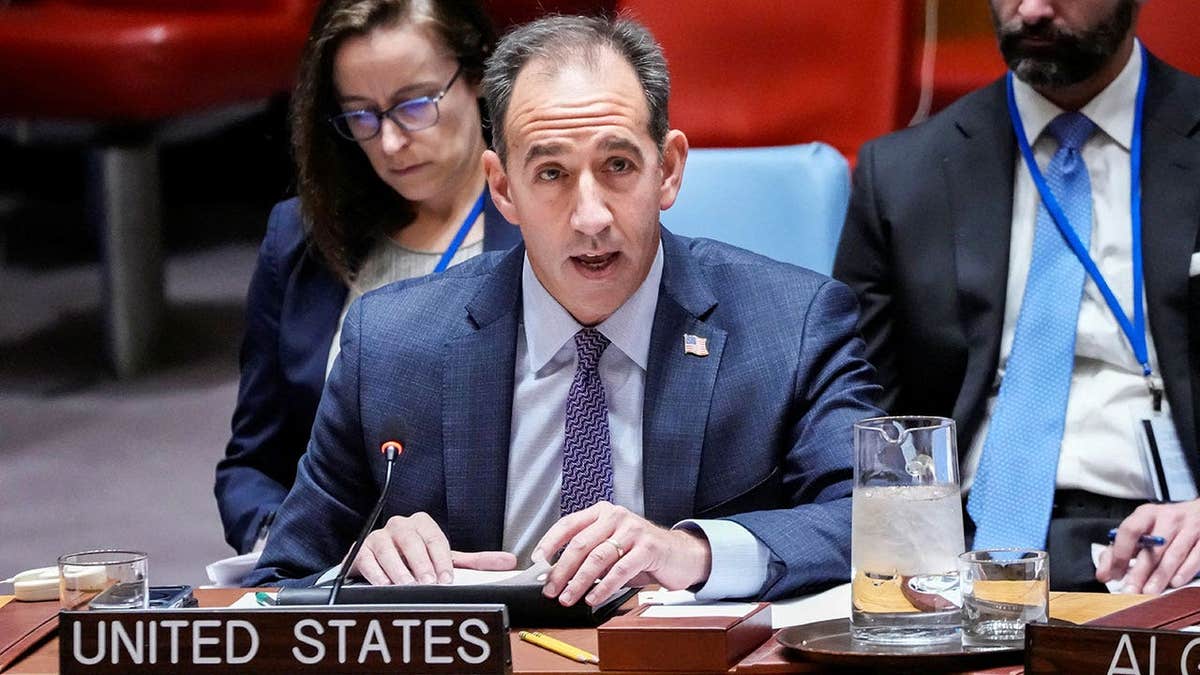
Jeff Bartos, a Pennsylvania businessman nominated by former President Donald Trump, appeared before the Senate Foreign Relations Committee in 2025. He sought confirmation to become the U.S. ambassador for United Nations Management and Reform. Despite skepticism over the viability of his role, Bartos has made strides in reforming the organization.
Approach to Reform
Bartos outlined a campaign aimed at reshaping the United Nations, an entity often criticized for inefficiency and straying from its founding mission. The Trump administration tied future U.N. funding to reforms as the institution faced financial challenges, with a severe cash crunch threatening its operations.
Bartos recalled lawmakers’ skepticism: “UN reform? That’s an oxymoron if I’ve ever heard one.”
Through negotiations among member states, the U.N. successfully cut approximately $570 million from its regular budget and eliminated 2,900 positions. Bartos highlighted these as unprecedented achievements that required consensus among all 193 member states.
Financial Challenges and Strategic Changes
The U.N. Secretary-General António Guterres has echoed concerns over a liquidity crisis. Delayed payments from member states, particularly the United States, have exacerbated financial pressures. Bartos emphasized a shift in organizational culture toward efficiency, including changes such as reimbursing countries for deployed equipment in peacekeeping missions rather than for mere presence.
These adjustments could save an estimated $30 million annually. Bartos sees these reforms as a down payment, with ongoing focus on employee compensation and pension systems, aiming to redirect resources toward humanitarian initiatives.
Diverging Opinions on Reforms
U.N. officials contend that reform efforts originated with Guterres. Spokesman Stéphane Dujarric referenced the UN80 initiative, which targets system efficiency improvements. Despite differing perspectives, Bartos credits U.S. pressure for accelerating reform discussions.
As the U.N. searches for Guterres’ successor by 2026, Bartos maintains that reform will remain a centerpiece of candidate evaluations, with the need to streamline operations and reaffirm foundational goals.
Addressing Institutional Bias
The U.S. administration has also been active in challenging alleged anti-Israel biases within the U.N. Following the inclusion of Israeli security forces on a blacklist of entities credibly accused of sexual violence patterns, tensions have heightened.
U.S. Ambassador to the U.N. Mike Waltz and Bartos are pushing to dismantle these entrenched biases through diplomatic means. The U.N. counters that it has established a formal Action Plan to Combat Antisemitism.
Stephan Dujarric noted that member states drive U.N. human rights mechanisms, not the Secretary-General directly. Engagement at the state level is vital for addressing content and tone concerns.
Bartos remains committed to reform, seeing the task as an endurance challenge requiring strategic planning and focus, akin to his experiences with demanding athletic pursuits.
Leave a Reply