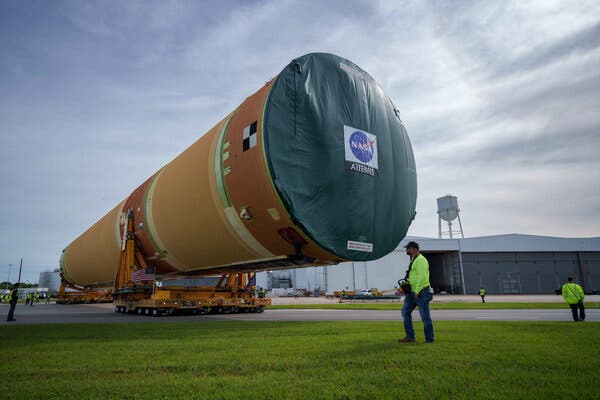
NASA has outlined its ambition to return humans to the moon’s surface for the first time in over half a century. Artemis III is the third mission in a series designed to achieve this goal. If successful, the mission sets the foundation for a permanent lunar presence and potential future missions to Mars.
The recent Artemis II mission sent four astronauts around the far side of the moon on a 10-day journey. Artemis III, however, will take a different approach. This mission will orbit Earth to test NASA’s Orion spacecraft’s ability to rendezvous and dock with one or more lunar landers.
NASA plans to conduct space maneuvers during this flight, which are vital for future Artemis missions. In an actual lunar landing scenario, astronauts would transfer to a lander docked to the Orion spacecraft. This lander would then ferry the crew from lunar orbit to the moon’s surface and back.
Two companies, SpaceX and Blue Origin, are developing landers for the Artemis program. NASA may use one or both landers for the Artemis III mission.
Originally slated for 2028, the first lunar landing attempt in decades was moved to mid-2027 due to a program timeline overhaul announced in February. Conducting tests in low-Earth orbit rather than near the moon simplifies Artemis III and reduces risk.
This approach also allows more frequent flights with NASA’s Space Launch System rocket and Orion spacecraft, aiding engineers in identifying and resolving issues with the rocket or spacecraft.
Many details about Artemis III remain unclear, such as the mission’s duration, whether astronauts will attempt to enter a lunar lander after docking, and if any scientific research will occur. NASA plans to update on progress and mission specifics during the crew announcement on Tuesday.
Leave a Reply