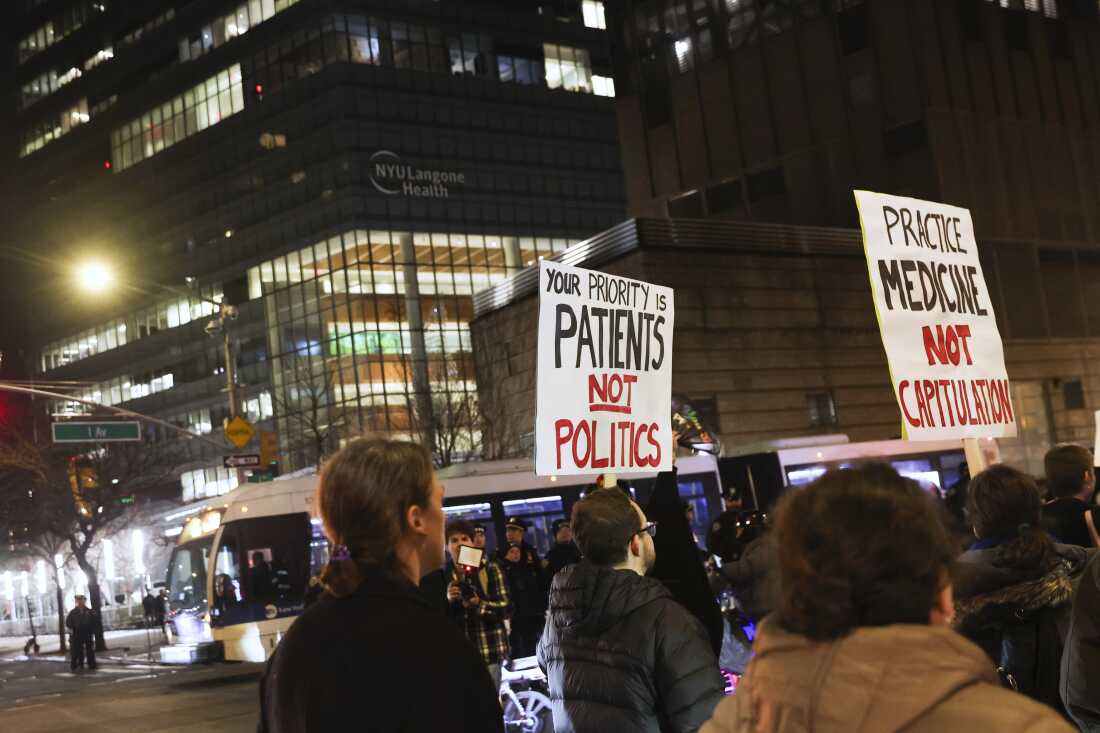
Supporters advocating for healthcare for transgender youth recently rallied outside NYU Langone Hospital in New York City. Their demonstration occurred amidst a significant legal development in California. Families of transgender youth received reassurances that their private medical records will not be handed over to the Trump administration at this time. A federal judge has temporarily prohibited California hospitals from complying with criminal subpoenas from the Department of Justice (DOJ).
Federal Subpoenas and Government Inquiry
For nearly a year, the DOJ has issued subpoenas to hospitals, demanding detailed records of transgender youth and related healthcare providers. Though the government has not explicitly stated their investigative aims, they align with President Trump’s intent to cease gender-affirming care for minors. Initial administrative subpoenas faced legal challenges, leading to the current use of criminal subpoenas, which involve a Texas federal court’s grand jury. Public disclosures, like one from NYU Langone Medical Center, indicate multiple hospitals have received these subpoenas. The administration refers to such healthcare as “sex-rejecting procedures.”
Legal Resistance and Advocacy
Shannon Minter, from the National Center for LGBTQ Rights, describes these subpoenas as harassment. He argues they aim to intimidate and deter doctors and frighten families. A recent legal victory in California is noteworthy, as families receiving care at Lucile Packard Children’s Hospital Stanford filed suit to block the release of their medical records. A federal judge issued a temporary restraining order for the state. The DOJ maintains it seeks to prevent harm to children with legal measures.
Community Response and Ongoing Challenges
Arne Johnson, a parent and activist with Rainbow Families Action, likened the legal victory to a brief reprieve amid ongoing turmoil. He expressed gratitude toward the families and legal representatives involved in the lawsuit, acknowledging their integrity and commitment during challenging times. Despite successes in court, several facilities have ceased providing gender-affirming care due to legal and economic pressures.
Additionally, a Maryland federal judge recently denied a motion to form a nationwide class of families to contest the administrative subpoenas. Craig Konnoth, a health law and LGBTQ rights scholar at the University of Virginia, cautions that the federal actions to seize private records are unprecedented and may have broader implications. He warns of the potential for governmental overreach based on group affiliations.
Leave a Reply