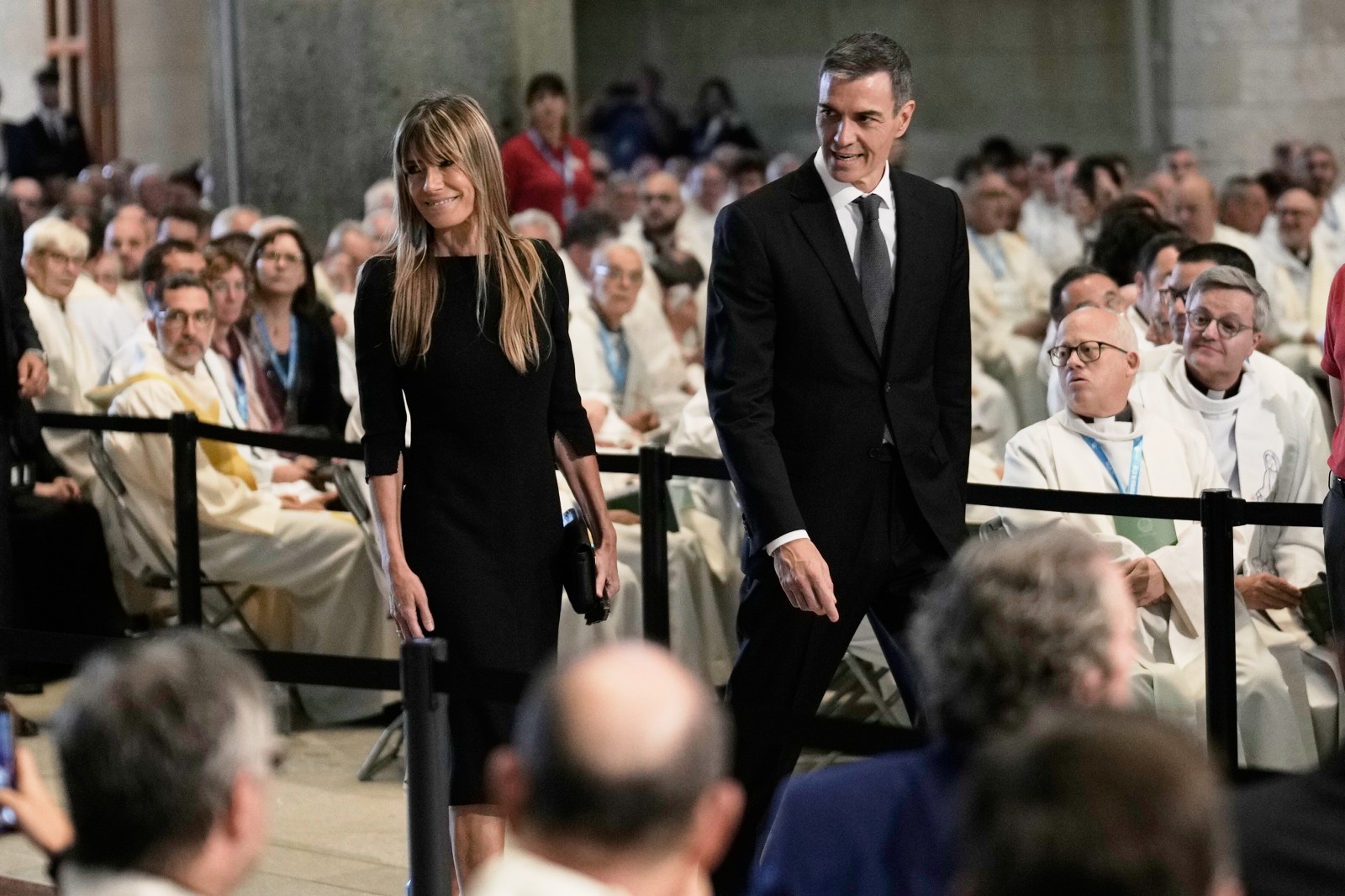
Investigative judge Juan Carlos Peinado has ordered Begoña Gómez, the wife of Spanish Prime Minister Pedro Sánchez, to stand trial on charges of corruption and influence-peddling. Gómez denies any wrongdoing. Pedro Sánchez and his allies within the Spanish Socialist Workers’ Party (PSOE) claim the allegations are politically driven by right-wing opponents aiming to destabilize his government. In contrast, opposition parties view the judicial process as a crucial act of institutional accountability.
Trial and Travel Ban
The judge determined there was enough evidence to proceed with a trial linked to Gómez’s professional and academic activities. Preceding the trial, precautionary measures have been implemented to reduce flight risks, including:
- Passport Surrender: Gómez must immediately hand over her passport.
- Travel Ban: She is legally restricted from leaving Spain.
- Court Reporting: Regular reporting to the court is mandated.
El País indicated that Gómez intends to contest these precautionary measures. A trial date is yet to be confirmed. The proceedings are expected to extend over time due to the extensive examination of financial documents and witness accounts involved. Under Spanish law, Gómez remains presumed innocent until proven guilty.
Allegations Explained
The investigation commenced after a complaint from Manos Limpias, or Clean Hands, an anti-corruption group linked to the political right in Spain. The accusations claim Gómez leveraged her position to influence government contracts awarded to certain technology firms. The judge also accused her of misusing public funds to hire a consultant and improperly using software during her tenure as a professor at a public university.
Gómez maintains her actions were legal and detached from her husband’s governmental role. “Begoña Gómez is innocent,” stated the PSOE. “For two years now, she has been the target of a political and judicial witch hunt. Today’s development is just the latest escalation.” Businessmen benefiting from contracts and consultants tied to Gómez are also set to face trial.
Gómez’s Background
Before Pedro Sánchez assumed office in 2018, Gómez was recognized as a university lecturer and business professional, with expertise in sustainability, innovation, and public-private sector collaborations. Her engagement at Complutense University, especially with projects bridging academic research and industry, is now under scrutiny.
She has participated in official events and international trips, elevating her public profile beyond her career.
The Political Impact
The trial intensifies scrutiny of Sánchez’s government, which has been beset by other corruption inquiries involving individuals closely connected to it. Reuters noted investigations into the prime minister’s former transport minister and a top-ranking PSOE official concerning possible kickbacks relating to public works and contracts related to oil, gas, and pandemic-era masks. They refute these allegations.
Opposition figures assert that Gómez’s case challenges the influence dynamics within Sánchez’s immediate circle. Calls for comprehensive accountability and potential early elections are anticipated to grow as the case advances to trial. Miguel Tellado, secretary-general of the People’s Party, expressed on X, “Sánchez has turned the Moncloa into a den of criminals… Elections now.” Sánchez, poised for reelection next year, remains uncharged in the matter involving his wife.
Trump-Spain Tensions
The case development emerges amidst tensions between Spain and President Donald Trump over Iran, spotlighting disputes between Washington and European allies. Under Sánchez, Spain vocally opposed U.S. actions in Tehran, including the use of Spanish bases and airspace for operations associated with the conflict.
Trump urged stronger alignment from NATO partners against Iran. Spain faces pressure regarding its stance on military involvement, revealing alliance divisions on the appropriate level of response. Though Trump hasn’t publicly addressed Gómez’s case, the political shifts in Spain unfold amid broader international friction and elevated geopolitical stakes.
Leave a Reply