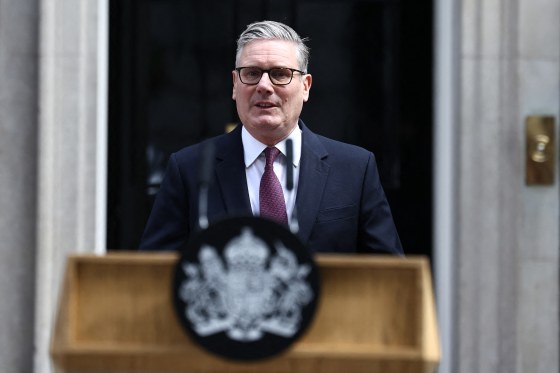
Jun. 22, 2026 – London, United Kingdom – Keir Starmer, the British Prime Minister, announced on Monday that he will resign due to an uprising from within his own Labour Party. His resignation could pave the way for Andy Burnham, his likely successor, to become the next prime minister. This leadership change will mark the seventh prime minister in a span of just 10 years.
Starmer delivered his statement outside No. 10 Downing Street on Monday morning, ending weeks of speculation. He had previously achieved a landslide election victory in 2024 by capturing public sentiment against the Conservative Party’s 14-year rule. However, his tenure has been fraught with scandals and criticism over policy decisions that have not resonated well with the British public.
Calls for Starmer’s resignation intensified following disappointing local and regional election results in May. He faced sharp criticism from within his party, as Nigel Farage’s Reform UK made significant gains, showcasing the challenges Starmer faced.
Andy Burnham, the mayor of Greater Manchester and known as the “King of the North” for his advocacy, openly considered a leadership challenge against Starmer. Burnham’s decisive victory in a special election for a parliamentary seat on Thursday positioned him strongly to lead such a challenge. He emphasized “the change moment” following his election success, highlighting an opportunity to instill hope and demonstrate the positive impact of politics.
Starmer’s difficulty in maintaining the confidence of his party was exacerbated by the resignation of key Cabinet ministers, including Health Secretary Wes Streeting and Defense Secretary John Healey. Streeting criticized Starmer’s indecision, while Healey’s departure was linked to disputes over military funding.
Starmer faced backlash over appointing Peter Mandelson as U.S. ambassador, despite Mandelson’s association with convicted sex offender Jeffrey Epstein. Although Mandelson was eventually removed, the scandal cast doubt on Starmer’s commitment to clean politics.
Economic challenges compounded Starmer’s difficulties, including fallout from Brexit and global conflicts, restricting his capability to implement major reforms. While aiming for fiscal discipline, Starmer was left trying to balance spending cuts with tax hikes.
Flagship projects, such as investments in net-zero emissions and digital ID cards, ended up either diluted or abandoned. These setbacks fueled skepticism over Starmer’s ability to make tactical decisions.
Political analysts like Andrew Barclay, a lecturer at the University of Sheffield, noted Starmer’s struggle to establish a clear government narrative. Tim Bale, a professor of politics at Queen Mary University of London, highlighted the challenges Starmer faced, citing the promises made to progressives clashing with his centrist approach.
Despite domestic struggles, Starmer’s foreign policy handling garnered praise, particularly in dealing with global conflicts. His decision to stay out of the Iran war was recognized as bold by both critics and supporters.
If Burnham is the sole serious challenger, he would be the likely successor without a drawn-out leadership contest. His emphatic election win against Farage’s Reform Party in Makerfield solidified his credentials, marking a significant turning point for Starmer.
The coming leadership transition will see the United Kingdom’s seventh prime minister in a decade, continuing the cycle of instability that began with Brexit.
Leave a Reply