Stocks in the United States declined on Tuesday, influenced by a tech sell-off that originated in Asia. Concerns about potential interest rate hikes by the end of the year have contributed to market instability.
Market Performance
The S&P 500 fell by 0.9%. This comes after achieving gains in 11 of the last 12 weeks, driven mostly by advances in technology stocks. Meanwhile, the Dow Jones Industrial Average, less affected by tech stocks, fell slightly by 8 points, or less than 0.1%, as of 10:42 a.m. Eastern. The Nasdaq composite dropped by 1.4%.
Market declines were evident across Asia, with South Korea’s Kospi index dropping 10%. European stocks also experienced declines.
Technology Stock Influences
Technology stocks contributed significantly to the market downturn, particularly for companies capitalizing on artificial intelligence advancements. Their elevated stock values heavily influence market trends. On Tuesday, although more stocks within the S&P 500 gained than fell, tech companies had a dominating effect.
- Micron Technology saw a decline of 9.7%.
- Nvidia’s stock decreased by 2.6%.
- Samsung Electronics faced a substantial drop of 12.3% in South Korea.
SpaceX showed fluctuations in early trading but was up 1.8% later. The company, engaged in space exploration and AI, plans to secure funding through a bond offering to support AI development.
Interest Rate Concerns
The anticipation of interest rate hikes has lessened the enthusiasm surrounding AI-related stocks. Higher rates could inhibit economic growth, worrying traders. Technology stocks have significantly driven major indexes, reaching record levels throughout 2026. Within the S&P 500, the tech sector alone rose 27% in the last three months and 18% for the year. South Korea’s Kospi has nearly doubled in 2026.
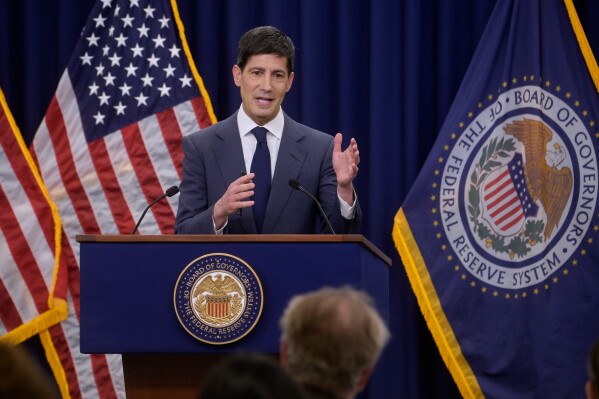
The Federal Reserve may increase interest rates before the year ends. Wall Street estimates an 85% chance of a rate hike, up from 60% the previous week.
Yields on U.S. Treasurys showed minor drops:
- 10-year Treasury yielded 4.49%, down from 4.51% on Monday.
- 2-year Treasury yielded 4.20%, down from 4.24% on Monday.
Inflation and Energy Costs
Inflation has intensified due to tariffs and escalating energy costs during the U.S.-Iran conflict. Consumer price increases reached 4.2% in May, the highest in three years. Another inflation measure expected Thursday predicts a further increase, estimated at 4.1% in May.
Oil prices decreased amid U.S.-Iran negotiations to end hostilities:
- A barrel of U.S. crude fell to $72.60, a 1.7% decrease.
- Brent crude, the global standard, dropped to $76.54, also by 1.7%.
Despite declines, prices remain above $70 levels before the conflict.
AP Senior Producer Mayuko Ono in Tokyo contributed to this report.
Leave a Reply