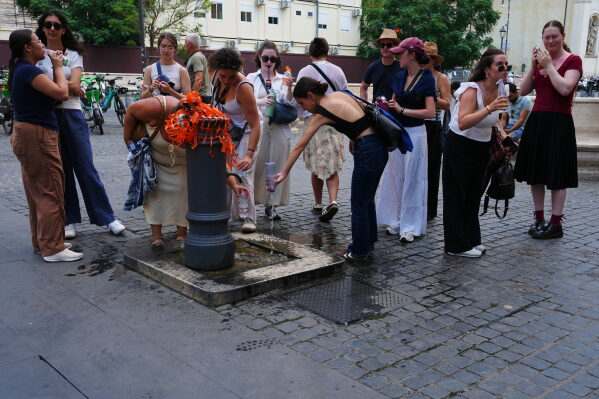
Europe is facing extreme temperatures as an early summer heat wave impacts millions across the continent. Experts attribute this to a weather phenomenon known as a heat dome. Understanding the causes and effects of this phenomenon is crucial.
Understanding Heat Domes
Heat domes occur when high-pressure systems become stationary, trapping heat and humidity over an area for several days. Mireia Ginesta, a research associate at the Climate Litigation Lab, explains that this happens due to a northward bulge in the jet stream. The jet stream is a fast-moving air current at high elevations that influences weather patterns. As the air descends at lower altitudes, it becomes compressed, increasing pressure and temperature.
Jennifer Francis from the Woodwell Climate Research Center explains that heat domes set up conditions for heat waves. While the jet stream creates the heat dome, the resulting heat wave is felt at the surface.
Current Impact in Europe
This week, Europe is experiencing high temperatures due to an early heat wave affecting countries like France, Italy, Spain, and the United Kingdom. Jennifer Francis notes that such brutal heat waves have only become common in Europe recently, often overwhelming local cooling measures.
France has been heavily impacted, with widespread heat alerts and reports of heat-related fatalities. Temperatures are reaching up to 104°F (40°C), leading experts like Liz Bentley from the Royal Meteorological Society to predict breaking temperature records.
Influence of Climate Change
Experts are observing an increase in the frequency and intensity of heat domes due to climate change. According to Jennifer Francis, global warming shifts temperature ranges, making extreme heat more likely. Liz Bentley stresses that climate change contributes to longer-lasting heat waves, affecting nations worldwide.
Staying Safe During Heat Waves
Individuals in affected areas should prioritize hydration, avoid physical exertion during peak heat times, seek shade, and safely cool off in nearby bodies of water. France has implemented measures such as canceling public events and restricting alcohol consumption to mitigate heat risks.
Nighttime heat poses a significant health risk, as bodies need to cool down overnight. Strategies to stay cool at night are vital for health, stresses Jennifer Francis.
For continuous updates, Alexa St. John provides climate coverage and insights through Associated Press reporting.
Leave a Reply