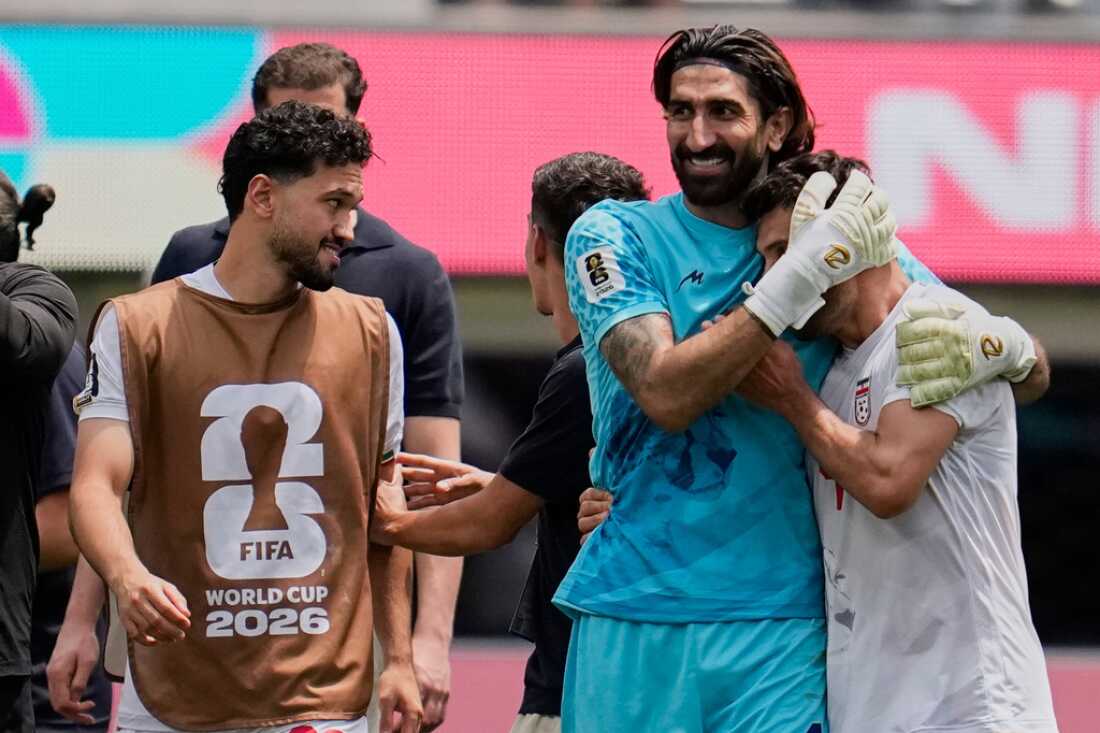
The Iranian national soccer team faces significant challenges in the World Cup, partly due to travel restrictions imposed by the United States. These limitations have sparked dissatisfaction among players and officials as they navigate their group-stage matches.
The team, which has been stationed in Tijuana, Mexico, is set to depart for Seattle for its next match. The U.S. Department of Homeland Security has eased restrictions slightly, allowing the team to enter the country two days before the upcoming game in Seattle. However, they must leave promptly after the match on Friday.
Andrew Giuliani, executive director of the White House FIFA Task Force, indicated that this decision took into account the longer travel time. Iran’s team originally requested to relocate its base camp from Tucson, Arizona, to Tijuana, which was granted just before their arrival.
During previous matches near Los Angeles, Iran was permitted just one day of advance travel, barely meeting FIFA regulations. Coach Amir Ghalenoei emphasized that they were at a disadvantage, having less than 24 hours to prepare for a noon match against Belgium, which ended in a 0-0 draw.
Iran’s captain, Alireza Jahanbakhsh, voiced frustration, asserting a desire for equal treatment compared to other teams. The team had asked for added time to adjust and recover, given the 1,200-mile trip to Seattle.
Travel complications have also arisen on shorter routes. The flight between Tijuana and Los Angeles, typically lasting under an hour, has stretched to five hours. Captain Mehdi Taremi noted this difficulty, occurring just before their match with New Zealand.
Political tensions further complicate matters. U.S. Homeland Security Secretary Markwayne Mullin accused Iran’s team of attempting unauthorized entry of personnel linked to Iran’s Revolutionary Guard. This accusation was strongly refuted by Iran’s soccer federation.
The Iranian players stressed their focus on football, despite the conflict in the Middle East. They have commemorated victims from a missile strike on an elementary school, using symbolic pins with the number 168. This represents the number of people, mostly children, killed in the attack.
After their match in California, Iran left a note wishing peace among nations. Their next training session in Tijuana featured flags bearing the number 168, highlighting their peaceful stance amid ongoing war.
Egypt, Iran’s upcoming opponent, requested early arrival in Seattle after defeating New Zealand 3-1. FIFA denied this due to insufficient security resources. The Egyptian team returned to Spokane, Washington, awaiting further travel.
Leave a Reply