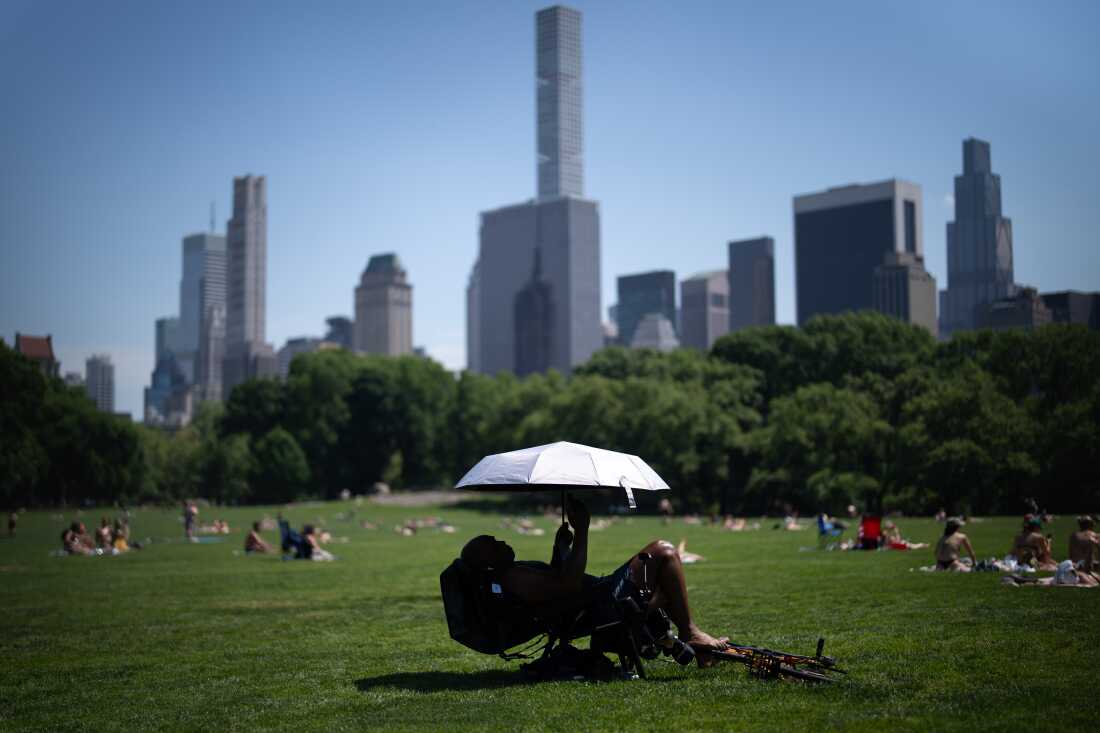
Forecasters indicate that a significant heatwave will affect most American states leading up to and during the July 4 weekend. The National Weather Service (NWS) reported on Sunday that much of the eastern two-thirds of the U.S. will experience dangerously high temperatures.
The extreme heat will pose substantial risks in areas like Ohio, parts of North Carolina, and Washington, D.C., especially for individuals with respiratory conditions and elderly people. According to the NWS, the combination of high humidity levels could push heat indices to 100-110 degrees. The central and eastern U.S. faces a moderate to major HeatRisk, threatening those without adequate hydration or cooling methods.
Communities in Iowa, Missouri, and Kansas are currently under extreme heat warnings. This weather pattern, known as a heat dome, involves a hot air mass becoming trapped under a pressure ‘lid’ above the Earth’s surface. Bryan Putnam, an NWS forecaster, noted that while temperatures may reach into the 90s and 100s, the added humidity will make them feel even hotter. ‘Heat indices will rise, causing temperatures to feel much higher,’ Putnam told NPR.
The threat of extreme heat is expected to persist beyond July 4 and extend to the Western U.S. Daytime heat could feel like 100-105 degrees, with limited relief overnight. Putnam advised those celebrating the July 4th events, including fireworks at night, to remain cautious. ‘Evening temperatures might linger in the 80s and 90s, with humidity keeping the heat indices high. The drop in temperature after sunset won’t necessarily mean cooler conditions,’ Putnam explained.
Prepare and Limit Time Outdoors
Officials urge people in affected regions to prepare for several days of extreme heat. The Missouri State Emergency Management Agency recommended planning and minimizing outdoor activities. It’s crucial to ‘take immediate action’ if someone exhibits symptoms of heat-related illnesses.
The Centers for Disease Control and Prevention (CDC) warns that heat exhaustion, heat rash, and heat stroke are potential risks of heat-related illnesses. Symptoms could include nausea, headache, confusion, and dizziness.
New York City Health Commissioner Alister Martin emphasized the urgency of preventing heat stroke, calling it ‘fast, deadly, and almost always preventable.’ In a social media post, Martin shared that as an emergency room (ER) doctor, he witnessed heat stroke cases on days like these. The CDC highlights that untreated heat stroke may result in death or permanent disability. Symptoms such as confusion, altered mental status, slurred speech, and loss of consciousness require immediate emergency treatment.
Martin suggested using air conditioning, staying hydrated, and checking on neighbors during the heatwave to ensure community safety.
Leave a Reply