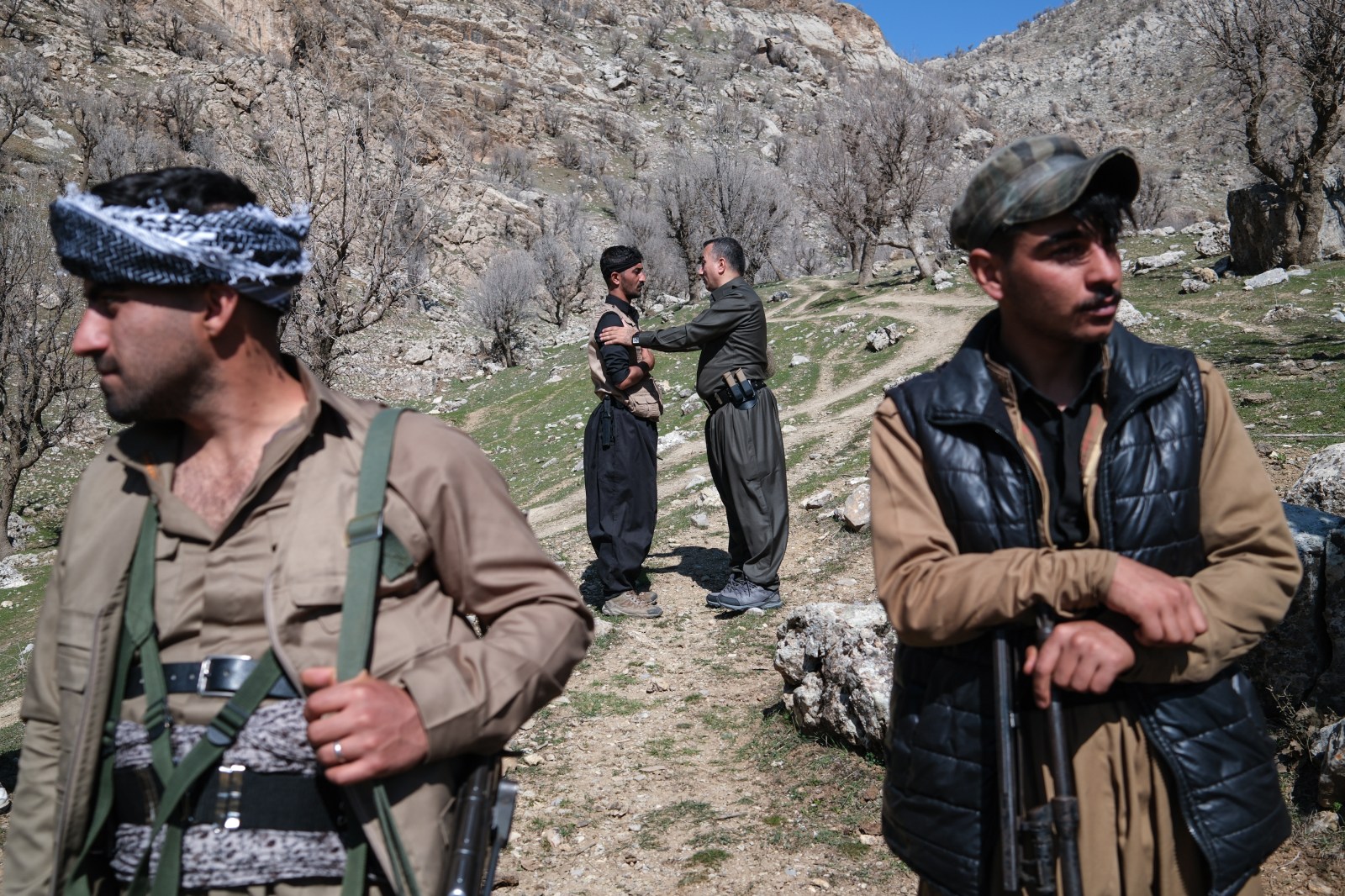
Recent clashes between Iranian security forces and Kurdish rebel groups are heightening tensions in Iran, impacting its broader conflicts, especially with the United States and Israel. This situation threatens to test the tentative ceasefire between Tehran and Washington.
Recent Developments
The Islamic Revolutionary Guard Corps (IRGC) reported the deaths of two members in what has been labeled as a “terrorist and cowardly act” in the city of Paveh, situated in Kermanshah province. This attack was claimed by Xori Hiwa, a newly formed Kurdish group meaning “Sun of Hope,” according to the Hengaw Organization for Human Rights, based in Norway.
On the same day, the IRGC launched a counterterrorism operation, claiming to have “completely destroyed” a six-member team in West Azerbaijan province, bordering Iraq’s Kurdistan region. During these engagements, the Kurdish rebel group, Kurdistan Free Life Party (PJAK), reported four of its fighters were killed near Mahabad.
Historical Context and External Influences
Iran has a long-standing history of Kurdish insurgency, dating back to the decades before the revolution. The recent clashes come after U.S. and Israeli threats to motivate Kurdish movements against Iran. Iranian media have highlighted alleged ties with the Mossad, suggesting potential plans to instigate a Kurdish offensive, though these have not been actualized.
Henri Barkey, a former State Department official, noted that Kurdish forces currently don’t pose a significant threat to the regime. However, he warned about potential future dangers if national unrest spreads, allowing Kurdish groups to further their agendas. Iran has pressured Iraq and the Kurdish government to dismantle Iranian Kurdish groups operating within their borders.
“The IRGC finds itself in the driver’s seat after the war,” Barkey stated, citing potential changes in threat levels.
Kurdish Population and Political Dynamics
Kurds represent around 10 percent of Iran’s population, primarily residing in the western provinces. Several Kurdish groups have historically challenged Iran. Notably, in response to this year’s nationwide protests, key Iranian Kurdish groups united to form the Coalition of Political Forces of Iranian Kurdistan.
U.S. engagement with Kurdish groups has been inconsistent. Despite initial intentions to support Kurdish uprisings, U.S. backing has wavered. This inconsistency limits the potential for Kurdish forces to challenge the Iranian regime effectively.
PJAK and other Kurdish groups believe their objectives differ from U.S. interests. Iranian Kurdish movements derive strength from youthful recruitment, emphasizing the ongoing commitment to their cause.
Potential Outcomes and Challenges
Kurdish factions remain well-organized among insurgent groups in Iran but currently lack the capacity to significantly challenge Iran’s security infrastructure. Concerns arise about potential sectarian conflicts, reflective of situations in Afghanistan and Iraq.
Experts argue that recent clashes stem from intensified government crackdowns. Engaging Kurdish groups on a broader scale could require renewed conflict involving the U.S., Israel, and Iran, coupled with guarantees of support.
“For meaningful cooperation to emerge, robust commitments to back Kurdish actions would be necessary,” noted Mohammed Salih, emphasizing the regional complexities.
Leave a Reply