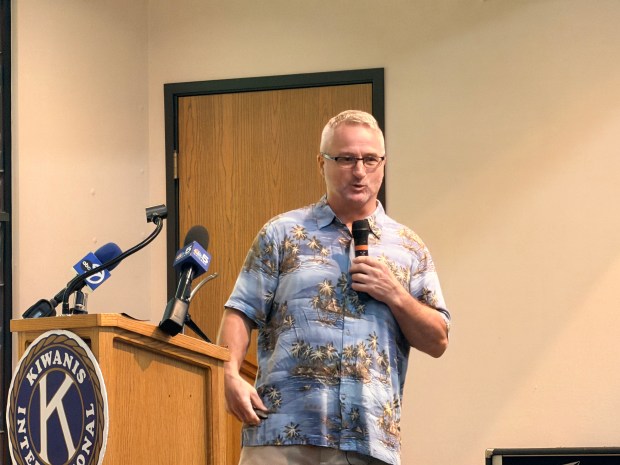
High temperatures are pushing people to seek relief at beaches and pools. Dave Benjamin, Executive Director of the Great Lakes Surf Rescue Project, delivers crucial warnings about water safety.
The Need for Water Safety Education
Benjamin emphasizes that while everyone is aware of fire survival tactics, few know water survival strategies. “Water safety education should be integrated into schools,” he asserts, addressing the Valparaiso Noon Kiwanis Club.
Gender differences play a role in drowning statistics. “Four out of five drowning victims are male,” says Benjamin. Men tend to overestimate their swimming abilities by about 50%, while females estimate theirs accurately.
Drowning Risks and Overestimating Abilities
Surprisingly, those proficient in swimming drown more often than non-swimmers. Benjamin points out the importance of knowing and respecting one’s limits in water. With 80% of Americans claiming to swim, most cannot complete a pool length in calm conditions.
The southern part of Lake Michigan is particularly dangerous. As of Thursday, 29 drownings have occurred in the Great Lakes this year, with 14 in Lake Michigan alone.
The Shape of the Lake and Rip Currents
The lake’s formation and wind conditions can create hazardous rip currents. Benjamin warns, “Wind and waves can easily overwhelm people.”
Water safety is not common sense.
Benjamin speaks from experience. Before founding the rescue project, he nearly drowned while surfing due to a faulty tether and realized the urgent need for education and training.
Tragic Incidents and Advocacy
Drownings continue to be a public health concern. In a recent incident, a boy in Michigan died when lifeguards were off duty. Programs to teach water safety are vital yet face funding challenges.
The World Health Organization recognizes drowning as a neglected issue. Benjamin’s data shows 1,445 drownings in the Great Lakes since 2010. His ongoing advocacy underscores the importance of water safety education.
Sensible Water Rescue Practices
Benjamin advises against jumping into the water for rescues. Instead, use life rings or reach out to pull someone to safety. Indiana law requires life rings on beaches. Effective CPR involves rescue breaths and chest compressions due to the victim’s oxygen needs.
His organization offers training that equips lifeguards and others with necessary survival skills. Benjamin concludes by highlighting the need to educate communities to reduce drowning risks.
Doug Ross contributed this report as a freelance journalist for the Post-Tribune.
Leave a Reply