The United States secured a 2-0 victory over Bosnia-Herzegovina, yet tensions rose due to a contentious red card given to star striker Falorin Balogun. The decision means Balogun will miss the upcoming match against Belgium on Monday. This penalty decision, made after a video replay, has sparked discussions about its severity and contrasts with instances where players like Argentina’s Lionel Messi seemingly avoided similar sanctions.
Understanding Red Cards
Red cards represent the ultimate form of punishment in soccer, removing a player from the game. This forces their team to continue shorthanded and also suspends the ejected player for the next match. The disciplinary system using red and yellow cards was devised post the 1966 World Cup by referee Ken Aston. During a stop at a traffic light, he correlated yellow with caution and red with stop.
Referees hold considerable discretion during matches. A player receiving a second yellow card in a game automatically gets a red card. Direct red cards are issued for severe offenses, including dangerous tackles or violent conduct.
The FIFA rules state, “Any player who lunges at an opponent in challenging for the ball from the front, side, or behind using one or both legs, with excessive force, endangering the safety of an opponent, is guilty of serious foul play.”
The incident with Balogun has raised questions about whether the foul was intentional or merely a forceful effort requiring a yellow card instead. U.S. coach Mauricio Pochettino maintained, “It never was intentional. It was a normal action in football that you are fighting for the ball and your feet land.”
Role of Video Review
Referees have the unenviable task of watching all game action, but with potential for oversight. FIFA introduced Video Assisted Review (VAR) during the 2018 World Cup to mitigate this. In Balogun’s situation, the referee Raphael Claus initially refrained from issuing a card. However, VAR officials prompted a review, which led to the red card. This decision has also fueled a debate about whether the slow-motion replay exaggerated the intent behind the play.
Thierry Henry, a former French striker and current studio analyst, criticized the decision saying, “You need to have some common sense. Where is the player supposed to put his foot there in that situation?”
No Appeal for Balogun
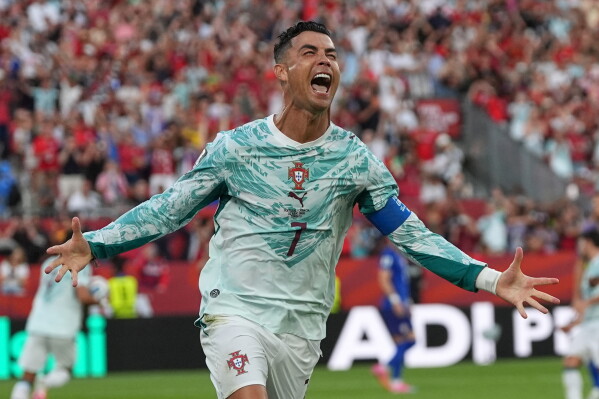
Balogun is set to miss the next game, yet might return for the quarterfinals should the U.S. overcome Belgium. Appeals are not available for red card suspensions unless FIFA imposes a ban over one game. FIFA holds the authority to extend the suspension if it deems the foul requires further penalty. Notably, Cristiano Ronaldo faced a similar situation but avoided additional matches with a deferred ban.
Favoritism Towards Star Players?
The issue of elite players receiving preferential treatment is not new. Messi was involved in a questionable challenge during Argentina’s match against Algeria, resulting in a free-kick but no booking. Social media buzzed with footage of the incident, especially after Balogun’s red card.
U.S. defender Weston McKennie expressed disillusionment, remarking, “I think there’s been many other plays like that throughout the tournament on other players that a card wasn’t given at all.”
Past World Cup Red Card Incidents
Red card disputes are a part of World Cup history. England’s David Beckham and Wayne Rooney faced dismissals in 1998 and 2006, respectively. The infamous 2006 final saw Zinedine Zidane sent off after headbutting an opponent. In 2010, Nigel de Jong avoided a red card after kicking Xabi Alonso in the chest during the final.
Leave a Reply