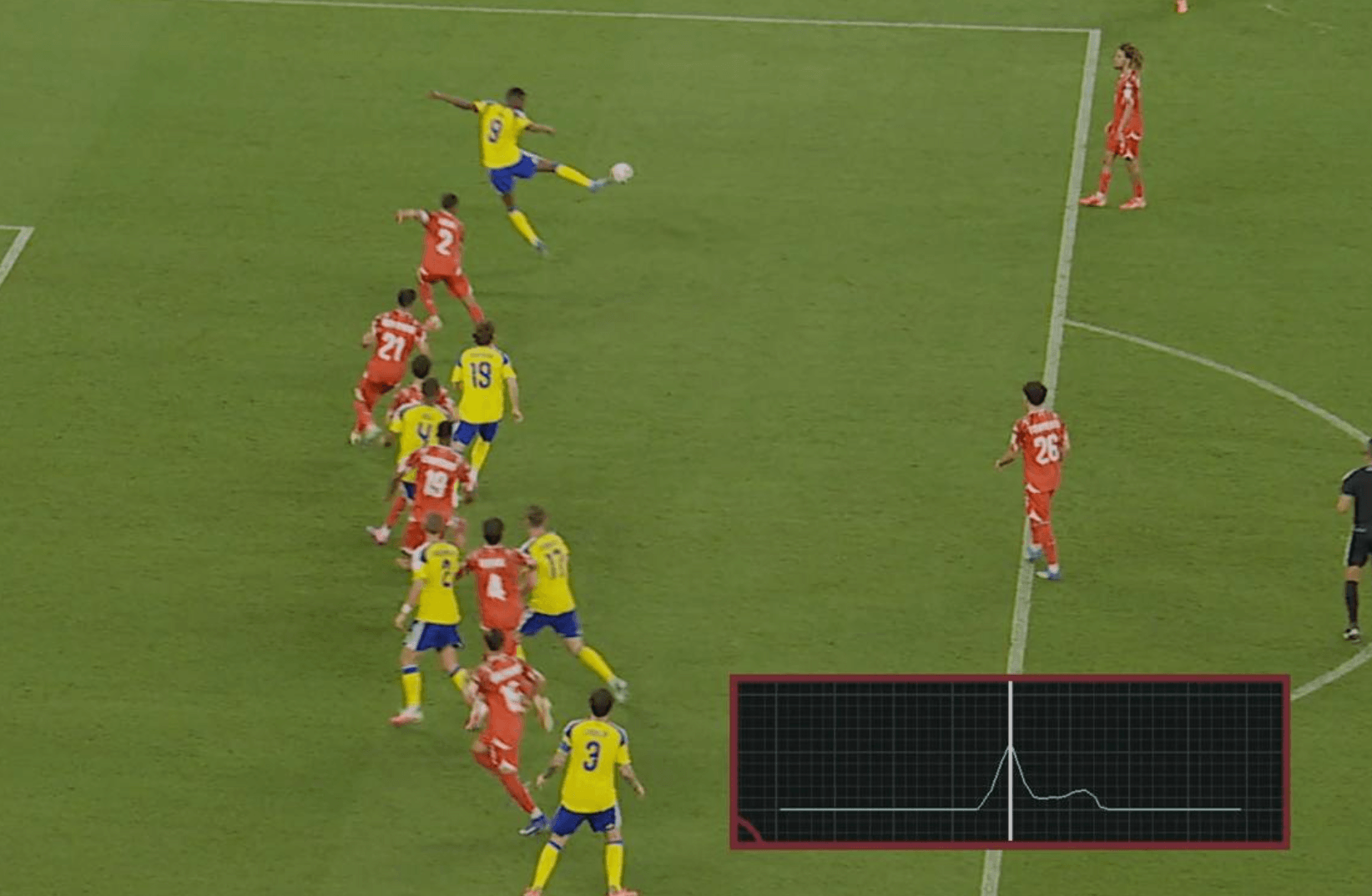
The recent events in the World Cup demonstrated how technology influences crucial match decisions. Croatia experienced disappointment in their last 32 match against Portugal when Josko Gvardiol appeared to equalize late only for VAR to disallow the goal. The review showed Mario Pasalic was offside as he set up Gvardiol after the ball grazed Igor Matanovic. This judgment relied on technology akin to cricket’s ‘snick-o-meter,’ which confirms contact through detectable spikes.
Referee Espen Eskas, following the VAR confirmation, upheld Portugal’s 2-1 advantage, ensuring their progress to the last 16. Such technology and its application aren’t unique at this World Cup. A similar incident occurred in the group stage. Mattias Svanberg’s goal during Sweden’s 5-1 victory over Tunisia was initially flagged for offside. However, VAR identified Alexander Isak’s crucial touch, validating the goal and using graphics to illustrate the moment Isak hit the ball.
Understanding the Technology
Recent advancements have transformed football. Adidas, in collaboration with FIFA, introduced 500Hz inertial sensors within World Cup balls to track movements precisely. This Connected Ball Technology (CBT), working alongside player data, supports offside decisions in real-time by detecting exact contact moments 500 times per second.
The technology also measures ball speeds, as seen with Yasin Ayari’s rapid goals. While this tech enhanced the European Championship in 2024, the Premier League, using Puma balls, hasn’t adopted it.
Comparisons with Cricket
FIFA’s graphics during these reviews closely resemble those used in cricket’s Decision Review System (DRS). Tools like Ultra Edge or Snickometer can identify ball-to-bat contact through spikes. Though sensitive mics near stumps primarily gather data, this tech isn’t foolproof. Controversies in the Ashes series indicated alignment discrepancies between graphics and video, questioning reliability.
While FIFA showcased Isak’s touch post-approval, cricket often unveils these moments live, adding drama. The World Cup’s use of displayed graphics reflects a step toward transparency, enhancing fans’ understanding of crucial decision-making processes.
Leave a Reply