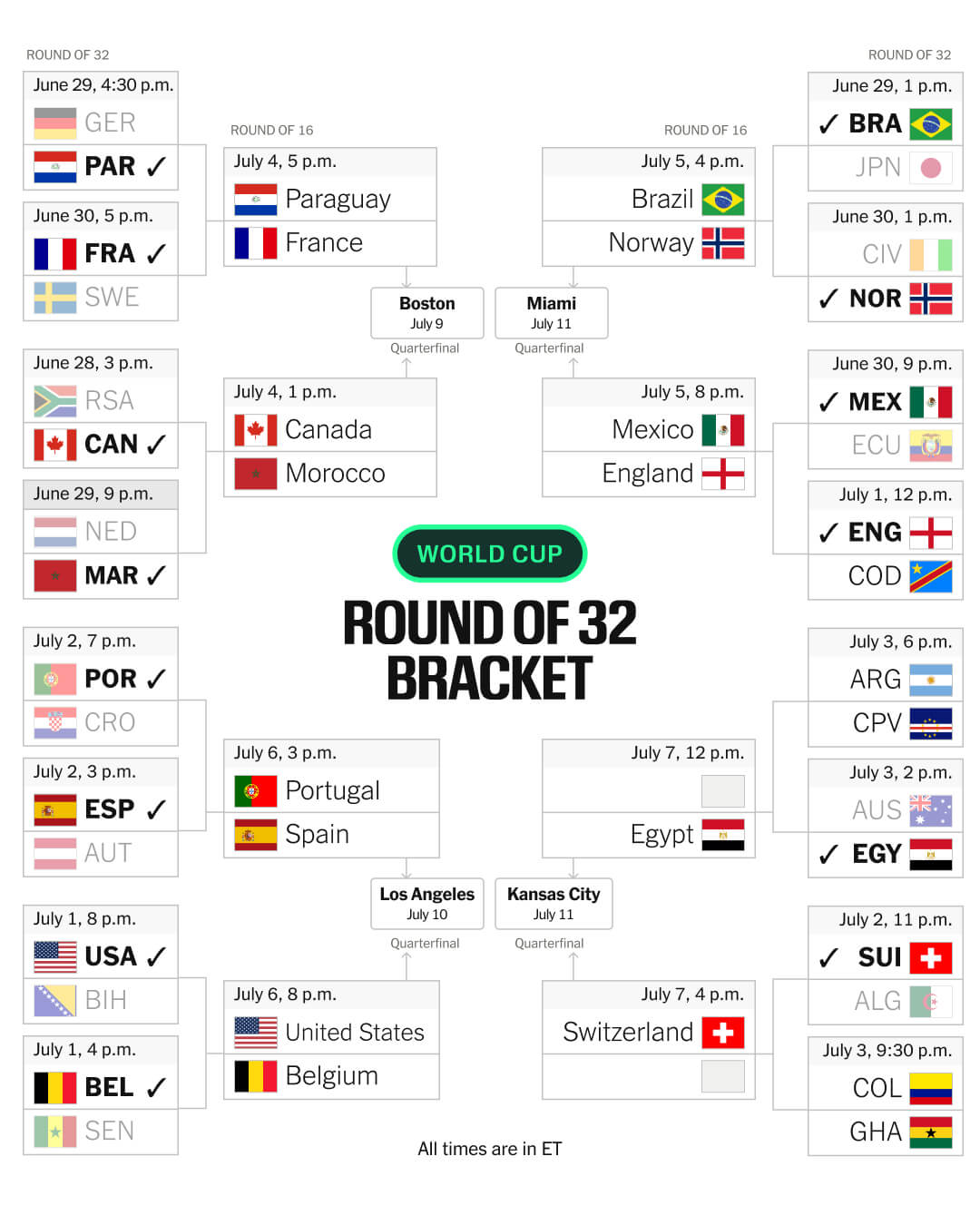
Egypt overcame Australia in a dramatic penalty shootout at Arlington’s AT&T Stadium. This victory allows Egypt to progress to the World Cup round-of-16 match set to take place on July 7 in Atlanta. They will face the winner of the Argentina vs. Cape Verde match scheduled later in Miami.
Game Highlights
Australia began the match with strong momentum, highlighted by Cristian Volpato’s near-goal with a long-range shot within the opening five minutes. Despite this early pressure, Egypt took control and scored first. Midfielder Emam Ashour connected with a Karim Hafez cross and found the net with a header 13 minutes in.
Australia encountered a setback when Jordan Bos sustained what seemed to be a serious knee injury just before halftime. They fought back in the second half, leveling the score thanks to an inswinging free-kick by Aiden O’Neill. The unfortunate own goal came from Egypt’s Mohamed Hany. This marked Hany’s second own goal of the tournament, making him the first player in World Cup history to score two own goals.
Despite Mo Salah’s cross leading to a goal-bound header from Ramy Rabia during stoppage time, Australia’s goalkeeper Patrick Beach made an exceptional save to deny Egypt a regulation-time win. In the closing stages of extra time, Australia’s coach Tony Popovic substituted goalkeeper Beach for Mathew Ryan in anticipation of a potential penalty shootout.
Penalty Shootout Drama
Popovic’s strategy backfired when Ryan failed to stop any of Egypt’s penalties. Australia started poorly, with Harry Souttar missing the first kick and Lucas Herrington hitting the bar on their fourth attempt. Egypt impressed under pressure, converting all their penalties, including a strategic Panenka by Salah. Egypt defender Hossam Abdelmaguid scored the winning penalty.
“Popovic’s decision to swap goalkeepers was reminiscent of Louis van Gaal’s 2014 World Cup tactic, yet it did not yield the same success for Australia.” — Stuart James
Mohamed Salah’s Fitness Concerns
Questions surrounding Mohamed Salah’s fitness lingered before this crucial match. Egyptian coach Hossam Hassan had expressed concerns about rushing Salah back to the field. Although Salah played, his performance showed he was not in peak condition due to a hamstring strain, leaving him less effective for much of the game.
Despite being on the fringes for large periods, Salah delivered a vital cross to Rabia, nearly securing a last-minute win. His iconic Panenka penalty displayed his exceptional abilities despite fitness issues.
“Salah, despite struggling with an injury, remains a cornerstone for the Egyptian team.”
Potential for Goalkeeper Beach’s Highlight Moment
Australia’s Patrick Beach made a spectacular save in the last moments of regular time. Salah’s perfectly placed cross found Rabia, yet Beach stretched to deflect the ball, keeping Australia in the game. Such a save could be viewed as one of the tournament’s best.
Mohamed Hany’s Unfortunate Spotlight
Concerns arose over Hany’s quick return to play after a head injury, leading to his second own goal. Regulations demand independent medical doctors verify players’ fitness, but critics argue for further protection to ensure safety.
Hany’s case exemplifies ongoing discussions about concussion protocols in professional sports. The debate over temporary substitutions for head injuries continues.
Emam Ashour’s Standout World Cup Performance
At 28, Emam Ashour’s impactful World Cup run might pave the way for a European club opportunity. His key goals for Egypt establish him as a versatile and competent player. He remains a central figure in Egypt’s squad, having played in multiple positions effectively across four matches.
Currently playing for Al Ahly, Ashour’s past stint in Denmark suggests a potential move abroad. However, Cairo’s major clubs like Al Ahly offer competitive salaries, reducing the allure of overseas contracts.
Tactics Against Australia’s Tall Lineup
Australia’s towering defensive lineup posed challenges for Egypt. With defenders like Harry Souttar, standing 6ft 6in, Australia’s physical presence affected the flow of the game, particularly during set pieces. Egypt’s strategy to counter this robust defense involved focusing on speed and exploiting transition plays.
Australia’s approach emphasized defending well and converting available chances, a tactic hindered only by the shootout outcome.
Leave a Reply