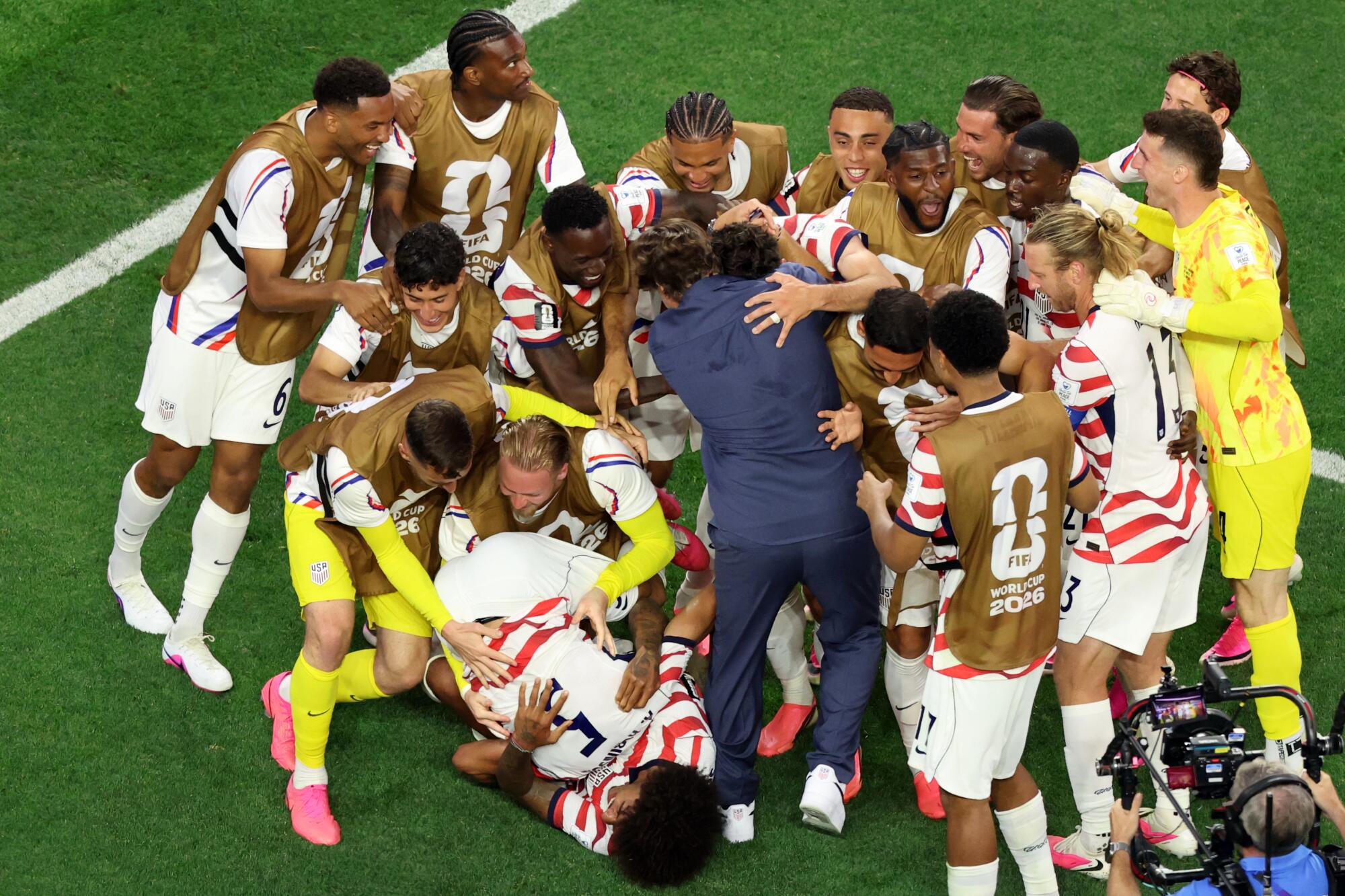
James Wilson, a significant figure in American history, played a vital role in the founding of the United States. He signed both the Declaration of Independence and the Constitution. Wilson believed in welcoming immigrants, arguing against barriers that might deprive the nation of foreign talents and abilities. His vision aligns with the current makeup of the U.S. national soccer team.
The team, preparing for a World Cup elimination game against Belgium, symbolizes Wilson’s ideals. Of the 26 players, six are foreign-born, and many others have immigrant parents or grandparents. This diversity reflects the melting pot that America is often described as. U.S. coach Mauricio Pochettino, originally from Argentina, highlights this blend, embodying the union of different cultures while embracing his role as a leader. Demonstrating his adaptability, he recently participated in a Seattle Mariners’ game, showcasing the unique opportunities present in America.
Tim Ream, the team captain, expressed the significance of playing on Independence Day, during a World Cup, on home soil. He sees the diverse background of the team as a true representation of America. This sentiment extends beyond soccer, resonating with the nation’s history. During the formation of the U.S., immigrants played crucial roles; eight of the 56 Declaration signers and eight of the 55 Constitution framers were immigrants.
Adam Sawyer from Relevant Research remarks on how the U.S. soccer team mirrors broader societal trends. He emphasizes the role of sports teams in advancing integration, aligning with the historical support of immigration as seen in the Declaration’s condemnation of King George III’s restrictive policies.
Faisal Al-Juburi, of RAICES, sees the U.S. soccer team as a reflection of America’s potential at its best. He notes the team’s global roots and shared purpose as a unified symbol. This is not a new trajectory; soccer in America has long been an immigrant-driven sport. Joe Gaetjens, a Haitian immigrant, was among the first to make a mark in U.S. soccer, scoring the decisive goal in the 1950 World Cup win over England.
Recently, the U.S. has recruited dual-nationals like Malik Tillman, Antonee Robinson, and Sergiño Dest, showcasing the benefits of a diverse pool. Al-Juburi highlights the strength arising from this integration, challenging the idea of separation. He sees the team as more of a gumbo rather than a melting pot, where each member contributes their uniqueness to enrich the collective.
Jules Boykoff, a professor and former soccer player, celebrates the team’s embodiment of inclusion. By simply being themselves, they offer valuable insights into the successes of America’s cultural fusion. The U.S. soccer team’s journey underscores the enduring wisdom of the Founding Fathers and provides a contemporary lesson in embracing diversity.
Leave a Reply