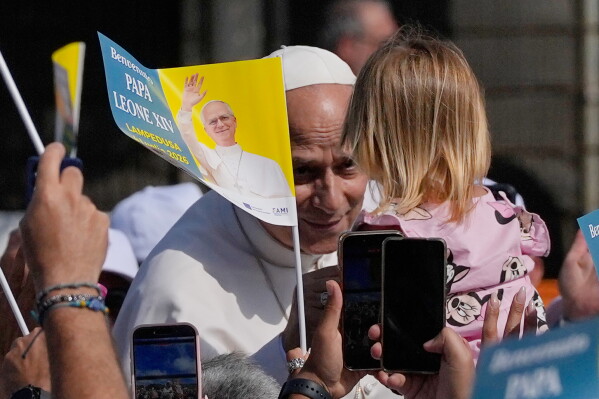
Pope Leo XIV arrived in the picturesque town of Castel Gandolfo on Sunday, marking the beginning of a six-week vacation at the papal summer retreat. The town, nestled in the hills south of Rome, warmly welcomed Leo, who is once again reviving the tradition of papal summer vacations after a 12-year hiatus during Pope Francis’ tenure.
Leo greeted enthusiastic supporters along the main road, later appearing and waving from the villa’s balcony where he will reside. The pope expressed his hopes that everyone can enjoy vacation time to rejuvenate both body and spirit during his noontime prayer service before departing the Vatican.
Leo, originally from Chicago, resumed the tradition of escaping the Vatican’s summer heat for the cooler environment of Castel Gandolfo, which overlooks the serene Lake Alban. This location has been a favored retreat for Roman leaders since Emperor Domitian’s reign in the first century.
Since his election on May 8, Leo has been deeply engaged in inaugural audiences, outings, and Holy Year celebrations as the first American pope in history. Although he will partake in several public events during his holiday, including Masses and Sunday noon prayers, officials anticipate he will allocate significant time to rest and reflect on key issues facing his new role.
Since he was elected he has been working, working, working. It is time for him to get more energy and get strength for his mission,
said Sister Mary Livia, a nun from Uganda.
Papal Palace History
The papal palace, built by Pope Urban VIII in 1624 at Castel Gandolfo, initially served as a summer refuge from Rome and later expanded to 55 hectares (136 acres)—larger than Vatican City. The grounds host a working farm, beautifully maintained gardens, a Jesuit-run observatory, and an environmental educational center inspired by Francis’ 2015 encyclical, Laudato Si. Past popes regularly used the palace in summer, attracting large crowds for Sunday blessings delivered in the inner courtyard.
Pope Benedict XVI concluded his papacy at the estate in 2013, but Pope Francis chose to stay in Rome during the summer months. His decision initially impacted the local economy. However, by transforming the papal estate into a public museum, reaching visitors year-round, Francis ultimately benefited the town economically.
Simone Mariani, a restaurant owner in town, highlighted how Francis’ decision stimulated tourism beyond the traditional Sunday crowds of the past;
He made access to these structures possible, which no pope ever did in 400 years.
Nevertheless, the absence of regular papal visits left an emotional void for the town’s residents.
All year, we’d miss the color, the movement, but we knew when summer came he would return…
shared Patrizia Gasperini, owner of a souvenir shop near the palace.
Drafting Important Documents
Although the palace is now a museum, Leo will reside in Villa Barberini, previously used by the Vatican secretary of state during papal stays. Mayor Alberto De Angelis hopes Leo continues to visit Castel Gandolfo periodically throughout the year, following Pope John Paul II’s example.
Popes traditionally use time at Castel Gandolfo to draft influential church documents and encyclicals, and De Angelis hopes Leo embraces this tradition;
We hope Pope Leo produces some text, some encyclical here that has a global reach…
he stated.
Associated Press journalists have contributed to this report with support through AP’s collaboration with The Conversation US, funded by Lilly Endowment Inc.
Leave a Reply