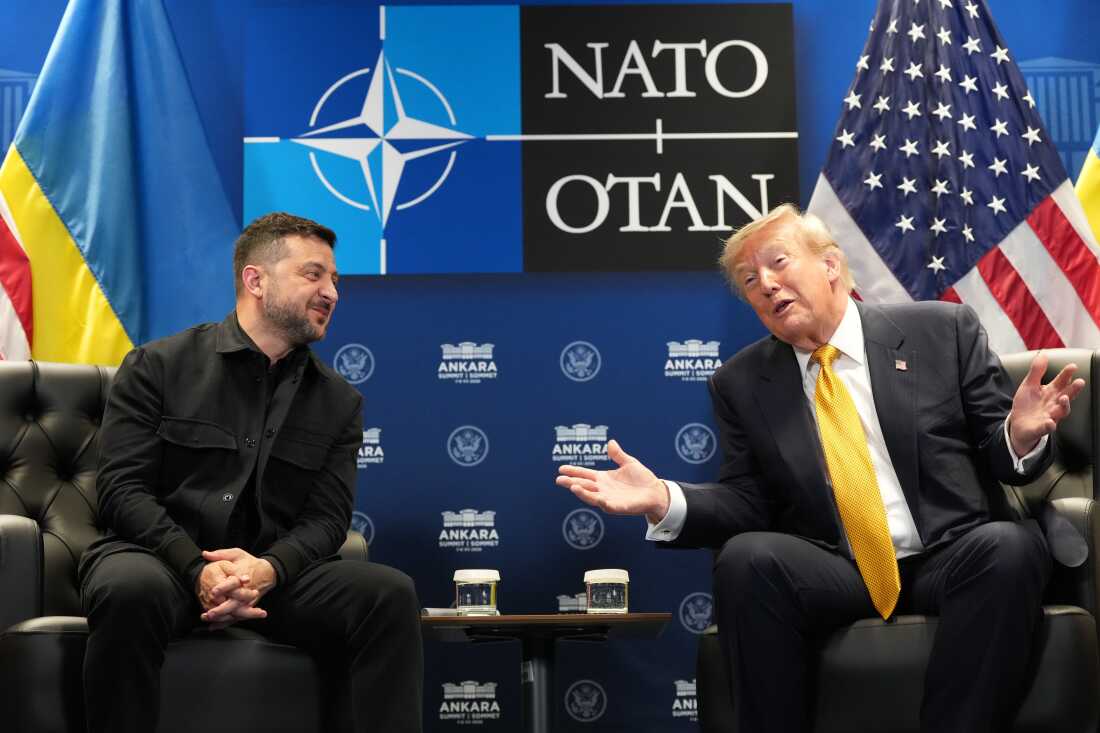
On July 8, 2026, U.S. President Donald Trump met with Ukraine’s President Volodymyr Zelenskyy during a NATO summit in Ankara, Turkey. Trump announced that the U.S. will grant Ukraine a license to produce Patriot air defense systems. This move is aimed at helping Ukraine counter missile threats from Russia, which has been a long-standing request from Kyiv.
Previously, the U.S. had resisted allowing foreign manufacture of Patriots. Trump’s decision marked a significant change. Earlier in the summit, Trump criticized European partners over various issues, but later praised NATO members for their progress in defense spending.
European NATO members, along with Canada, are working to meet increased defense spending targets as U.S. troop presence in Europe decreases. Trump reiterated the U.S. desire to control Greenland, leading to Denmark’s Prime Minister Mette Frederiksen stating readiness to defend NATO territory, including Denmark.
During his meeting with Zelenskyy, Trump positively acknowledged Ukraine’s efforts and indicated the potential for resolving conflict in the region. He noted Zelenskyy’s effectiveness in the ongoing war and confirmed plans for the U.S. to assist Ukraine in manufacturing Patriots.
NATO Secretary-General Mark Rutte praised Trump’s military actions against Iran, following an overnight attack on merchant ships. The U.S. strikes and sanctions on Iran highlight current tensions, although Trump suggested talks might continue.
Rutte commended Trump’s influence in pushing for increased NATO defense spending. European allies have added significantly to their defense budgets, and efforts are underway to align their spending with U.S. contributions. Despite this, some countries like Slovenia, Belgium, Spain, and the Czech Republic have struggled with previous spending targets.
Zelenskyy reiterated Ukraine’s interest in joining NATO, emphasizing the strength and experience of Ukrainian armed forces. However, this move faces strong opposition from Russia. NATO leaders pledged $80 billion to support Ukraine’s defense, citing ongoing threats from Russia.
During the summit, Trump also engaged with Syrian President Ahmad al-Sharaa, who took control after deposing Bashar Assad. Trump expressed support for al-Sharaa and plans to remove Syria’s designation as a state sponsor of terrorism. Lifting this label is expected to aid in rebuilding Syria’s global relations and economic conditions.
Secretaries have been working on normalization with Syria, with significant changes already initiated in U.S.-Syrian relations.
Leave a Reply