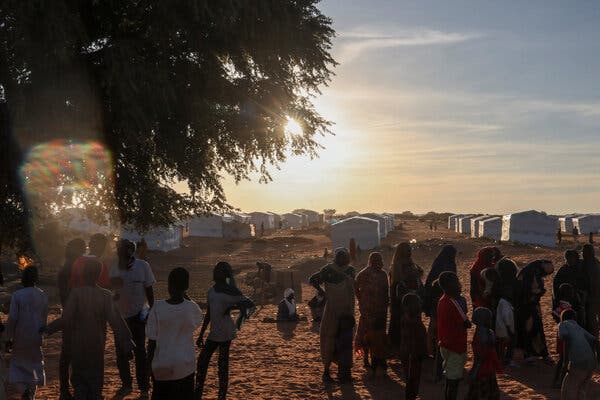
The world is witnessing another human rights crisis unfold in Sudan. A rebel group, the Rapid Support Forces (RSF), known for its atrocities, has nearly surrounded the city of El Obeid. Approximately 600,000 people there are severely lacking essentials like food, water, and medicine. Recent drone attacks by the RSF have already claimed civilian lives. The United Nations high commissioner for human rights, Volker Türk, has sounded the alarm that a dire situation is developing.
Sudan’s ongoing war remains overlooked globally. Unlike conflicts in Ukraine or the Middle East, Sudan’s strife doesn’t align with broader international political narratives. Moreover, there’s a tendency to overlook African conflicts, reflecting troubling racial and economic biases. The persistent warfare in Sudan almost makes the prospect of peace seem elusive.
The statistics illuminate the grim reality. The war in Sudan is among the deadliest globally, with independent monitors estimating between 150,000 and 400,000 deaths. Millions have been displaced, with many seeking refuge in neighboring countries. The prolonged conflict risks regional stability.
Global efforts must intensify to stop the bloodshed and displacement. The United States holds significant leverage to encourage regional powers to intervene and halt the worsening situation, particularly in El Obeid. Through its influence over nations like Egypt, Saudi Arabia, and the United Arab Emirates, the U.S. can help revive peace talks and broker a cease-fire. This requires the Trump administration to renew its commitment to peace in Sudan and protect countless innocent civilians from violence.
Achieving peace won’t be straightforward. Since gaining independence in 1956, Sudan has faced coups, prolonged civil wars, and the Darfur genocide. The core conflict is ethnic; while over 90% of the population is Muslim, there’s a divide between Arab and Black ethnic groups. During the Darfur genocide, government-supported Arab militias killed hundreds of thousands of Black civilians.
The present conflict erupted after Omar al-Bashir cut subsidies in 2018, leading to protests. By 2019, the military and local militias ousted the government, but their temporary alliance disintegrated, sparking civil war. They now vie for control over territories and natural resources like gold and oil, with both sides committing atrocities. The Sudanese Armed Forces, led by Gen. Abdel Fattah al-Burhan, recognized by many as the head of state, have ties to the Muslim Brotherhood and receive support from Iran and Egypt. The United Nations has accused them of grave crimes, including torture and sexual violence.
Stopping this conflict requires immediate international action. World powers must pressure for a resolution to halt further humanitarian disaster.
Leave a Reply