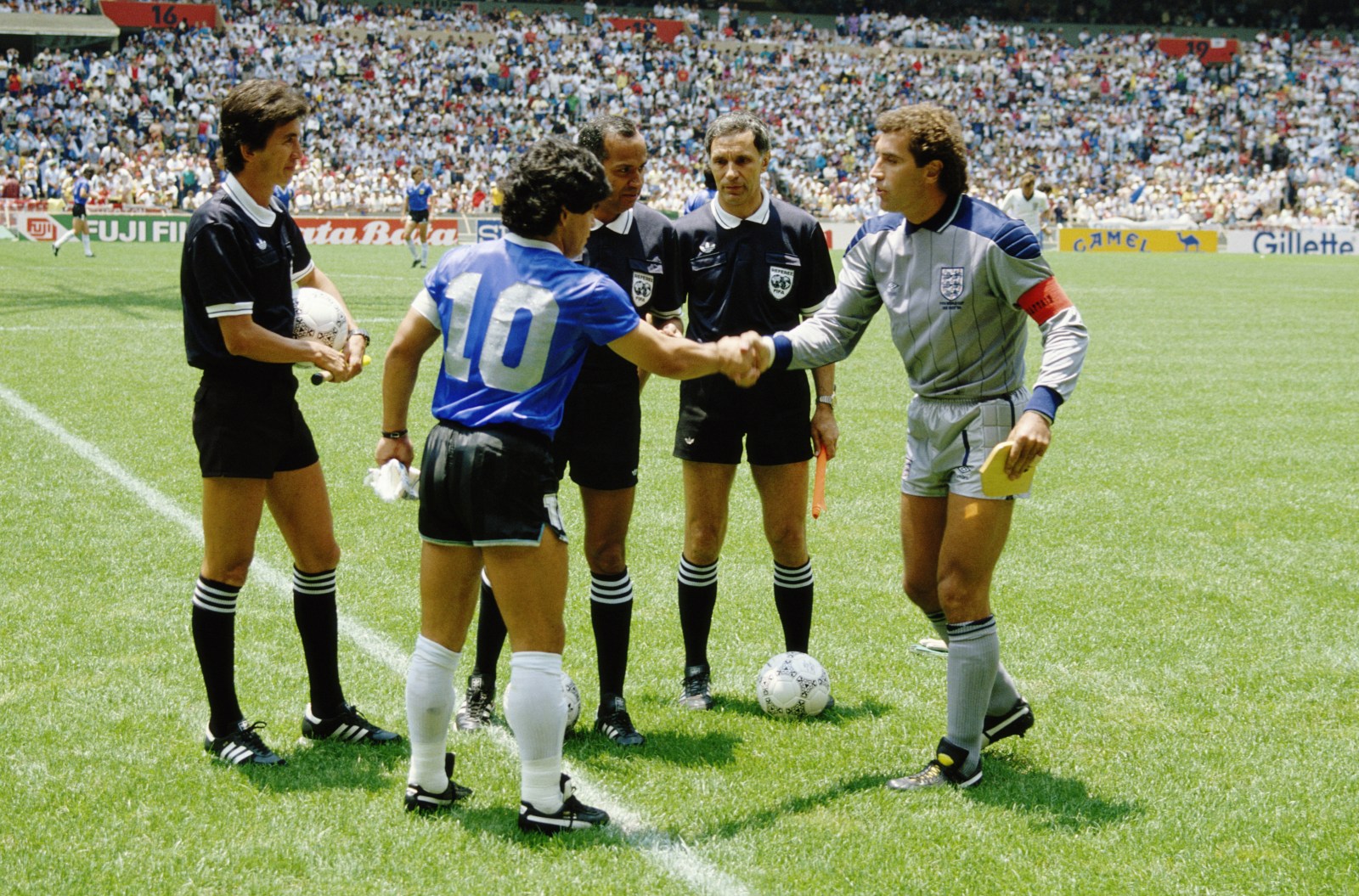
The 1986 World Cup quarterfinal between England and Argentina transcended a regular soccer match. Diego Maradona’s two infamous goals at Estadio Azteca in Mexico City became symbols for many Argentines. His memorable ‘Hand of God’ goal and his extraordinary dribble through the England team arrived four years after the Falklands War had ended. This conflict resulted in the loss of 649 Argentine service members, 255 British troops, and three islanders. Although Argentina lost that war, the victory in Mexico City on June 22, 1986, against England held emotional significance.
Before the match, Maradona stated it had no connection to the war, but he later admitted this was not entirely true. In his autobiography, he referred to it as ‘revenge’ for the young Argentines who died. Asif Kapadia’s 2019 documentary also highlighted Maradona describing the win as ‘symbolic revenge’.
Maradona has passed away, and time has moved on. Many players who will face off on Wednesday at Atlanta Stadium were not born during these events. However, some deep-rooted wounds remain, and they are about to resurface.
England-Argentina Rivalry and the Falklands War Legacy
The upcoming World Cup semifinal at Atlanta Stadium marks the first tournament meeting between England and Argentina since 2002. They last played against each other in a friendly match in 2005. The rivalry is steeped in history, with the Falklands conflict playing a central role. For Argentines, the 1986 victory was about more than just advancing in the tournament. Roberto Perfumo, a former Argentine international, emphasized that beating England was the real goal.
This fierce rivalry continued beyond Maradona’s era. During the 1998 World Cup, a controversial red card for David Beckham saw England lose to Argentina on penalties. They met again in 2002, where Beckham’s penalty secured a narrow win for England. Following these encounters, meetings between the two teams have been sparse.
Oil and New Tensions in the Falklands
The focus on Wednesday will not only be on soccer. About 200 kilometers north of the Falklands, the Sea Lion oil project is stirring fresh tension. This development, overseen by Navitas Petroleum and Britain’s Rockhopper Exploration, anticipates beginning oil production in 2028. Estimates suggest the field holds 917 million barrels, offering significant revenue for the Falkland Islands government.
However, Argentina staunchly opposes any oil extraction without its consent, branding such activities unilateral and illegitimate. President Javier Milei has emphasized Argentina’s claim over the islands, advocating for the resources he believes belong to the Argentine people. While Milei’s government seeks diplomatic solutions, his stance reveals contradictions. Though he fosters relations with Britain, he maintains Argentina’s non-negotiable sovereignty claim.
Global Perspectives on the Falklands
International sentiment remains divided. A 2023 YouGov survey indicated that Americans generally support British sovereignty, with 35% in favor. Meanwhile, Spain shows higher backing for Argentina. Within Argentina, there is stronger consensus for reclaiming the islands.
Milei’s approach domestically diverges from the predominant national sentiment. His perceived disinterest in the Falklands issue is not popular back home. Politicians across the spectrum typically support the sovereignty claim, with past leaders adopting hard-line approaches, especially regarding oil exploration near the islands.
Oil and Political Stakes
For Argentina, the stakes are evolving from symbolic to material. The economic strain amplifies the significance of potential oil production in the contested region. Former Foreign Minister Jorge Taiana described Argentina’s current claim as diminished, yet the call for challenges around the Sea Lion project is growing amid upcoming elections.
As England and Argentina prepare for a pivotal match, Messi seeks a second World Cup title, while England aims to reach its first final since 1966. Beyond the soccer field, anthem chants in the Argentine locker room hint at lingering historical grievances. Thus, even decades after Maradona’s ‘revenge’, deeper issues persist, underscored by potential resource exploitation.
Leave a Reply