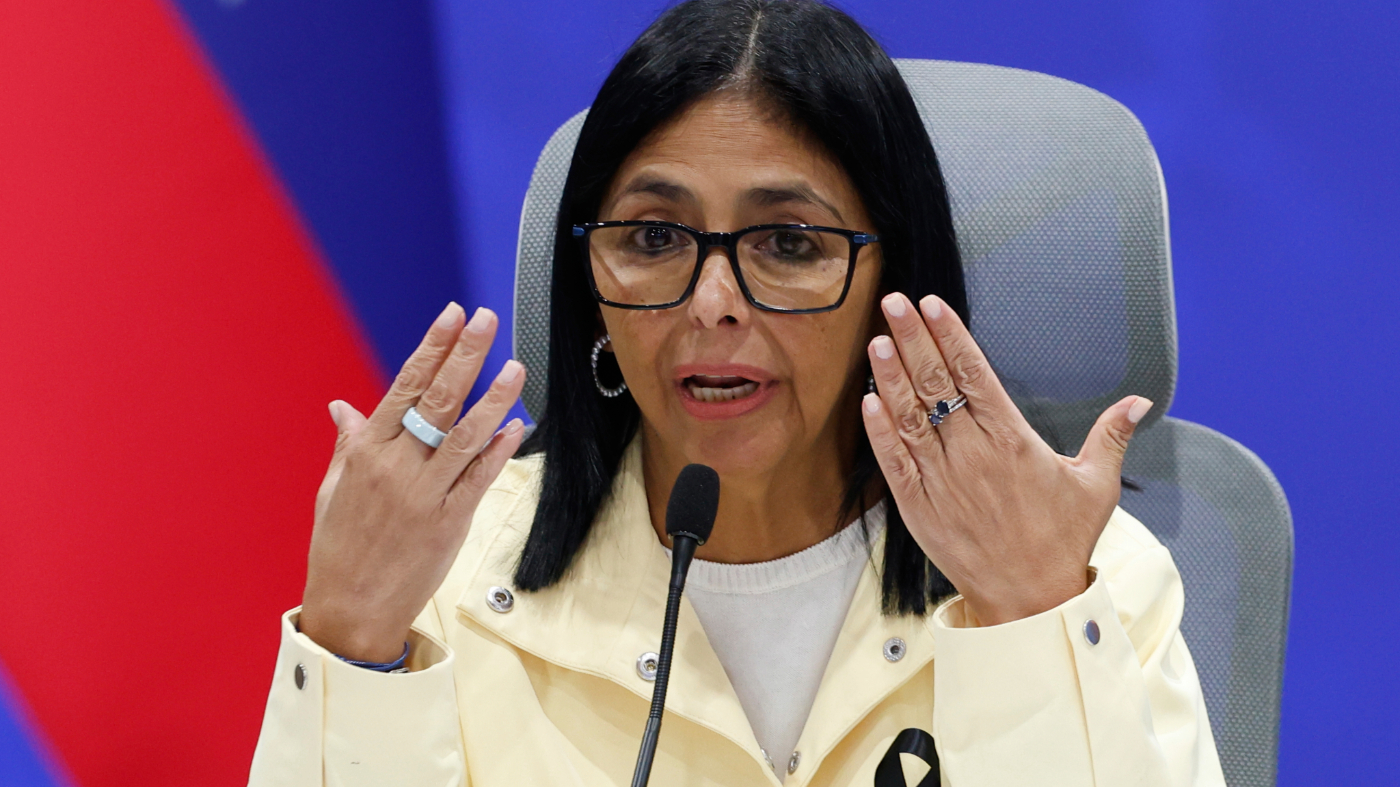
Venezuela’s current interim President, Delcy Rodríguez, recently addressed the government’s response to the earthquakes that hit Caracas on Thursday, July 2, 2026. Her leadership coincides with a dramatic shift in Venezuela’s diplomatic stance, marking a departure from the previous administrations’ alliances.
In June 2010, former Venezuelan President Hugo Chavez accused Israel of sponsoring terrorism, reflecting the country’s then stance aligned with Tehran. Chavez’s harsh words formed part of the regime’s ingrained communist ideology. This ideology was shared by Delcy Rodríguez before transitioning to her new diplomatic efforts.
“I want to condemn from the bottom of my soul, from the bottom of my guts: Damn you, State of Israel! Damn you Terrorist and Assassins!” — Hugo Chavez, June 2010
The conversion began last January after Nicolas Maduro’s removal, with Venezuela now taking steps to foster relations with Israel. In a striking change, Delcy Rodríguez sent a greetings message to celebrate Passover this April. She emphasized peace and religious freedom in Venezuela, advocating for understanding and cooperation between different faiths.
Previously, Venezuela was a noteworthy ally of Iran for over 20 years. This year, the Venezuelan regime notably skipped sending high-level delegations to Ayatollah Ali Khamenei’s funeral, signaling a shift from its long-held ties with Tehran.
Venezuela took further actions by capturing Ali Zaki Jalil, a Hezbollah agent linked to terrorism, extraditing him to Panama. The government also arrested Alex Saab, linked with money laundering and aiding Maduro’s connection with Iran. Saab played a crucial role in facilitating illicit activities involving Venezuelan resources like oil and gold.
The U.S., Venezuela, and the United Kingdom collaborated with the International Atomic Energy Agency to remove highly enriched uranium from Venezuela’s RV-1 reactor, eliminating a longstanding threat.
After the June earthquakes, Venezuela invited Israeli experts to provide crucial assistance. Delcy Rodríguez acknowledged the aid facilitated by the Jewish community in Venezuela. The IDF worked on a national rehabilitation plan and structural assessments to help local authorities rebuild homes.
Prime Minister Benjamin Netanyahu praised the efforts in a video message, hailing the renewing ties and support extended by Israel.
You are rebuilding ruins, and you are rebuilding relations. You are showing the people of Venezuela, as well as the government, the true face of the State of Israel. — Benjamin Netanyahu
Caracas’s narrative has been reformed, nonetheless, underlying propagandist material from Maduro’s era is being replaced. The interim government seeks Israel’s favor and resources to get diplomatic legitimacy rather than showing true alignment.
While Delcy and her political allies project a veneer of progress, Venezuela’s core issues persist. The public demands freedom for political prisoners, the return of exiled Venezuelans, such as opposition leader María Corina Machado, and the establishment of free elections.
Journalist Arturo McFields offers insight from exile, emphasizing that Venezuela’s future rests on establishing a truly democratic system. McFields, with credentials in journalism and international relations, calls for a foundation of transparency and freedom, crucial for real progress.
Arturo McFields is an exiled journalist, former Nicaraguan ambassador to the Organization of American States, and a former member of the Norwegian Peace Corps. He is an alumnus of the National Defense University’s Security and Defense Seminar and the Harvard Leadership course.
© 2026 Nexstar Media Inc. All rights reserved. This material may not be published, broadcast, rewritten, or redistributed.
Leave a Reply