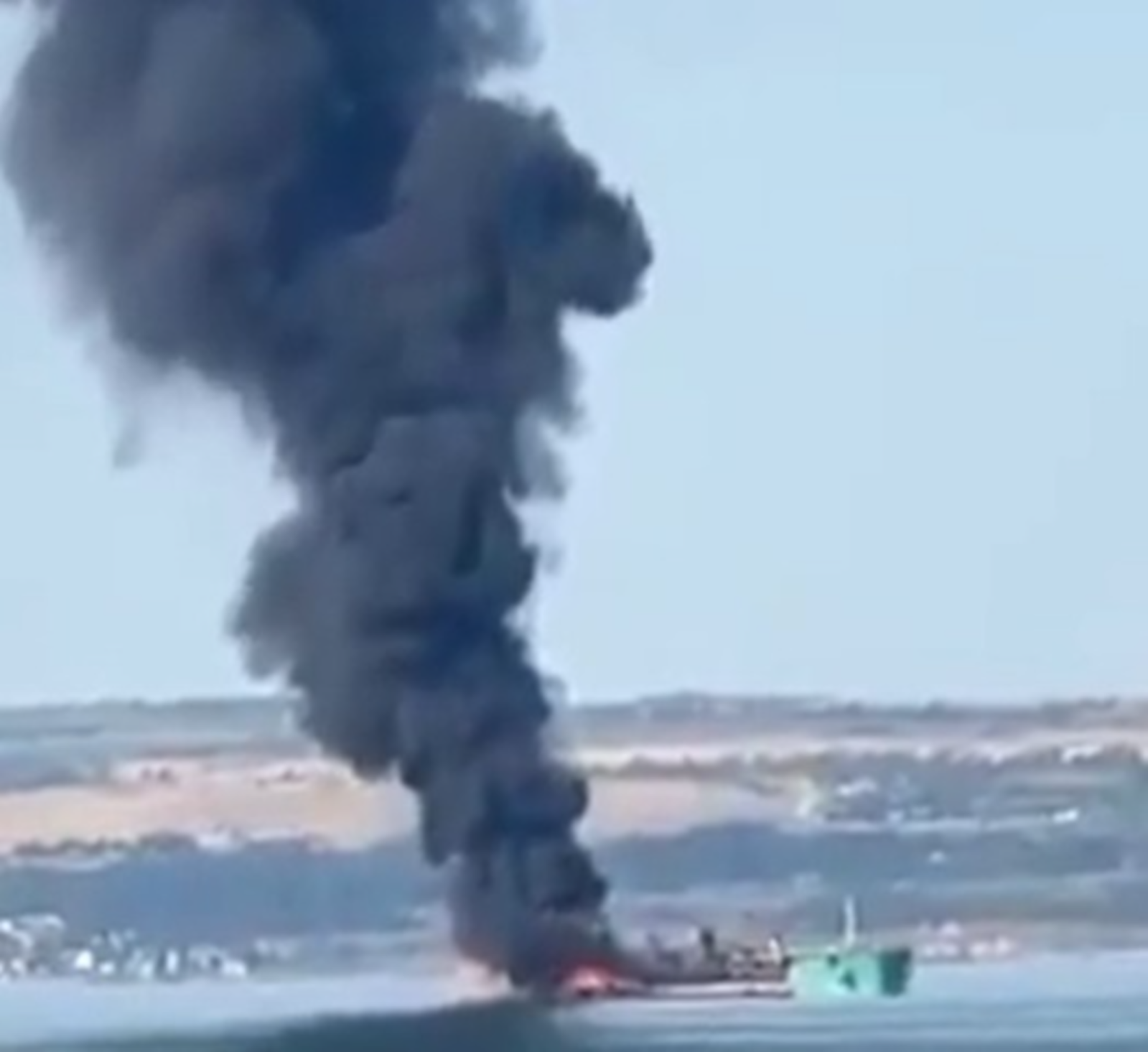
A commander from Ukraine’s drone unit has cautioned about a new stage in Kyiv’s campaign against Russia at sea. This follows recent attacks that significantly slowed shipping in the Sea of Azov. Commander Robert Brovdi of Ukraine’s Unmanned Systems Forces reported that 20 Russian vessels were attacked overnight. He noted that between July 6 and 15, Ukrainian drones hit 136 Russia-linked ships.
The Sea of Azov connects to the Black Sea through the Kerch Strait, linking Crimea with Russia. This route is crucial for Russia’s oil exports. Brovdi stated that Ukraine is now focusing on targeting vessels tied to Russia’s “shadow fleet,” which evade sanctions. The recent assaults on ships in the Sea of Azov led to Moscow halting shipping through the Don-Azov Channel.
Australian Army Major General Mick Ryan, now retired, remarked that this campaign occurs within some of the heavily defended airspaces in the Russian-controlled Black Sea region. For every ship struck, a corresponding Russian air defense system has also been targeted. This shows a well-coordinated air and sea strategy. Ryan highlighted that Ukraine lacks a conventional navy in the Black Sea but has created a viable defense and control framework using unmanned systems alone.
Further strikes took place, as Brovdi, known by his call sign Magyar, played a significant role in pioneering FPV drones as weapons. He commands “Magyar’s Birds,” a unit dedicated to drone warfare. According to Brovdi’s Telegram post, Ukrainian drones recently hit 17 oil tankers, two gas tankers, and a tugboat. These attacks align with Ukraine’s Statehood Day. Additionally, the Ukrainian Navy announced it sank a Russian border guard ship with an unmanned surface vehicle near Russia’s Krasnodar region.
Brovdi emphasized Ukraine’s strategy of disrupting logistical routes rather than directly attacking the Kerch Bridge. He noted fuel shortages in Crimea, affirming that the goal is to cut off access to supplies. Synthetic Aperture Radar imagery revealed that maritime traffic in the Sea of Azov declined sharply from 132 ships on July 6 to 43 by July 12. This decline primarily affected smaller vessels like tugboats.
For further details or comments on this story, Newsweek has been reached out for statements from the Russian defense ministry.
Leave a Reply