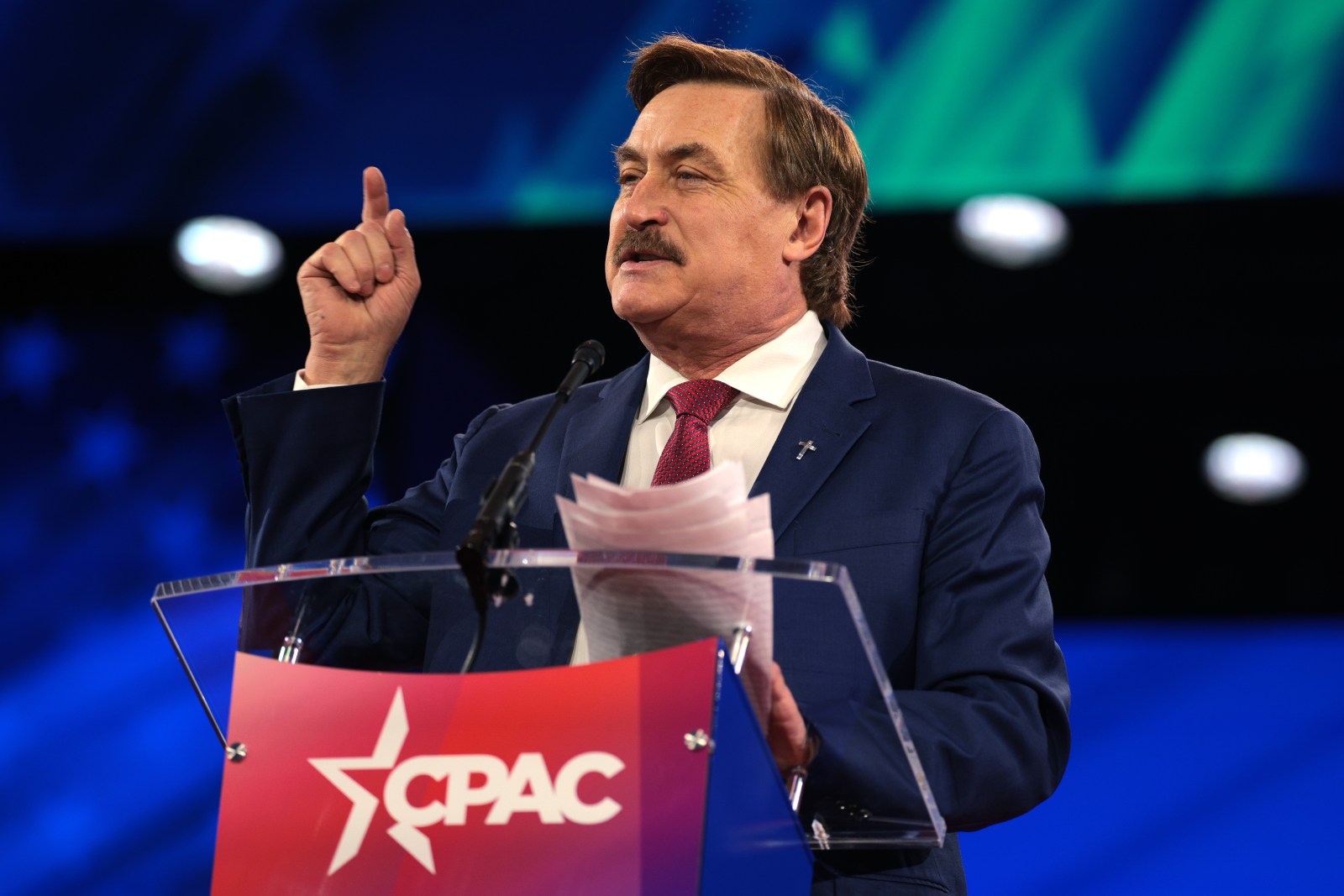
Mike Lindell, CEO of MyPillow, gained President Donald Trump’s endorsement for Minnesota’s gubernatorial race ahead of the August primary election. Lindell, a steadfast supporter of Trump and a vocal proponent of election fraud claims during the 2020 presidential election, is vying for the Republican nomination for governor. Whoever secures the nomination is expected to face Senator Amy Klobuchar in the November election, the leading candidate in the Democratic primary.
The gubernatorial race in Minnesota saw significant changes earlier this year when Democratic Governor Tim Walz decided against seeking a third term. This decision came amid criticism of his handling of a fraud scandal and the state’s involvement in Trump administration’s immigration enforcement. Two American citizens were fatally shot by immigration officers in the Minneapolis area, bringing immigration issues to the forefront of the election.
Trump endorsed Lindell through a post on Truth Social, praising him as “one of America’s greatest and most hardworking Patriots.” Trump emphasized that Lindell’s commitment to Minnesota and election integrity is unmatched. Newsweek reached out to the Lindell campaign for further comment.
“In the Minnesota gubernatorial race, Trump is backing his loyal foot soldier in his efforts to discredit the 2020 presidential election who is the most unpopular Republican candidate among the critical group of independents,” said Larry Jacobs, a political scientist at the University of Minnesota. “Trump’s intervention is particularly damaging to Minnesota Republicans who have not won a gubernatorial race for 20 years and face the formidable likely Democratic candidate Senator Amy Klobuchar.”
In his Truth Social post, Trump also criticized Klobuchar, comparing her unfavorably to Walz.
Mike Lindell Faces Competitive Republican Primary in Minnesota
Several candidates are running for the Republican nomination in the Minnesota governor race, including Minnesota House Speaker Lisa Demuth and businessman Kendall Qualls. Polls indicate a competitive race within the Republican primary.
- A Minnesota Private Business Council survey from June 23-25, 2026, with 1,601 likely voters, showed Demuth leading with 34 percent, followed by Qualls at 28 percent and Lindell at 24 percent. Fifteen percent remained undecided.
- A SurveyUSA poll, sponsored by KSTP-TV, had Lindell leading with 27 percent support, while Demuth had 22 percent and Qualls 17 percent. Twenty-four percent were undecided.
- A Big Data Poll, a Lindell internal survey, indicated Lindell with 27 percent support, Demuth at 21 percent, and Qualls at 10 percent. It surveyed 1,214 likely voters from June 26-29, 2026.
Demuth expressed her focus on uniting the party and securing victory in November. Qualls reiterated his support for Trump and emphasized the significance of local endorsements over national ones. Klobuchar stated her desire to be Minnesota’s choice over Trump’s endorsement of Lindell.
Polls Indicate Challenges for Lindell Against Klobuchar
General election polls suggest Lindell might face difficulties against Klobuchar. A Mason-Dixon Polling & Research Inc. poll showed Demuth closely trailing Klobuchar, while Lindell lagged by a wider margin.
- Demuth trailed Klobuchar by 8 points (40% to Klobuchar’s 48%).
- Qualls trailed by 11 points.
- Lindell trailed by 17 points (Klobuchar had 53%, Lindell 36%).
An Emerson College poll earlier showed Klobuchar leading Lindell by 22 points. The poll covered 1,000 likely voters with a margin of error of plus or minus 3 percentage points.
David Schultz from Hamline University noted that despite Lindell’s potential nomination, he would not be the strongest Republican candidate. He highlighted Klobuchar’s popularity statewide.
The Impact of Immigration on the Race
Immigration has become a pivotal issue in the Minnesota race. The Feeding Our Future nonprofit scandal contributed to the shift, with Republicans criticizing Walz for his administration’s response. Klobuchar is viewed as a candidate who can distance herself from the scandal and maintain Democratic control.
The Trump administration’s focus on immigration enforcement in Minnesota further complicated the race, notably after the fatal shootings by immigration officers, leading to backlash throughout the state.
Republicans’ Persistent Challenge in Minnesota
Republicans have consistently targeted Minnesota, yet it remains a Democratic stronghold. The state last voted for a Republican president in 1972. Recent elections have seen narrow Democratic victories, reflecting Minnesota’s light blue status.
Minnesota’s last Republican governor was elected in 2006, and it last elected a Republican senator in 2002. Trump’s approval rating is expected to be a critical factor in upcoming elections. Civiqs’ tracking poll showed Trump with a 32 percent approval and a 62 percent disapproval rating in Minnesota.
Leave a Reply