Christopher Nolan has explored various themes through his films, from the creation and destruction depicted in “Oppenheimer” to the courage shown in “Dunkirk.” His exploration of heroes and villains is evident in “Batman Begins” and “The Dark Knight,” while the complex middle ground is tackled in “The Dark Knight Rises.” Family, time, and dreams are central to movies like “Interstellar,” “Tenet,” and “Inception.” “Memento” probes memory, “The Prestige” explores magic, and “Insomnia” delves into mystery. His debut, “Following,” centers on a writer, setting the stage for his 13th film, “The Odyssey,” which examines mythmaking.
Nolan’s latest work seems to converge all his past themes and obsessions. He utilizes Homer’s ancient epic, “The Odyssey,” which originated in the eighth century B.C.E. This film interprets guilt and trauma within the context of a hero’s return journey. Much like how “Oppenheimer” investigates culpability alongside the story of a bomb, “The Odyssey” intertwines trauma with the tale of returning home.
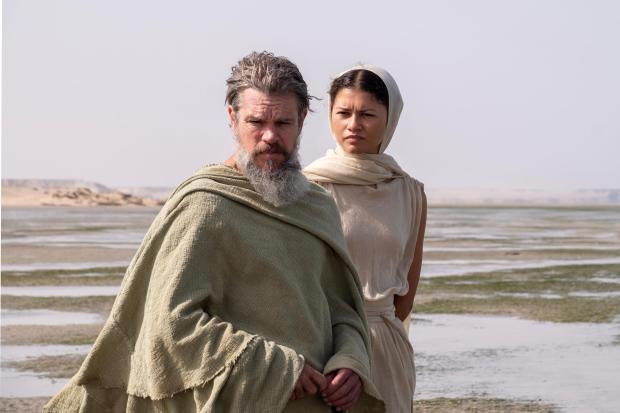
The infamous Trojan horse, as perceived by Nolan, is a destructive act comparable to the bomb. Odysseus, portrayed by Matt Damon, carries the weight of this deceit and its consequences. His identity becomes synonymous with this war crime, recounted in songs at countless feasts. His journey home stretches over a decade, with his crew battling mythic adversaries like Cyclops and witches, sidestepping dangers posed by sirens and the wrathful god Poseidon. Eventually, Odysseus finds respite on a beach with the nymph Calypso, played by Charlize Theron, yet remains haunted by visions of Athena, portrayed by Zendaya.
Meanwhile, Odysseus’ wife Penelope (Anne Hathaway), son Telemachus (Tom Holland), and loyal servant Eumaeus (John Leguizamo) eagerly anticipate his return. They must fend off overzealous suitors eyeing the throne. The family longs for reunion, yet fears confronting each other and the time lost to war.
Nolan’s adaptation captivates with its large-scale production, artistic mastery, and compelling storytelling. It is the first film to be shot entirely in IMAX, capturing sweeping vistas from Morocco to Iceland through the lens of his trusted cinematographer Hoyte van Hoytema. The entire crew, chosen for their expertise, contributes to this vivid retelling.
The audiovisual impact is heightened by Ludwig Göransson’s score; Jennifer Lame, the editor, crafts battle sequences that keep viewers tense and engaged. The flashback structure mirrors Odysseus’ foggy memory as he recounts past events to Calypso and later to Penelope, revealing the complexity of heroism. Odysseus admits breaking Zeus’ law with the horse trick, escalating an era of darkness—a message resonating in today’s world.
Contemporary elements highlight the relevance of the story. Anachronisms such as Telemachus casually calling Odysseus “Dad” and modern language use demonstrate Nolan’s view: the story is about us and the ongoing violence in our lives. Damon’s portrayal reflects the common man, embodying both strength and vulnerability, capturing the universality of human emotion through Odysseus’ experience.
The depiction of Hades, where soldiers demand recognition for their sacrifices, provides one of the film’s most intense scenes, a contrast to Nolan’s previous war films where the dead were peripheral. Here, they are focal, and Nolan compels the audience to engage with this heavy, uncomfortable reality.
Through breathtaking cinematography and poignant storytelling, Nolan delivers a profound artistic achievement. “The Odyssey” entertains and challenges, asking viewers to examine the cost of their ideals.
Leave a Reply