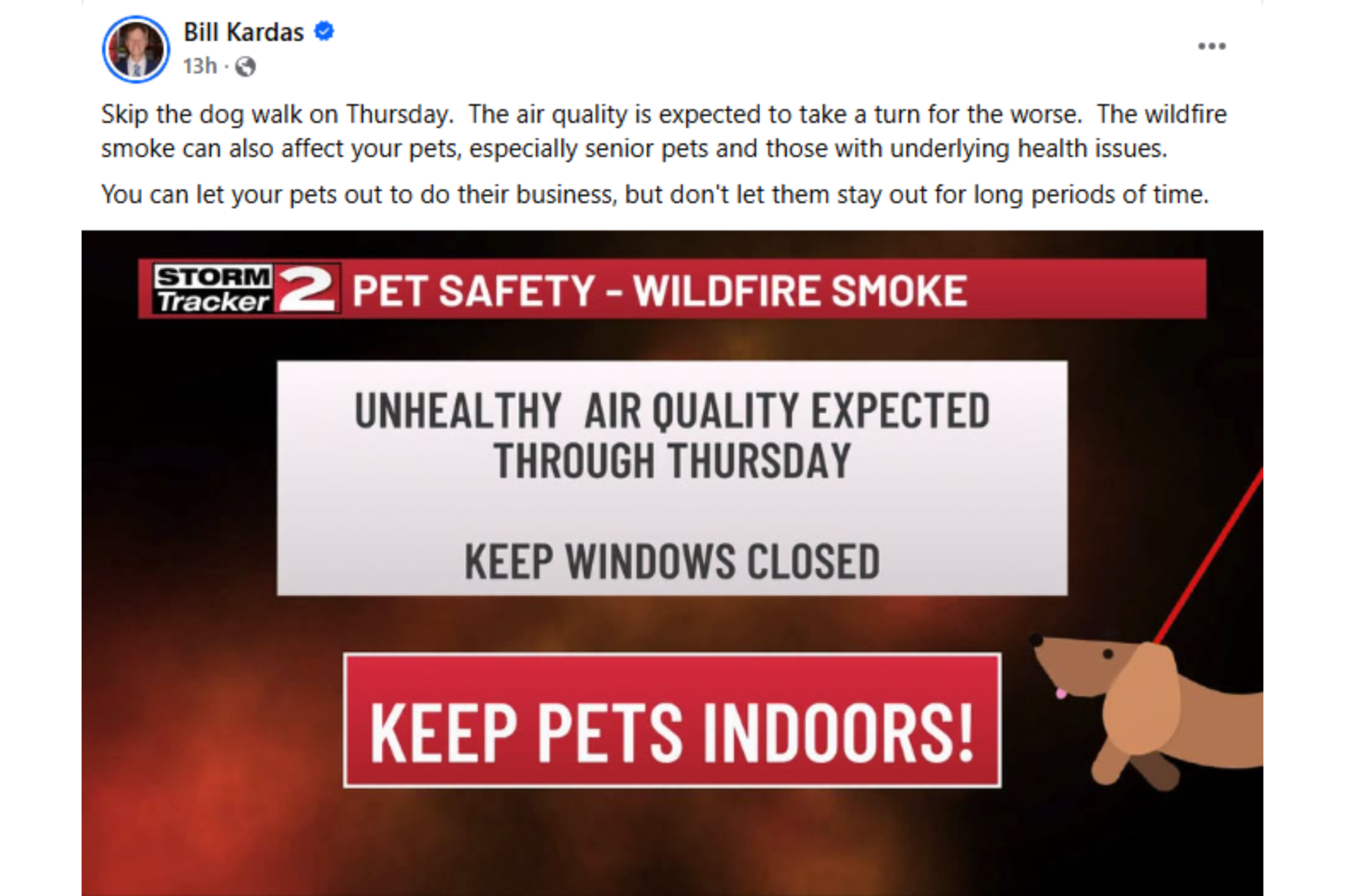
Residents in New York are being asked to remain indoors, restrict outdoor activities, and delay routine tasks like walking pets as a dangerous mix of heat and Canadian wildfire smoke elevates air pollution to harmful levels.
An ongoing Air Quality Health Advisory covers New York as smoke from numerous Canadian wildfires drifts into the state, creating a hazy environment and increasing concentrations of PM2.5 fine particulate pollution.
The National Weather Service (NWS) has alerted that these smoky conditions coincide with a heatwave pushing temperatures to close to 100°F, with heat indexes surpassing 100 in areas around New York City.
“Good morning! Temperatures will reach 100°F in some areas today. A Heat Advisory remains in effect until 9:00 PM tonight. Smoke from nearby wildfires may lead to hazy skies and reduced visibility at times.” — NWS New York NY (@NWSNewYorkNY) July 15, 2026
The New York State Department of Environmental Conservation and Department of Health have broadened air quality advisories statewide as smoke moves east. Western New York, Central New York, and the Eastern Lake Ontario region are predicted to face significant impacts.
Downstate regions like New York City, Long Island, and the Lower Hudson Valley are expected to face air quality conditions labeled “unhealthy for sensitive groups,” while some upstate areas reach the more severe “unhealthy” category.
New York City Emergency Management anticipates that New York City’s air quality might reach unhealthy levels, with an Air Quality Index (AQI) possibly near 200, affecting everyone, not just vulnerable groups.
Health Risks from Smoke Exposure
Forecasters and health officials indicate fine particle pollution from wildfire smoke triggers symptoms like coughing, dizziness, fatigue, and shortness of breath. It can also worsen conditions like asthma and heart disease.
Residents are advised to avoid or minimize outdoor activities, keep windows and doors closed, use air conditioning or air purifiers, and wear an N95 or KN95 mask outdoors.
Meteorologists warn that normal activities such as outdoor exercise or pet walks may heighten smoke exposure during poor air quality.
Air quality could quickly deteriorate if smoke settles closer to ground level.
Emergency Measures in New York City
New York City officials have initiated actions to assist residents in handling the dual heat and smoke emergency. The city’s heat emergency plan has extended hundreds of cooling centers remaining available across all boroughs.
Residents can find nearby cooling centers using the city’s online locator or by calling 311.
The city has increased free KN95 mask distribution, offering extra protection against smoke particles. The masks are accessible at Brooklyn and Queens public libraries, selected libraries in other boroughs, and public transit stations.
City agencies have adjusted their operations due to prevailing conditions.
Mayor Zohran Mamdani stated that outreach workers have boosted their efforts to aid vulnerable citizens while schools, parks, and other departmental activities have moved indoors, rescheduled events, and modified programs.
“Tomorrow’s combination of dangerous heat and unhealthy air is a serious threat to New Yorkers’ health. If you can, stay somewhere cool with air conditioning, limit your time outdoors, drink plenty of water, and check on your neighbors—especially older New Yorkers and anyone…” — Mayor Zohran Kwame Mamdani (@NYCMayor) July 16, 2026
The community is also encouraged to sign up for Notify NYC emergency alerts and check on elderly neighbors and others at higher risk.
Mayor Mamdani and state officials stress that New Yorkers should consider the combination of heat and smoke a “serious threat” to public health. It’s crucial to stay in cool, air-conditioned places, keep hydrated, avoid intense outdoor activities, and monitor air quality forecasts until conditions improve.
Additional comments and information have been sought from local agencies and environmental bodies.
Contact Newsweek editors on this story: John Fitzpatrick and Tony Phillips.
Leave a Reply