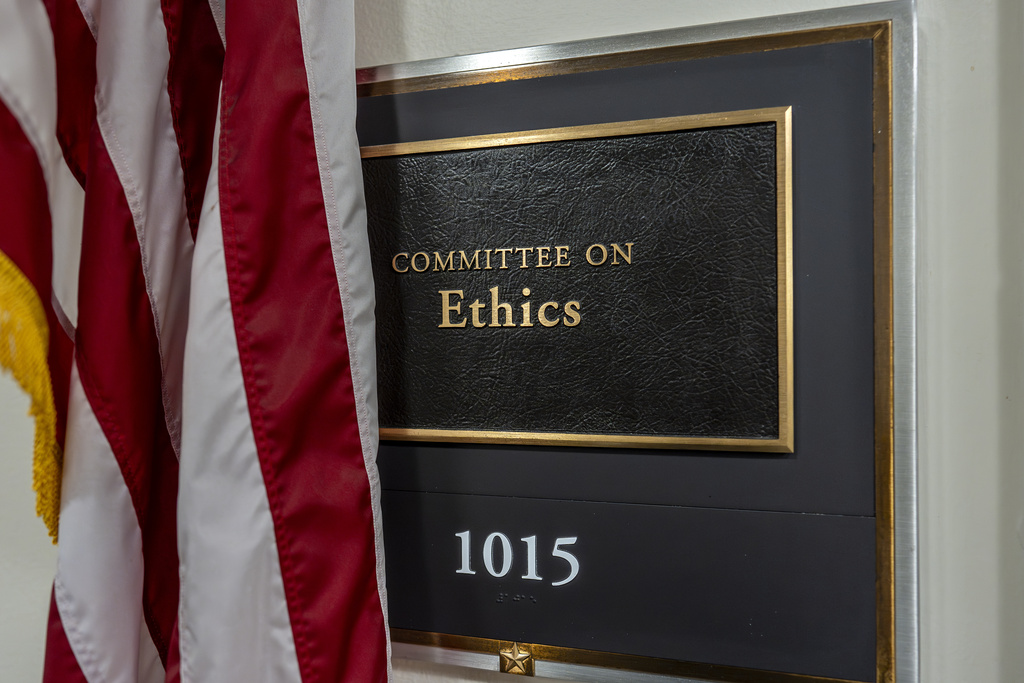
The issue of sexual misconduct in Congress continues to be a concern, even years after the #MeToo movement prompted significant repercussions among lawmakers. Nearly ten years later, the 119th Congress is witnessing similar scandals that attract increased public attention.
Recently, two members of the House, Reps. Eric Swalwell (D-Calif.) and Tony Gonzalez (R-Texas), have resigned due to related issues. Furthermore, Reps. Cory Mills (R-Fla.) and Chuck Edwards (R-N.C.) are currently under investigation by the House Ethics Committee for sexual misconduct allegations. Since the 2017 movement, the committee has launched 20 investigations into similar allegations, yet only 15 have been publicly named.
Although workplace sexual misconduct affects only a small fraction of the workforce nationally, high-profile cases draw substantial public interest, especially when involving influential individuals like members of Congress. Congress epitomizes both exemplary and undesirable traits of human behavior, representing constituents with diverse moral values. The public often expects elected representatives to uphold republican virtues, but reality sometimes undermines these ideals.
Scandals within Congress tend to occur cyclically, fueled by lapses in moral standards, weak ethical enforcement internally, or media focus. Recent media coverage includes stories like the Jeffrey Epstein case and the downfall of Maine Democratic Senate candidate Graham Platner, highlighting how Congress remains under scrutiny despite no direct involvement from current members.
This attention impacts upcoming midterm elections, with the possibility of shifting the balance of power between political parties. Political dynamics have become increasingly personalized, leading to an environment where any scandal can be exploited for partisan purposes. Nonetheless, misconduct by Congress members should not be excused, demanding genuine accountability.
Historical scandals during the 1980s and early 1990s in Congress resulted in a shift in political power in 1995 to Republicans under Speaker Newt Gingrich. This change brought about the Republican reform agenda, “The Contract with America.” A cornerstone of this agenda was the “Congressional Accountability Act,” mandating that Congress members adhere to laws governing the general populace. The act passed overwhelmingly in the House on January 4, 1995, applying public sector laws against discrimination, harassment, and sexual abuse to Congress.
In efforts to enhance transparency, Rep. Thomas Massie (R-Ky.) proposed a resolution directing the Ethics Committee to release information regarding members investigated for sexual misconduct. This resolution was adopted, showing unanimous support for transparency, although Rep. Nancy Mace (R-S.C.) criticized its timing as “political theater.” The Committee’s response highlighted that $300,000 has been paid in settlements regarding such claims.
Efforts are underway to hold accountable members involved in misconduct, with groups like the Congressional Progressive Staff Association and Republican women advocating for improved rules and statutory changes to ensure transparency and stronger enforcement.
Current allegations involve members across both parties, implying minimal impact on midterm election outcomes. These scandals offer insights that extend beyond partisan views. Congress faces the ongoing challenge of refining its ethics processes across both chambers to meet public expectations for propriety.
Leave a Reply