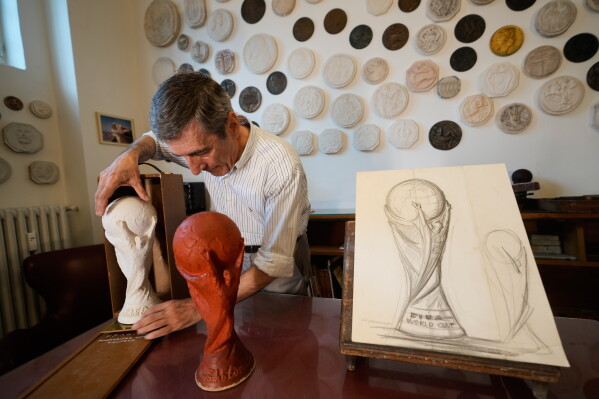
The FIFA World Cup trophy, considered the pinnacle of soccer achievement, embodies the essence of triumph and struggle. Designed by Italian sculptor Silvio Gazzaniga, the trophy encapsulates athletes’ perseverance, fans’ excitement, and the exhilaration of victory.
The Creation of an Iconic Trophy
Silvio Gazzaniga crafted the World Cup trophy in his Milan studio after FIFA sought a fresh design following Brazil’s permanent claim to the original Jules Rimet Trophy in 1970. This design features two figures reaching toward an orb symbolizing the Earth. Silvio’s son, Giorgio Gazzaniga, recounts the extensive sketches his father made, eventually leading to the final conception resembling DNA spirals moving upwards.
In collaboration with G.D.E. Bertoni Srl, Silvio Gazzaniga, who passed away in 2016, was responsible for creating several eminent trophies, including the UEFA Cup and the European Super-Cup. On July 11, 2026, Giorgio Gazzaniga inserted the original plaster sculpture into a wooden case in a warehouse in Pioltello, Italy.
The Fate of the Jules Rimet Trophy
The Jules Rimet Trophy, inaugurated during the first World Cup in 1930, depicted the Greek goddess Nike. Brazil gained permanent possession after its third win. The trophy was stolen twice: once in 1966, discovered by a dog named Pickles in London, and again in 1983 from the Brazilian headquarters, never to be recovered.
Gazzaniga’s Trophy – A Symbol of Victory
Gazzaniga’s bold creation was chosen among over 50 designs submitted to FIFA. It captured the struggle for victory, as described by Giorgio Gazzaniga, showing the rough, resilient image of athletes striving for victory and the shared joy of fans. The original plaster model and other memorabilia remain preserved at the family office near Milan.
Trophy Traditions Continues
The official FIFA World Cup trophy stands 36 centimeters tall, made of 18-carat gold with a malachite-accented base. Winning teams receive a gold-plated replica, while FIFA retains the original, displaying it at their Swiss headquarters.
Used in World Cup tournaments since 1974, Gazzaniga’s design remains in use, destined to be seen at least until the 2038 event. Giorgio Gazzaniga reminisces about the 1974 final, where West Germany faced the Netherlands. The sight of the trophy raised by the winning team established the creation as a symbol of soccer triumph.
Leave a Reply