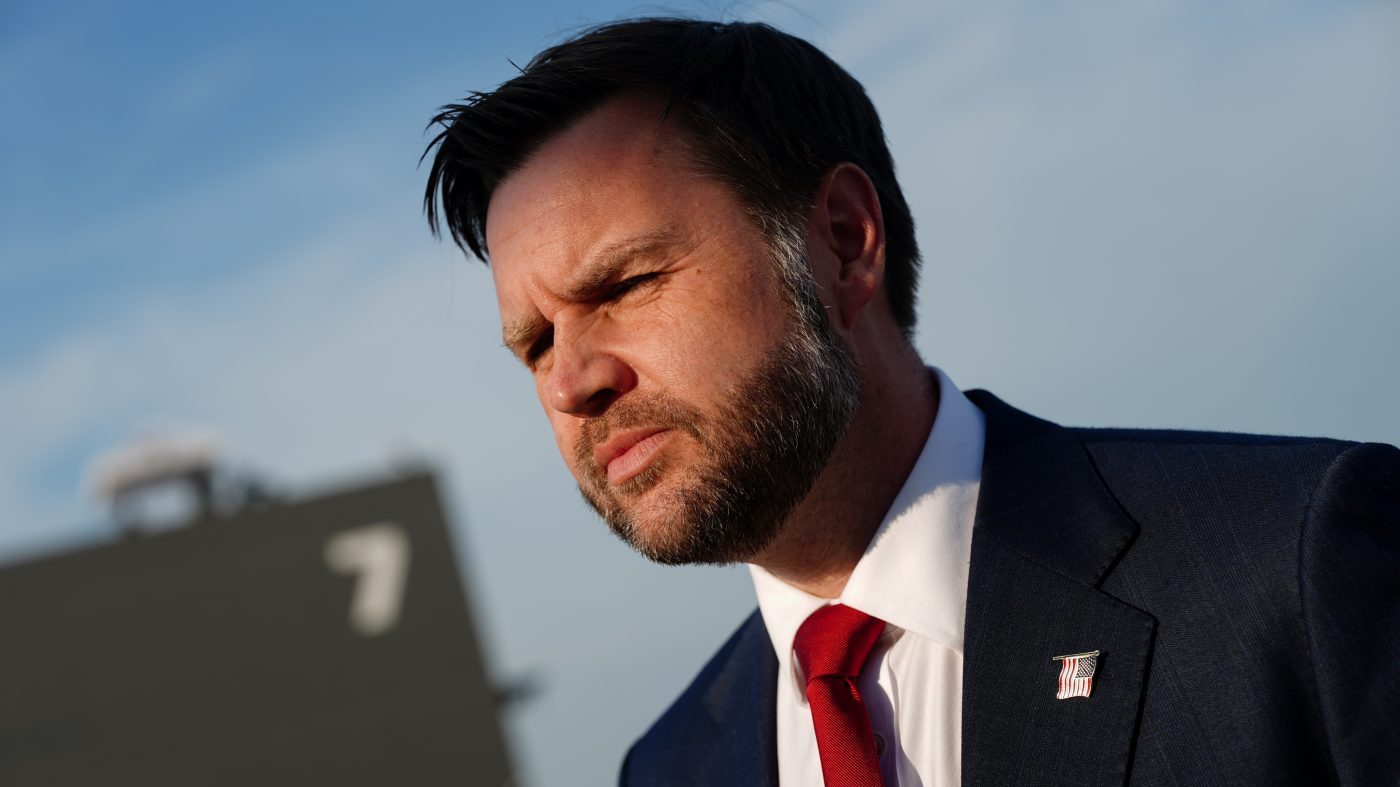
Nathan Howard of the Associated Press captured Vice President JD Vance before he boarded Air Force Two at Emmen Air Base in Switzerland on June 22, 2026. This followed high-level discussions between the United States and Iran during the Lake Lucerne Summit.
In his 2016 bestseller, Hillbilly Elegy, JD Vance advocated for free enterprise and personal responsibility as solutions to restore dignity and opportunity to impoverished Rust Belt areas. He highlighted the positive impact of Japanese investment in a Middletown, Ohio steel mill. However, as Vice President, Vance’s perspective shifted. During his appearance on “The Michael Knowles Show,” he expressed support for Hamiltonian economics over laissez-faire economics, claiming the economy should serve human dignity.
Vance promotes interventionist policies aimed at supporting families, living wages, leisure, faith, and community involvement. However, such policies may not enhance dignity or strengthen American lives and families. He also noted that Milton Friedman’s laissez-faire economics suited a strong Christian culture of the past, a context missing in today’s global liberalism.
Vance’s views align with New Right populism, as articulated by Patrick Deneen, author of Why Liberalism Failed. Deneen argues that progressive norms and globalization have eroded American civil society, necessitating federal intervention for families and communities. He suggests measures like tariffs, industrial subsidies, and pro-family initiatives as solutions. Vance identifies with Deneen’s “postliberal right” and supports New Right economics in the White House.
Critics argue that the decline of the American family predates NAFTA or China’s entry into the World Trade Organization. Economic populism might not reverse the social fragmentation from America’s sexual revolution and Lyndon Johnson’s Great Society. The post-1960s rise in divorce and non-marital births resulted from cultural changes, including no-fault divorce laws and the end of the “shotgun marriage” tradition.
Some towns experienced economic boosts from fracking, raising blue-collar wages. Yet, these did not reverse negative trends in family life. Fiscal rejuvenation alone does not restore marriage norms or stable two-parent child upbringing. Vance’s economic agenda might not lead to prosperity. The Trump administration’s tariffs, defended by Vance, did not spark a manufacturing upswing and resulted in about 100,000 fewer manufacturing jobs a year after implementation.
A Joint Economic Committee report indicates families will face over $2,500 in tariff-related costs in 2026, a 43 percent increase from the previous year. Under protectionist regimes, well-connected industries benefit, while ordinary people bear costs. Industries without tariff advantages lobby for exemptions, as seen with auto, pharmaceutical, energy, and semiconductor sectors.
Vance’s economic ideas, involving federal power to favor specific interests through tariffs and subsidies, might not promote human dignity. Such policies could hinder Americans’ ability to support families, contribute to communities, or enjoy leisure.
Conservatives may lament the degradation of family values and community loss, but solutions likely won’t come from regulatory measures like the Harmonized Tariff Schedule or Federal Trade Commission’s purview. Societal renewal depends on empowering individuals to innovate, compete, and thrive in a free economy and society, free from bureaucratic obstacles.
If JD Vance embodies future American conservatism, revisiting Hillbilly Elegy might offer valuable insights.
Aidan Grogan serves as an associate editor at the Manhattan Institute’s City Journal and is a senior contributor with Young Voices plus a history Ph.D. candidate at Liberty University.
Copyright 2026 Nexstar Media Inc. All rights reserved. This content is not for redistribution.
Leave a Reply