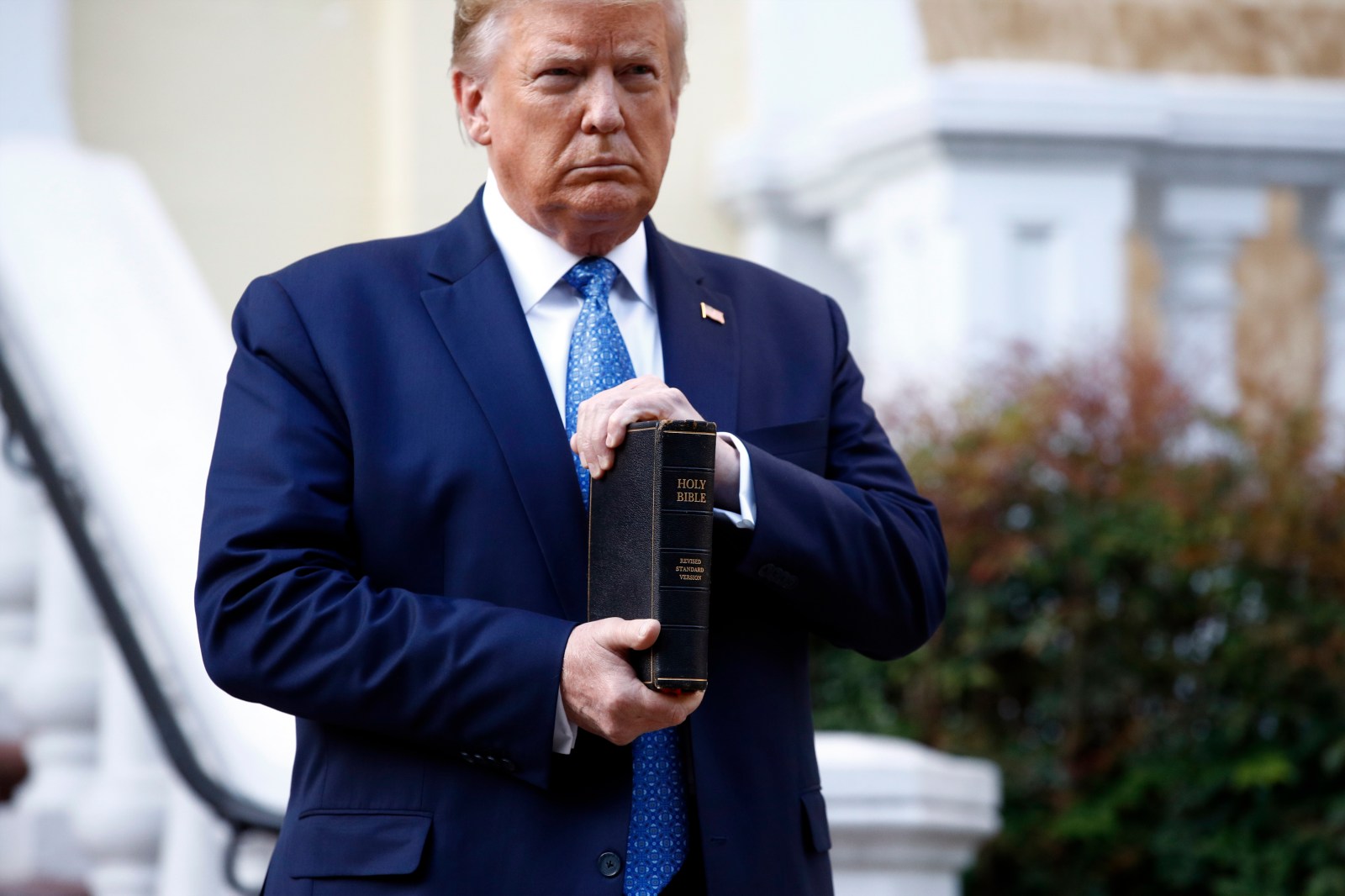
President Donald Trump recently issued a stark warning to Iran, turning tensions in the Strait of Hormuz into what resembles an ancient biblical equation. Trump declared that for each missile, rocket, or drone attack on a ship, the United States would retaliate by bombing an Iranian bridge or power plant. This approach highlights his consistent preference for straightforward, attention-grabbing foreign policies.
On Truth Social, Trump stated that “any time” Iran targets a ship in the Strait of Hormuz, the U.S. would retaliate by “bomb[ing] and destroy[ing] ONE BRIDGE OR POWER PLANT,” including those near Tehran. This pronouncement clearly appeals to his supporters, fitting into a narrative of retaliatory justice rooted in simplicity.
Trump’s track record shows similar strategies in action. His trade policy echoed this philosophy, promoting a “Fair and Reciprocal Plan” in response to perceived imbalances in foreign trade. This approach was evident following the U.S. assassination of Iranian General Qassem Soleimani in January 2020, when Trump mentioned identifying 52 targets in Iran, symbolic of the 52 Americans held hostage in 1979.
Despite these clear messages, the reality of the Strait of Hormuz complicates such direct retaliation. According to the U.S. Energy Information Administration, approximately 20 million barrels of oil move through the strait daily, accounting for about one-fifth of the world’s petroleum liquids consumption. Disruption in this critical passage could have severe global implications.
Recently, U.S. Central Command reported that Iran has attacked over 30 commercial vessels in just three months, threatening maritime safety and the free movement of goods. While a deterrence strategy seems logical, the success of Trump’s threat relies on several factors. Tehran must believe in Trump’s willingness to act, the ability of Washington to manage any escalation, and whether the costs to Iran outweigh the gains from enduring a strike.
Trump’s latest approach serves as more than a mere targeting doctrine. It is a strategic move intended to dominate discourse and force Iran to consider the tangible cost of its actions. The choices before Iran now include halting attacks, testing Trump’s resolve with limited strikes, or engaging in a full-scale exchange of infrastructure destruction. Yet, escalating this eye-for-an-eye strategy risks significant and increasing consequences.
Leave a Reply