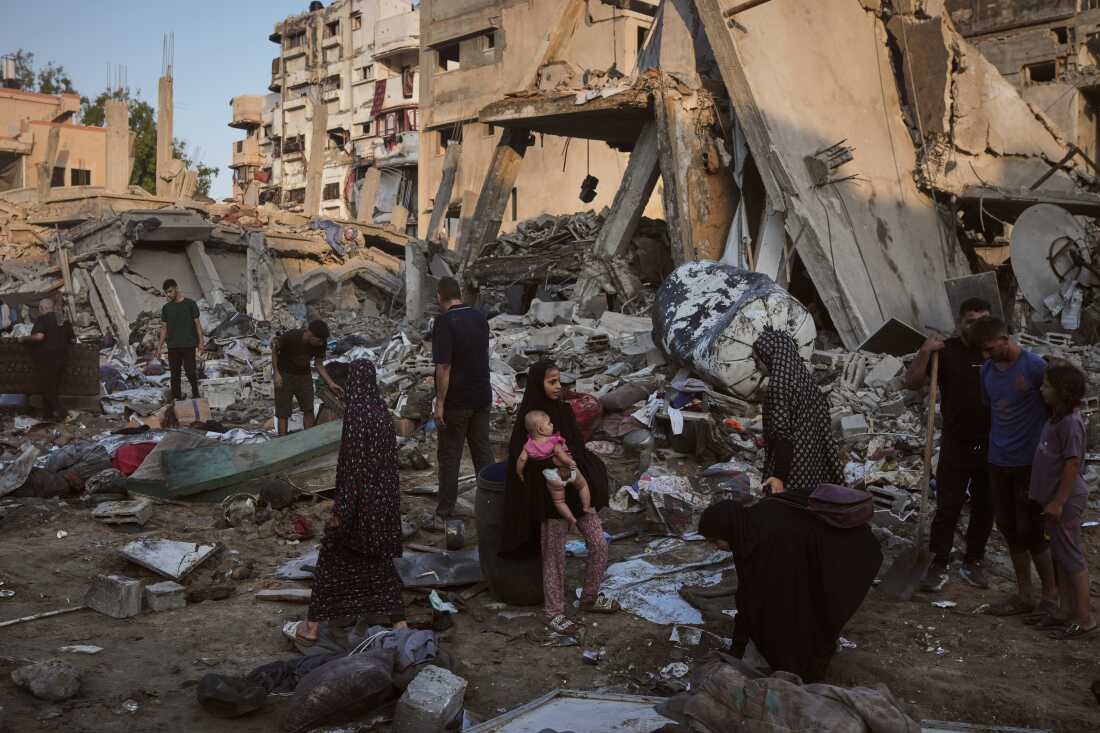
Palestinians in Gaza City are facing the arduous task of salvaging belongings after an airstrike on July 30, 2026. Amid this turmoil, a significant announcement emerged from Washington.
President Donald Trump reported a deal that involves disarming Hamas and facilitating Israel’s withdrawal from Gaza. However, numerous challenges, conditions, and extended timelines complicate the cessation of the conflict in this region. Neither Hamas nor Israel immediately acknowledged any agreement following Trump’s statement.
The White House’s announcement arrives nine months after a ceasefire, brokered by the U.S., was signed. The crux of negotiations between Israel and Hamas remains unresolved, focusing on Hamas’s disarmament and Gaza’s reconstruction.
The agreement will be carried out in carefully structured phases,Trump conveyed on social media.
He outlined that as Hamas disarms, Israeli forces would withdraw. Subsequently, an International Stabilization Force will collaborate with a new Palestinian police unit to secure Gaza for its people and neighbors.
Trump’s comprehensive 20-point ceasefire plan requires Hamas to dismantle its weapons and extensive tunnel network. It envisions Israeli forces’ exit, introduction of a technocratic Palestinian government, establishment of an international security force, and reconstruction efforts for Gaza.
This alleged agreement seeks to address one of the Gaza ceasefire’s most challenging aspects. Amid stalled negotiations and increasing military actions, Trump and related officials have shown optimism about the prospects.
Despite a lack of specific timelines, officials expressed confidence that the Gaza police would transfer some weapons to a Board of Peace-backed administration soon. Yet, many Hamas militants and heavy arms remain outside this agreement’s scope. Full disarmament might take up to 350 days.
From Israel’s perspective, skepticism looms. U.S. officials assure that Israel participated throughout the negotiation process. However, skepticism about Hamas’s readiness to relinquish control over Gaza prevails.
An official noted Israel’s actions would not extend beyond prior commitments, such as troop withdrawal and cessation of airstrikes, in line with the 20-point plan.
Trump’s disappointment would be significant if Israel veered from its obligations. His recent meeting with Prime Minister Benjamin Netanyahu hinted at ongoing discussions but lacked detailed disclosures.
Meanwhile, Iran’s role remains complex. Despite advising against the agreement, Iran’s capacity to support Hamas diminishes as it grapples with conflicts involving the U.S.
Historically, Hamas’s stance involved prioritizing the first ceasefire phase before broaching disarmament. Its charter, advocating armed resistance against Israel, makes conceding its weaponry challenging. Recently, however, Hamas dissolved its Gaza government, paving the way for a U.N.-backed technical committee to assume governance.
The origin of this conflict traces back to an October 7, 2023, Hamas-led assault on southern Israel, resulting in approximately 1,200 fatalities and 251 hostages. Israel’s retaliatory campaign has, to date, led to over 73,000 Palestinian deaths. The Israeli military’s control over more than half of Gaza leaves Palestinians in cramped camps and heavily damaged urban areas.
Leave a Reply