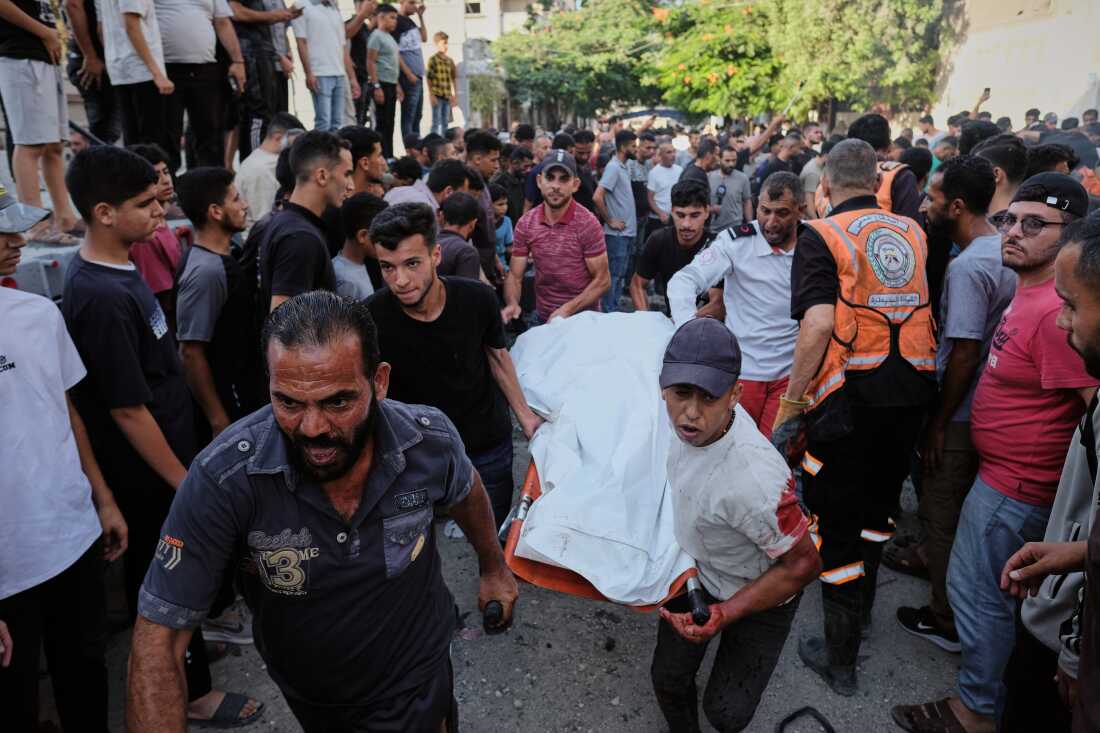
TEL AVIV, Israel — Israel has communicated significant security worries to the White House regarding the ongoing disarmament agreement with Hamas. This follows Israeli airstrikes over the weekend in Gaza that resulted in the deaths of at least 17 people, including children. Doron Spielman, spokesperson for Prime Minister Benjamin Netanyahu’s office, expressed skepticism over the disarmament deal announced by U.S. President Donald Trump. According to Spielman, Hamas still appears focused on military reconstruction, opposing the notion of a genuine demilitarization.
Spielman stated, “Our assessment is that if we redeploy before Hamas is truly disarmed, it will quickly expand its presence throughout Gaza, rebuild its terrorist infrastructure, and once again threaten Israeli communities.” He referred to the previous Hamas attack on October 7, 2023, which had sparked intensified conflict in the Gaza Strip. Spielman stressed that disarmament requires Hamas to physically relinquish its weapons completely.
The U.S.-brokered ceasefire, initiated nine months prior to alleviate the nearly three-year-long conflict, has seen discussions around disarmament remain contentious. Trump’s ceasefire plan requires Hamas to surrender its weapons, dismantle its tunnel networks, and envisages Israeli military withdrawal from Gaza, a new Palestinian technocratic government, international security deployments, and the reconstruction of the Palestinian area. Although Hamas has declared intentions to disarm, practical challenges and lengthy timelines hinder progress.
The agreement, as reported by the Associated Press, outlines that all Hamas-controlled police weapons will be handed over to a U.S.-supported Palestinian technocratic committee upon its deployment in Gaza. This committee, the National Committee for the Administration of Gaza, marks a pivotal step. Nevertheless, the disarmament process will align with phased Israeli withdrawal and requires dismantlement of military production sites post-committee arrival and international force deployment.
Gaza is deeply affected by the ongoing conflict, with many areas controlled by Israel ruined and depopulated. The remaining territory, populated by around 2 million Palestinians, houses families in harsh conditions within tent camps and destroyed neighborhoods.
Israel’s strategic maneuvers in Gaza are likely to align with its upcoming October elections. Netanyahu, amidst election challenges, is pressured by far-right coalition allies who advocate for continued military pressure on Hamas, opposing any large-scale Israeli concessions. Netanyahu’s opposition criticizes his handling of the 2023 Hamas attack, which involved hostage situations and substantial casualties on the Israeli side. The brutal conflict response by Israel has resulted in over 73,000 deaths, per Gaza’s Health Ministry, although civilians and militants are not distinguished in the data.
Spielman expressed gratitude for Trump’s efforts toward securing peace but emphasized Israel’s stance on disarmament, highlighting ongoing intelligence that suggests Hamas is indeed rearming. The White House, while consulted during the agreement talks, has yet to comment on Israel’s assertions.
Inside sources reveal Israel communicated specific demands to the deal’s facilitators, including allowing Israeli military action freedom within Gaza and excluding Qatar and Turkey from the agreement verification process. Moreover, Israel insists Hamas’ weapons are destroyed post-confiscation.
Despite the signed ceasefire, Israel continues military operations in Gaza. Local medical sources report that the latest Israeli attacks resulted in the death of at least 17 people, involving civilian casualties such as a family tragedy where a residential strike led to a child’s death. The Israeli army stands by its claim of targeting militants within these operations.
Leave a Reply