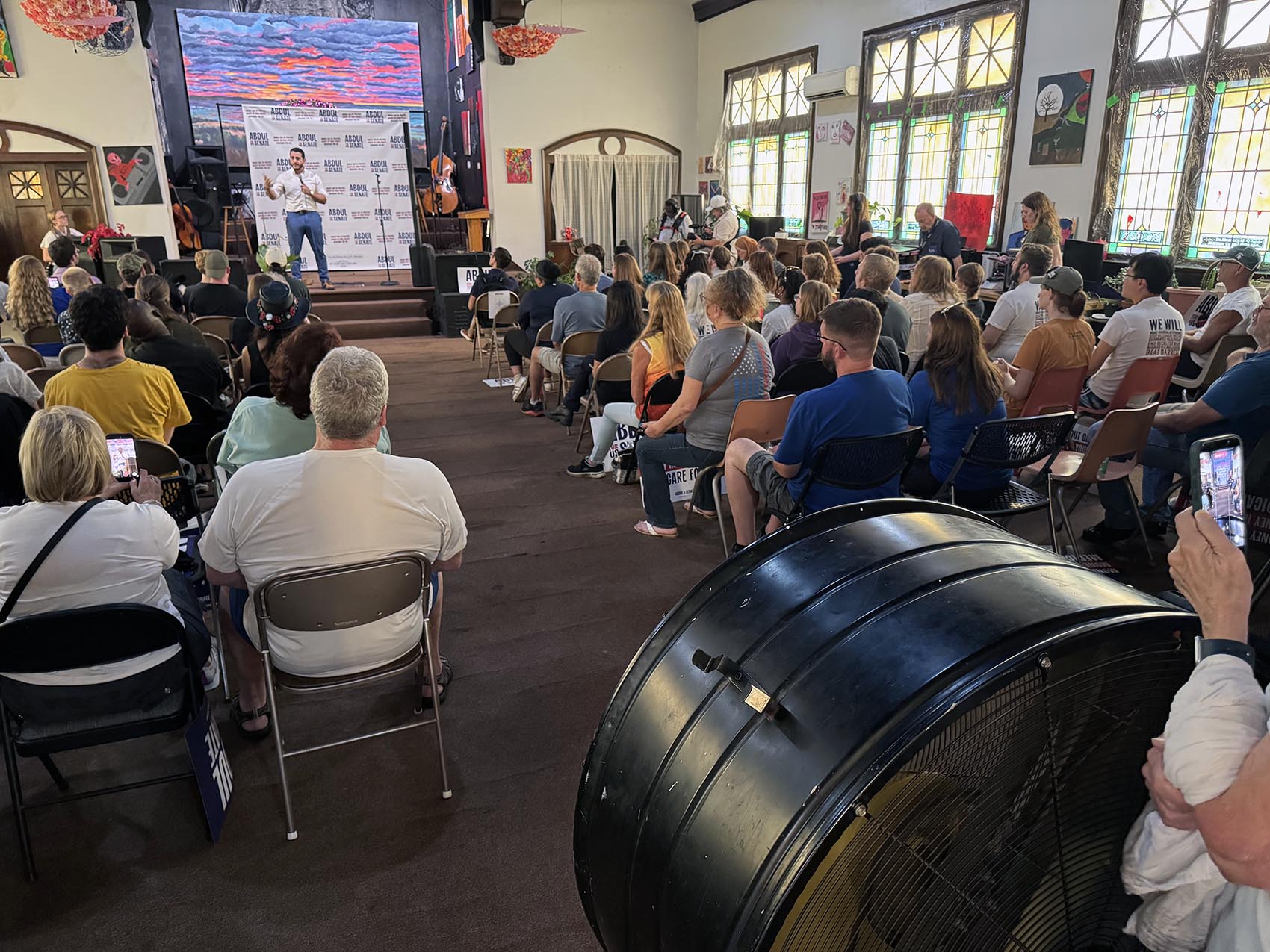
Last week, I spent two days immersed in the Michigan U.S. Senate Democratic primary, the central political contest between centrist congresswoman Haley Stevens and progressive former public health director Abdul El-Sayed. Producer Sam Weber and I traveled to Detroit with several questions: How do these candidates compare in person? What concerns are most pressing for Michigan voters? Could this ideological divide be problematic for Democrats come November? And what implications might this race have for the future?
Candidates’ Impressions on the Ground
Both Stevens and El-Sayed proved more impressive in-person than they appeared in media coverage. Stevens demonstrated notable stamina, reinforcing her core message of relentless dedication to Michigan. El-Sayed exhibited a compelling charisma, appealing effectively to young and progressive voters with both energy and intelligence.
Contrasting Venues
The campaign events highlighted stark differences. El-Sayed’s gathering at The Fledge, a converted church and arts venue, featured eclectic elements like a large decorative mushroom. Approximately 100 attendees, plus one cat, witnessed his address. Stevens, on the other hand, met with 23 individuals in a Chamber of Commerce conference room, and later with 16 members of the ‘Blue Brigade’ in the suburbs, accompanied by star-shaped cookies adorned in patriotic colors.
Key Concerns for Michigan Voters
Voters voiced focus on three central issues: money in politics, the economy, and Israel. El-Sayed supporters highlighted economic struggles and frustrations with both political parties, calling for removal of big money from politics. Stevens’ supporters echoed concerns about politics’ monetary influence, while addressing issues like healthcare and expressing reservations about certain political alliances.
Economic Insights from Local Perspectives
During a lunch stop at The People’s Kitchen in Lansing, owner Doug Mulkey exemplified typical economic concerns, balancing employee benefits against high inflation, and indicated keen interest in the election outcomes.
The Centrist-Progressive Divide
While the divide between centrist and progressive Democrats was apparent, it felt less severe in person than depicted online. Few voters suggested they might abstain from voting for the other candidate if their preferred choice lost. Unlike the Clinton/Sanders rift of 2016, this divide seems less entrenched.
Implications for the Democratic Party’s Future
This primary is seen as a data point rather than a pivotal moment for the Democratic Party’s future direction. Progressive wins are increasing across the nation, and regardless of this primary’s outcome, they contribute to ongoing trends without defining them. While Democrats differ in choices, there’s notable overlap in their priorities and a collective appetite for change. Ultimately, success may hinge on focusing on common ground post-primary.
The Michigan primary offers a current reflection on party dynamics and voter priorities, with broader implications as Democrats evaluate their path forward. This contest highlights an opportunity for innovation and risk-taking in political approaches.
Leave a Reply