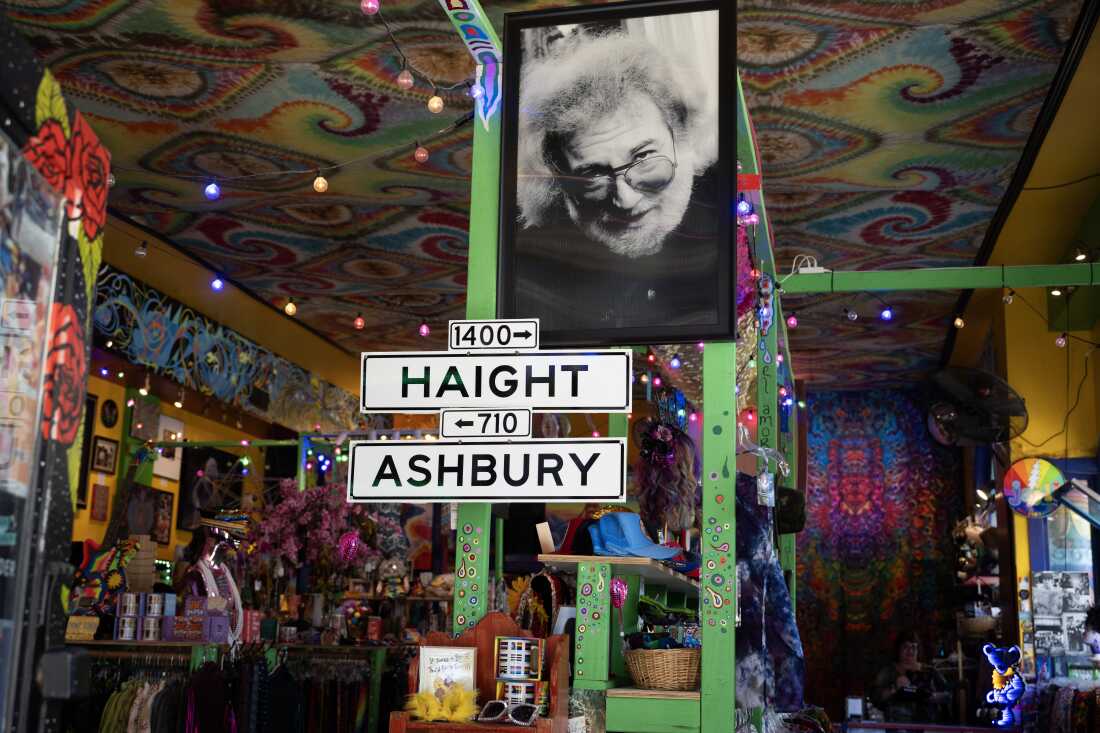
“Love on Haight” is a store located on Haight Street in San Francisco, known for its abundant Grateful Dead memorabilia and tie-dye clothing, along with a prominent photo of Jerry Garcia. During this year’s Days Between, from August 1 to August 9, NPR Music shared several stories about the ongoing attraction to the Grateful Dead and how fans are carrying forward the band’s legacy.
Jerry Garcia had a unique way of describing the musical taste of Grateful Dead fans. Dennis McNally, the band’s biographer and longtime publicist, recalls Garcia likening it to a fondness for licorice, emphasizing that not everyone likes it, but those who do, enjoy it immensely. This insight helped Garcia understand the phenomenon surrounding the Dead. The band attracted thousands to their concerts, becoming a growing subculture that extended the hippie spirit beyond San Francisco’s counterculture prime into the following decades.
By the 1990s, after their hit “Touch of Grey” in 1987, the Grateful Dead performed to their largest audiences yet, filling stadiums nationwide. The band’s belief in not repeating performances, continually exploring new possibilities, kept audiences engaged. According to McNally, a significant part of the Dead’s appeal was their egalitarian approach. There was no hierarchy between performers and the audience. McNally explains, “Even with crowds of 50,000, Jerry believed the audience were peers on a journey. Everyone was part of the band.”
This communal ideology partially stemmed from the band’s early participation in Ken Kesey’s “Acid Test” events, where an audience was less of a concept, and more of an integrated experience. Sixty years later, the quest for improvisation endures.
The Grateful Dead’s endurance is largely due to its devoted fan base, known as Deadheads, who continue to forge local communities across the country. McNally, who authored A Long Strange Trip: The Inside History of the Grateful Dead, attributes the legacy’s continuity to grassroots efforts. At his San Francisco home, adorned with Grateful Dead memorabilia, McNally reflected on the band’s beginnings in the Acid Tests, emphasizing the collective experience they fostered.
Despite changes and reinventions, the band’s fan base remains robust, welcoming new generations. Deadhead culture thrives similar to fervent sports fandoms, with fans fully committed through all performances, even the imperfect ones. “Improvisation carries risk, but it allows for magic,” McNally states, highlighting the thrill and reward of spontaneous performances.
When Garcia passed away in 1995, the Grateful Dead ceased formally, but their music lived on via cover bands, tribute shows, and varied configurations of surviving members like RatDog and The Dead. The reunion for the 50th anniversary in 2015 marked the band’s supposed farewell. “I thought Deadhead phenomena would fade,” McNally mused, quoting George Harrison’s idea of things passing, adding, “except for Deadheadism.”
The reunion shows attracted hundreds of thousands of fans and revitalized the Dead’s presence. Grahame Lesh, Phil Lesh’s son, noted a resurgence in recognition at Monte Rio, California, performances. The resultant formation of Dead & Company, featuring surviving members, and new additions like John Mayer, expanded their appeal to younger generations, filling venues alike.
The Grateful Dead’s resurgence in modern culture is evidenced by psychedelic designs in streetwear and media acknowledgment of Dead & Company’s performances. In 2023, the band announced their final tour due to concerns over the physical demands on members like Kreutzmann. Following performances in Las Vegas, San Francisco, and a 60th-anniversary celebration, Bob Weir passed away in 2025, but the music moved forward. Artist Mischa Richter captured the revival of this legacy through a documentary, Summer Tour, focusing on two young fans waving farewell to the band during their last tour.
The documentary, backed by actress Chloë Sevigny, embarked on its screening journey nationwide, reflecting the enduring interest in new Deadhead generations. At a Brooklyn Bowl stop, Mason’s Children, a band formed while following Dead & Company, emulated the Dead’s energy. Fans gathered, showcasing the community’s ongoing vibrancy.
For young fans like Tyler Goodmoore, Dead & Company offers a sense of camaraderie amidst a divided society. Even Kennedy Center Honoree Bob Weir recognized American music’s unifying power. Fans like Sky Edenfield appreciate the in-person experience of the Dead’s music, attending shows without listening solo, emphasizing shared companionship over digital consumption.
Peter Shapiro, of significant influence in the Deadhead music scene, describes fans’ exploratory nature as a perpetual driver in live music. His involvement began after transformative experiences at Dead concerts. Venues he owns, such as Brooklyn Bowl and Garcia’s, along with publications like Relix Magazine, further cultivate the community.
Don Was, a respected musician, commends Deadheads for their unique dedication and connection. He compares their gatherings to familial reunions: “It’s a tribal gathering, and the band’s presence matters less than the shared experiences.” The Grateful Dead’s legacy, steeped in exploration, continues to unite and inspire across generations.
Leave a Reply