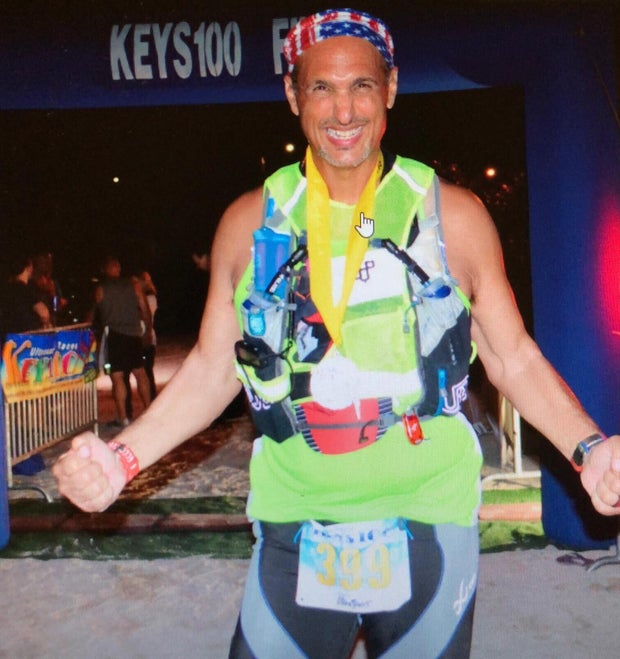
Todd Meiklejohn’s day began like any other on Aug. 8, 2025. He works in adult education and had started his routine early. At 6 a.m., he was preparing for a meeting while his wife, a nurse, was at the gym. Suddenly, he felt a sharp, squeezing pain. Everything became a blur. He could only see with one eye and his right side became immobile. He retained consciousness but was confused about the situation.
“I think I exited the bathroom,” Meiklejohn recalled. “I fell against the wall, feeling paralysis on my right side.” He attempted to stand, yet lacked strength. As an athlete and biker, the loss of strength frightened him. “I kept falling,” he expressed, “I couldn’t regain my power.”
“I’m one of the lucky patients,” Meiklejohn remarked.
His wife found him 45 minutes later. She immediately called 911. He was swiftly taken to Miami Neuroscience Institute at Baptist Health, diagnosed with a major stroke. Dr. Guilherme Dabus, the interventional neuroradiologist, emphasized “time is brain.” A stroke interrupts blood flow to the brain, depriving it of oxygen, causing brain cells to die. Rapid restoration limits long-term effects.
Doctors decided on a mechanical thrombectomy, removing the clot via a catheter to improve blood flow. “It almost resuscitates the brain,” Dabus stated. Meiklejohn underwent surgery 38 minutes after the emergency call. Minimal permanent damage ensued, and he regained speech and movement on his right side. He left the hospital within 48 hours. Dabus regarded his recovery as “amazing.”
Following the procedure, a heart defect, PFO (patent foramen ovale), explained the event. Usually harmless, it allowed the clot passage to the brain in Meiklejohn’s rare case. Dr. Eihab Ghantous explained how typical clots go to the lungs to be dissolved. But PFO can direct them to the brain, causing strokes. Only when other causes are eliminated do doctors consider PFO.
Dabus confirmed this mechanism in Meiklejohn’s case, stating the clot was “almost ejected out” of the heart toward the brain. After discovering PFO, Meiklejohn had a successful procedure to close it, minimizing future stroke risk.
Since the stroke, Meiklejohn focused on recovery, rebuilding endurance and muscle tone. He returned to work within four weeks, completed a 100-mile bike ride two months later. He still bears scars and monitors his health closely. Reflecting, he recognizes how timely his wife’s return was.
“Thank God she came back,” Meiklejohn remarked.
Aiming to heighten stroke treatment awareness, he shared the importance of fast reactions. “Many people are affected by strokes,” he noted, “but until it happens to you, you don’t know.” Meiklejohn emphasizes understanding treatment and rapid response.
Leave a Reply